

In human appearance, hair is often the most striking feature. It not only shapes our image but also carries cultural and aesthetic significance. Yet not everyone can maintain a full head of hair over time.
Walking down the street or browsing historical images, we notice that some people’s hairlines gradually recede, some develop thinning at the crown, and others lose their hair entirely. This phenomenon is far from rare, but it continues to spark curiosity—why do some people go bald while others retain thick, abundant hair?
Many believe that an “oily scalp” is the chief culprit behind hair loss. In reality, excessive sebum production can indeed make hair appear greasy and clog pores more easily, but it is not the direct cause of follicle shrinkage or baldness.
Likewise, staying up late does affect overall health, leading to reduced immunity and hormonal imbalance, which may worsen hair shedding. However, the equation “late nights = baldness” does not hold true. Hair loss may temporarily increase under lifestyle stress, but a few nights of insufficient sleep alone will not directly result in permanent baldness.
Within the human hormonal system, testosterone is a critically important androgen. It is primarily secreted by the testes in men, while the ovaries and adrenal glands in women also produce smaller amounts. Testosterone’s influence extends far beyond sexual traits—it plays a central role in many physiological processes throughout the body. During puberty, rising testosterone levels drive the deepening of the voice, the growth of muscle mass, the strengthening of bones, and the development of body hair, all of which are hallmarks of secondary sexual characteristics.
In adulthood, testosterone continues to regulate bodily functions. It helps maintain muscle mass and bone density, contributes to the production of red blood cells, and is closely linked to mood, energy, and libido. Importantly, testosterone is not an exclusively “male” hormone; it is essential for both sexes, though men typically have much higher concentrations than women.
Within the body’s hormone metabolism pathways, 5-alpha reductase is a key enzyme. Its primary role is to convert testosterone into a more potent molecule—dihydrotestosterone (DHT). This conversion is essentially a chemical reduction: 5-alpha reductase alters the double bond in testosterone’s molecular structure, producing a new form with significantly enhanced activity.
DHT is generally two to five times more powerful than testosterone because it binds more tightly and persistently to androgen receptors. In other words, testosterone serves as the “raw material,” while 5-alpha reductase acts as the “factory” that upgrades it into a high-efficiency version. This upgraded hormone is particularly active in certain tissues, such as hair follicles, skin, and the prostate.
Thus, 5-alpha reductase functions like a “biological switch,” determining whether testosterone is transformed into the more potent DHT. While this process is a normal and necessary physiological mechanism, the strong effects of DHT can also have additional consequences—for example, it is closely associated with the development of male pattern baldness.
In the human body, dihydrotestosterone (DHT) is a normal hormone produced by the conversion of testosterone through the action of 5-alpha reductase. Its concentration is higher in men, but it is also present in women. DHT itself is not an “abnormal substance”; it serves normal physiological functions in tissues such as the skin, hair, and prostate.
The true key lies in the fact that hair follicles vary in their sensitivity to DHT depending on genetic factors. When follicles are highly sensitive to DHT, a series of changes occurs.
First, DHT binds to receptors on sensitive follicles, exerting persistent pressure. This continuous stimulation disrupts the surrounding microvascular network, gradually reducing the supply of blood and nutrients, leaving the follicle in a state of deficiency.
Next, deprived of adequate nourishment, the follicle begins to shrink and its growth cycle is shortened. A growth phase that would normally last for years is reduced to only a few months or less. As a result, hair transitions from thick and healthy to fine and fragile. This process is known as follicular miniaturization.
Over time, the follicle’s structure deteriorates further, producing hair so thin it resembles fuzz, until growth ceases entirely. At this stage, the follicle has permanently lost its function, entering an irreversible dormant state. In other words, DHT does not instantly “destroy” follicles; rather, through genetically determined hypersensitivity, it progressively cuts off nutrient supply, shortens growth cycles, and ultimately leads to follicle death.
Conversely, if follicles are not sensitive to DHT, they can maintain normal growth cycles even when DHT levels are high, and hair remains unaffected. This difference is entirely dictated by genetics—like a “program code” embedded in the follicle that determines whether DHT is interpreted as a normal stimulus or a harmful signal.
Put simply, DHT is a hormone present in everyone, but follicles in different regions of the scalp exhibit varying sensitivities due to genetic differences. Follicles at the hairline and crown act like “high-sensitivity detectors,” easily influenced by DHT, while those at the back of the head function as a “low-sensitivity safe zone,” resistant to DHT’s effects. This distribution pattern is the hallmark of male pattern baldness. Meanwhile, some individuals inherit genes that render their follicles broadly insensitive to DHT, meaning they are unlikely to experience significant hair loss at all.
 White hair and baldness are unrelated
Baldness does not appear overnight; it is a gradual, cumulative process. Although DHT is already present during puberty, the follicle’s response often requires years of accumulation before becoming evident. In youth, follicles still possess strong repair capacity, with robust blood circulation and nutrient supply. Even under the influence of DHT, the effects usually do not immediately manifest as noticeable hair loss.
As age advances into middle adulthood, overall hormone levels begin to stabilize or even decline, yet the action of DHT persists. By this stage, follicles have undergone years of interaction with DHT. Sensitive follicles gradually accumulate damage, their growth cycles repeatedly shortened, and eventually clear miniaturization begins to appear. This long-term cumulative effect typically reaches a critical point between the ages of thirty and forty, at which baldness becomes visibly apparent.
Moreover, middle age often coincides with increased life stress, poorer sleep quality, and imbalanced nutrition. While these factors are not the fundamental cause of baldness, they accelerate follicle degeneration, making genetically determined sensitivity more quickly translate into visible hair loss. In other words, genes set the potential for baldness, while time and lifestyle determine when it manifests.
Thus, baldness most often emerges in middle age not because DHT suddenly appears at that age, but because years of accumulated influence reach a threshold sufficient to alter outward appearance.
In women, although testosterone levels are lower than in men, it is still converted into DHT through the action of 5-alpha reductase. This means women are not “without DHT,” but simply produce it in smaller amounts. The mechanism by which DHT affects hair follicles remains present in women: if the genetic programming of the follicle makes it sensitive to DHT, women may also experience hair thinning or follicular miniaturization.
However, the female body has an important “protective shield”—estrogen. During youth and middle age, estrogen levels are relatively high, and this helps counteract the effects of DHT. Specifically, estrogen promotes blood circulation around the follicle, extends the hair growth phase, and reduces the activity of androgen receptors, preventing follicles from being overstimulated by DHT. This abundant estrogen protection explains why female baldness is usually milder and occurs later than in men.
When women enter menopause, estrogen levels drop significantly, and the relative influence of androgens increases. At this point, the effects of DHT become more apparent, and women with highly sensitive follicles may begin to show thinning at the crown. This is why female pattern hair loss often becomes noticeable only after menopause.
In women, baldness typically does not concentrate at the hairline or crown to form the distinct “M-shaped” or “Mediterranean” patterns seen in men. Instead, it manifests as a general reduction in hair density, most evident along the central parting of the scalp. Medically, this condition is referred to as female pattern hair loss.
In short, women can also go bald, because DHT is present in everyone. Yet estrogen provides strong protection during youth, and only as this shield weakens with age does genetically determined follicle sensitivity gradually reveal itself.
In the early stages of baldness, hair follicles are already under the influence of DHT but are usually not yet fully shrunken or destroyed. Intervening at this stage is often more effective than in later phases, because follicles still retain some capacity for repair.
Finasteride is one of the most commonly prescribed oral medications for male pattern baldness. Its core mechanism is the inhibition of 5-alpha reductase, the enzyme responsible for converting testosterone into dihydrotestosterone (DHT)—the hormone that progressively causes sensitive follicles to shrink and hair to fall out.
The molecular structure of Finasteride allows it to bind to 5-alpha reductase, blocking its activity and preventing large amounts of testosterone from being converted into DHT. As a result, DHT levels in the body drop significantly, reducing the stress placed on sensitive follicles. This means follicles are no longer continually deprived of nutrients or forced into shortened growth cycles. In this improved environment, follicles may regain partial function, hair growth cycles can be extended, shedding slows down, and in some cases thicker hair strands may regrow.
It is important to note that Finasteride does not directly “repair” follicles; rather, it reduces the destructive pressure by lowering DHT. Its effectiveness is most pronounced in the early to middle stages of baldness, when follicles are not yet irreversibly damaged. Once follicles have completely atrophied, the drug cannot revive them.
Minoxidil was originally developed as a blood pressure medication, but clinical observations revealed its unexpected ability to stimulate hair growth. It was later reformulated into topical solutions or foams for treating baldness. Unlike Finasteride, Minoxidil does not interfere with DHT directly; instead, it improves the follicular environment to prolong the hair growth phase.
Specifically, Minoxidil dilates scalp microvessels, increasing local blood flow and delivering more oxygen and nutrients to follicles. This enhanced supply can reactivate follicles that are dormant or on the verge of regression, pushing them back into the growth phase. Research also shows that Minoxidil stimulates potassium ion channels in follicle cells, altering membrane potential and further boosting metabolic activity.
Clinically, the hallmark effect of Minoxidil is the extension of the follicle’s growth phase (anagen). Hair that would otherwise have a shortened cycle can grow for longer periods, resulting in thicker, stronger strands. This mechanism is particularly effective in the early or middle stages of baldness, when follicles have not yet completely degenerated and can still be “reawakened.”
Minoxidil improves the follicular environment, while Finasteride reduces DHT pressure. Their mechanisms differ, yet both can be effective in the early or middle stages of baldness, and they are often recommended in combination for better results. However, they share a common limitation: they can only delay or alleviate symptoms, making them symptomatic rather than curative treatments. Since genes determine the follicle’s sensitivity to DHT, this fundamental cause remains unchanged. Once medication is discontinued—or as time progresses—follicles may still gradually deteriorate.
When follicles have completely died, hair transplantation becomes necessary to restore the situation.
The core concept of hair transplant surgery lies in the difference in follicle sensitivity to DHT across various scalp regions. Follicles at the hairline and crown are typically highly sensitive to DHT, making them prone to shrinkage and death. In contrast, follicles at the back and sides of the head are naturally more resistant and can survive long-term even in environments with high DHT levels. Hair transplantation involves relocating these low-sensitivity follicles to balding areas, allowing them to continue growing in their new location.
The procedure generally consists of two steps:
The results of transplantation are typically long-lasting, because the transplanted follicles inherently have low sensitivity to DHT. Their genetic “anti-DHT code” remains intact and does not reset simply because they are moved.
Once implanted, these follicles continue to resist DHT, unlike the original sensitive follicles that gradually shrink. This explains why hair transplant surgery can deliver durable outcomes: the newly placed follicles maintain normal growth cycles and produce thick hair over many years, often for a lifetime.
It should be noted, however, that hair transplantation is an expensive procedure. The high cost stems from its nature as a highly intricate medical operation. The surgery is not merely about relocating follicles—it requires microscopic separation of follicular units and careful implantation into the scalp. Each follicle must remain intact to ensure survival, demanding exceptional skill from surgeons and technicians. Because of the complexity, a single session often lasts six to ten hours, requiring sustained concentration from the medical team, which drives labor costs significantly.
Additionally, transplantation must be performed in a sterile environment, using specialized microscopes and cold-storage systems to preserve follicle viability. Maintaining and upgrading this equipment is costly. More importantly, the true value of transplantation lies not only in the act of moving follicles but in ensuring their long-term survival and continued growth in the new site. Achieving this outcome requires extensive clinical expertise, along with postoperative medication, care, and regular follow-up—all of which are included in the overall expense.
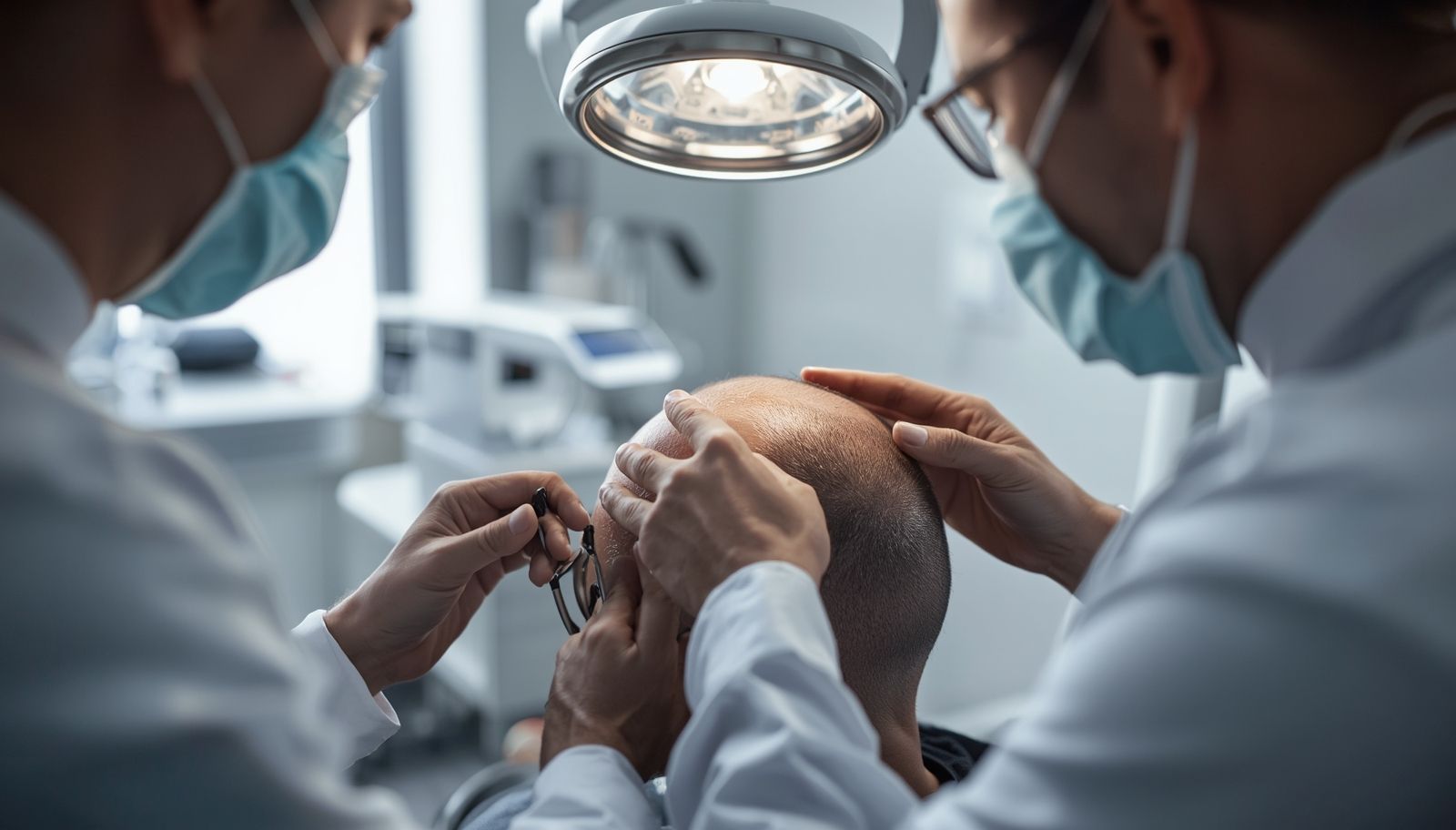 Consult a doctor for the most professional treatment
Although current medications and hair transplant surgery can only be considered symptomatic treatments, scientific progress has not stopped. Researchers are actively exploring more fundamental solutions, such as follicle cloning technology, which aims to cultivate entirely new follicles in the laboratory and then transplant them into the scalp, allowing bald areas to regrow healthy hair. Meanwhile, localized RNA therapies are also under development. Their principle is to use molecular signals to precisely regulate follicle gene expression, reducing sensitivity to DHT or reactivating dormant follicles.
These new approaches are still in the research stage, but they have already shown exciting potential. For individuals in the early stages of hair loss, rational control and timely intervention can minimize the rate of follicle degeneration. When these technologies eventually mature, it may even be possible to “freeze” the hairline at its most youthful state, no longer dictated by time or genetics.
Stem Cell and Follicle Regeneration Technologies
Gene Therapy
Novel Molecular Drugs
We leverage big data to bring you the most fascinating and mind-blowing trivia. Follow us for regular updates—prepare to be amazed while leveling up your knowledge.


The most captivating aspect of twins lies in their striking resemblance in appearance. When encountering twins in a crowd, the first impression is the shock of seeing two faces that look almost

Lightning is a sudden and violent natural discharge phenomenon. It usually appears as a brilliant streak of light cutting across the sky, either between clouds or from cloud to ground. Its shape is

A vaccine is a specially designed medical tool whose purpose is not to directly cure disease, but to “pre-train” the immune system so that the body can respond more quickly and effectively when it

Cancer often strikes fear because it is not merely a disease, but a force that can completely alter the course of a person’s life. Once someone is diagnosed, the focus of daily living shifts

Acne is often regarded as a troubling condition: it not only affects one’s appearance but can also subtly undermine self‑confidence. Many people, when looking in the mirror, feel anxious at the sight

Antibiotics are a class of drugs specifically designed to combat bacteria. They interfere with vital bacterial processes, such as damaging the cell wall, blocking protein synthesis, or disrupting DNA

A hot air balloon is a large and graceful aircraft, symbolizing humanity’s earliest attempts to explore the sky. In eighteenth‑century France, the Montgolfier brothers first launched such a fabric

Cars are the daily means of transport for many people, and during a journey it is inevitable to encounter sudden situations that require braking. But what actually happens when a car brakes abruptly


Follow us for quirky updates, fun discoveries, and a front‑row seat to the weird and wonderful world we live in.