
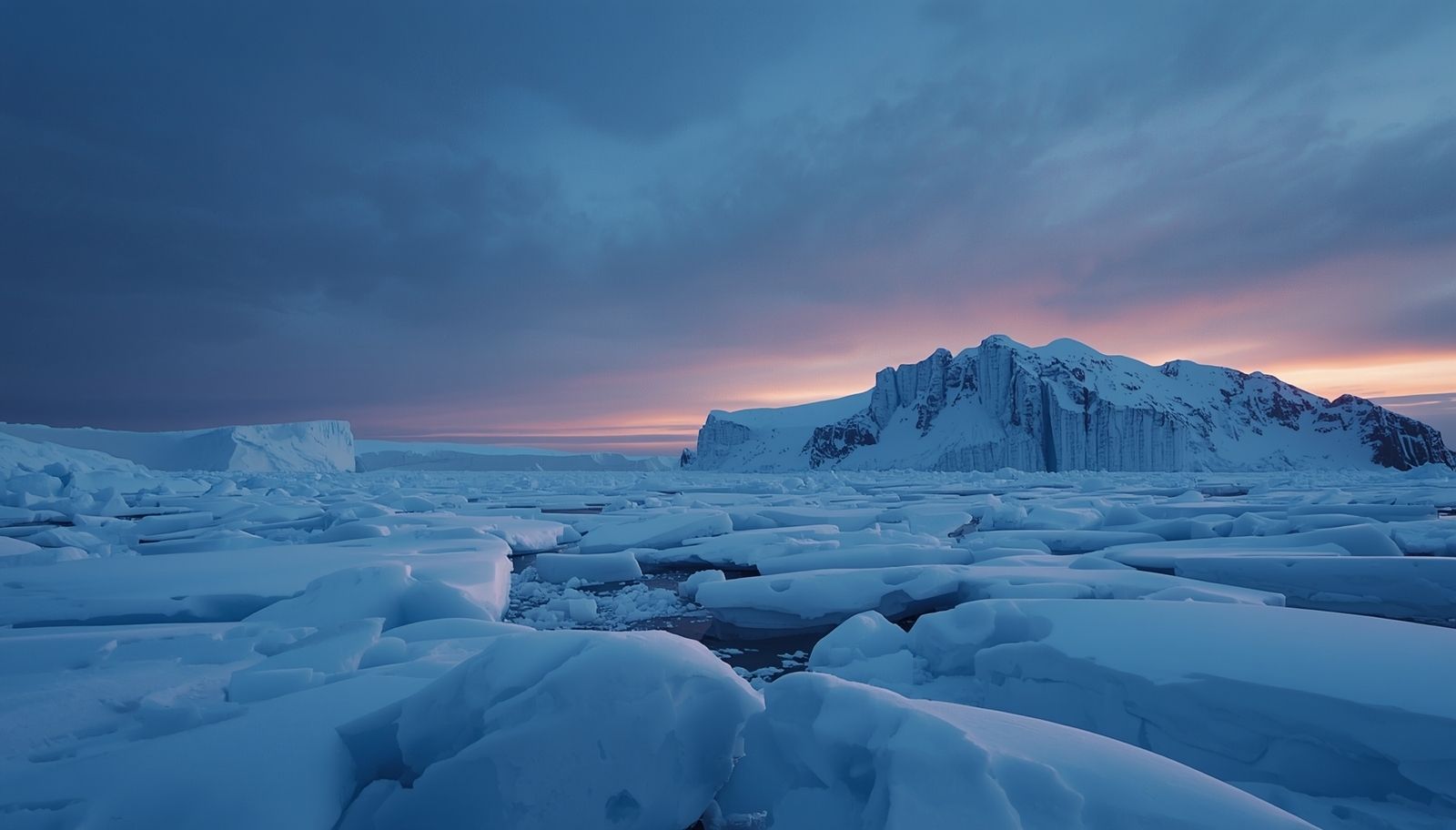
The polar realms, shrouded in relentless cold and endless mystery, remain territories that most people will never set foot upon in their lifetime. The Antarctic and the Arctic lie at opposite ends of the Earth, separated by the greatest of distances. Though both are lands of ice and snow, they reveal strikingly different faces in their respective domains. Why is Antarctica colder than the Arctic? And what other hidden contrasts lie between the two poles?
Although both the Arctic and Antarctic are cloaked in ice and snow, their geographical essence is fundamentally different. The Arctic is an ocean covered by floating sea ice, encircled by landmasses such as Greenland, Canada, and Russia. It lacks a true continental core; instead, its sea ice varies in thickness with the seasons. The surrounding lands consist mainly of low hills and permafrost plains, with scattered mountains of limited height—for example, Greenland’s Gunnbjørn Fjeld, at about 3,700 meters, is the highest peak in the Arctic region. Overall, the Arctic landscape is dominated by ocean and lowlands, with relatively gentle relief.
Antarctica, by contrast, is entirely different. It is a vast, independent continent blanketed by thick ice sheets, with an average elevation exceeding 2,800 meters, making it the highest continent on Earth. The Transantarctic Mountains stretch for 3,500 kilometers, nearly spanning the continent, while Mount Vinson rises to nearly 4,900 meters, standing as the pinnacle of the polar world. Beyond its mountain ranges, Antarctica features expansive ice fields, plateaus, and glaciers—terrain that is grand and extreme.
In other words, the Arctic is a world of “ocean plus surrounding lowlands,” whereas Antarctica is a “continental highland of ice.” These geographical differences not only shape the starkly contrasting climates of the two poles but also determine the ways in which ecosystems and human activities unfold.
In terms of climate, both the Arctic and Antarctic are cold, but they are cold in different ways. The Arctic climate is characterized as “maritime cold,” because it is essentially an ocean covered by ice. The presence of seawater moderates temperature fluctuations: winter averages range from –20°C to –40°C, while summer can approach the freezing point, occasionally rising above zero. Precipitation is greater than in Antarctica, falling mainly as snow, and the melting of sea ice adds humidity. This environment, though frigid, is relatively damp and exhibits clear seasonal variation.
Antarctica, by contrast, is entirely different. It is a continental highland with an average elevation exceeding 2,800 meters, lacking the moderating influence of the ocean. Its thick ice sheet reflects sunlight, preventing heat accumulation. Winter temperatures can plunge to –60°C to –80°C, while summer remains around –20°C. Precipitation is extremely scarce—some regions are even drier than the Sahara Desert—earning Antarctica the name “cold desert.” This dry, severe environment makes it the harshest climate zone on Earth.
In other words, the Arctic is a “moist cold world regulated by the ocean,” whereas Antarctica is an “extreme dry-cold desert of continental ice.” These differences shape not only temperature and precipitation but also the distribution of ecosystems across the two poles.
The ecological differences between the Arctic and Antarctic are perhaps the most immediate and astonishing. The Arctic ecosystem is a complex web woven from ocean and tundra. Its most iconic animal is the polar bear, which depends on sea ice to hunt seals and stands as the apex predator of the food chain. Because their survival is entirely tied to sea ice, the seasonal melting directly affects their hunting range and population stability.
On land, reindeer and musk oxen are the principal herbivores. Reindeer undertake vast migrations, following the brief growth of tundra vegetation, while musk oxen rely on their heavy coats to withstand the cold and excel at collective defense against predators. Alongside them are the Arctic fox and the gray wolf: the fox, agile and resourceful, feeds on lemmings and bird eggs, and in winter often scavenges leftovers from polar bears; the wolf, in certain regions, hunts in packs, preying mainly on reindeer and musk oxen.
Small mammals such as lemmings play a central role in the Arctic ecology. Their populations undergo periodic explosions, providing a crucial food source for snowy owls, foxes, and other predators. This cycle of “population boom → predator abundance → population decline” is a defining feature of the Arctic terrestrial ecosystem.
In the marine realm, the Arctic sustains walruses, belugas, narwhals, and bowhead whales. Walruses use their tusks to break ice and forage for shellfish, while whales depend on fish and plankton. Fish such as Arctic cod, together with vast numbers of plankton and crustaceans, form the foundation of the marine food chain.
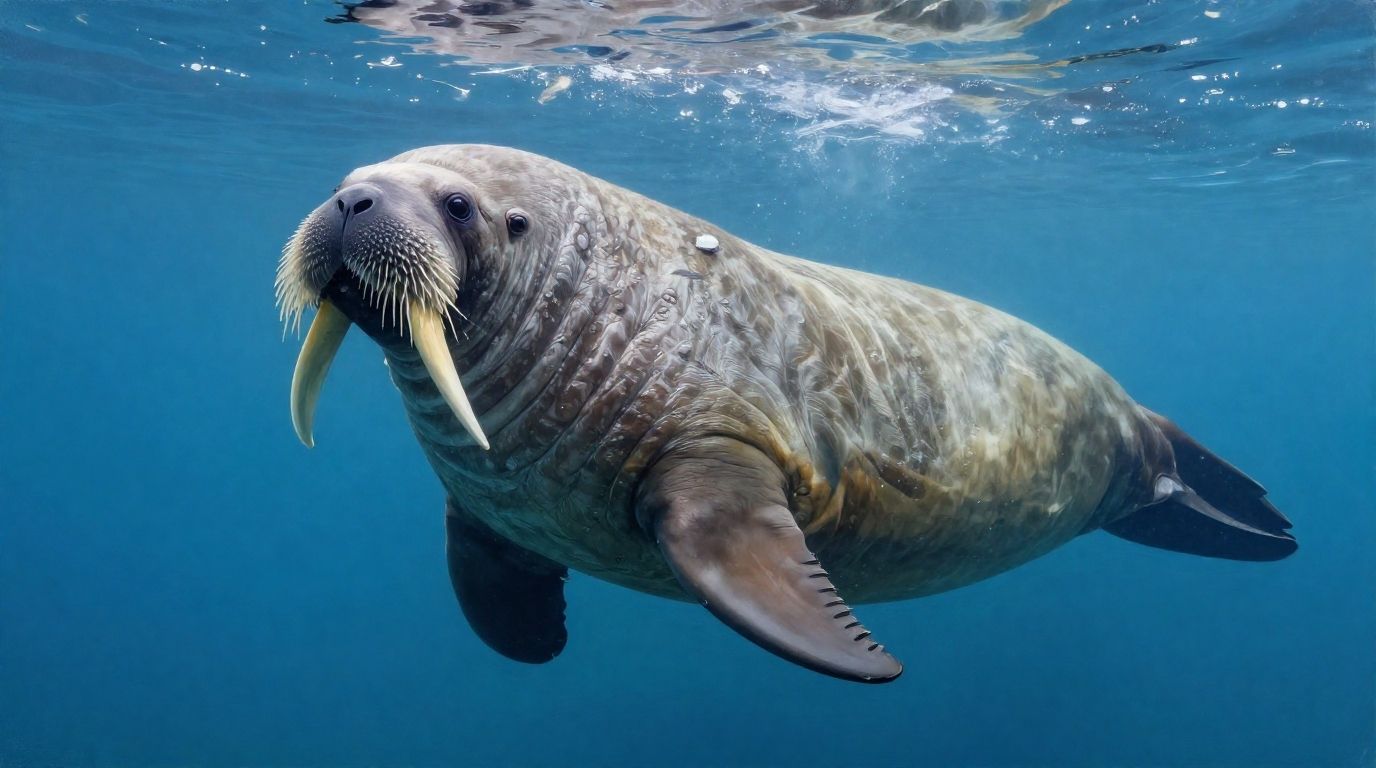 Walrus
Birds are also highly active in the Arctic. The snowy owl, with its pure white plumage, preys on lemmings and stands as a symbol of the tundra. The Arctic tern is an extraordinary traveler, migrating annually between the two poles and completing the longest journey of any creature on Earth.
The Arctic tern is a small seabird, yet it possesses the most astonishing migratory ability on Earth. Each year, it departs from its breeding grounds in the Arctic and flies to the distant Antarctic, returning north with the changing seasons—a journey spanning tens of thousands of kilometers. This migration makes the Arctic tern the animal with the longest flight distance on the planet; over its lifetime, its accumulated mileage can equal several round trips to the Moon.
During the Arctic summer, the tern takes advantage of long daylight hours and abundant fish to breed. It typically nests on tundra or coastal areas, forming colonies, and feeds its chicks with small fish and crustaceans. Its plumage is gray-white, with long tail feathers, and its flight is graceful and swift, skimming low over the sea to catch prey.
Ecologically, the Arctic tern plays a unique role. It is not only part of the Arctic food chain—serving as prey for foxes and raptors—but its extraordinary migration links the ecosystems of the Arctic and Antarctic. This “cross-polar journey” makes the tern a bridge in the global ecology, symbolizing life’s resilience and adaptability in extreme environments.
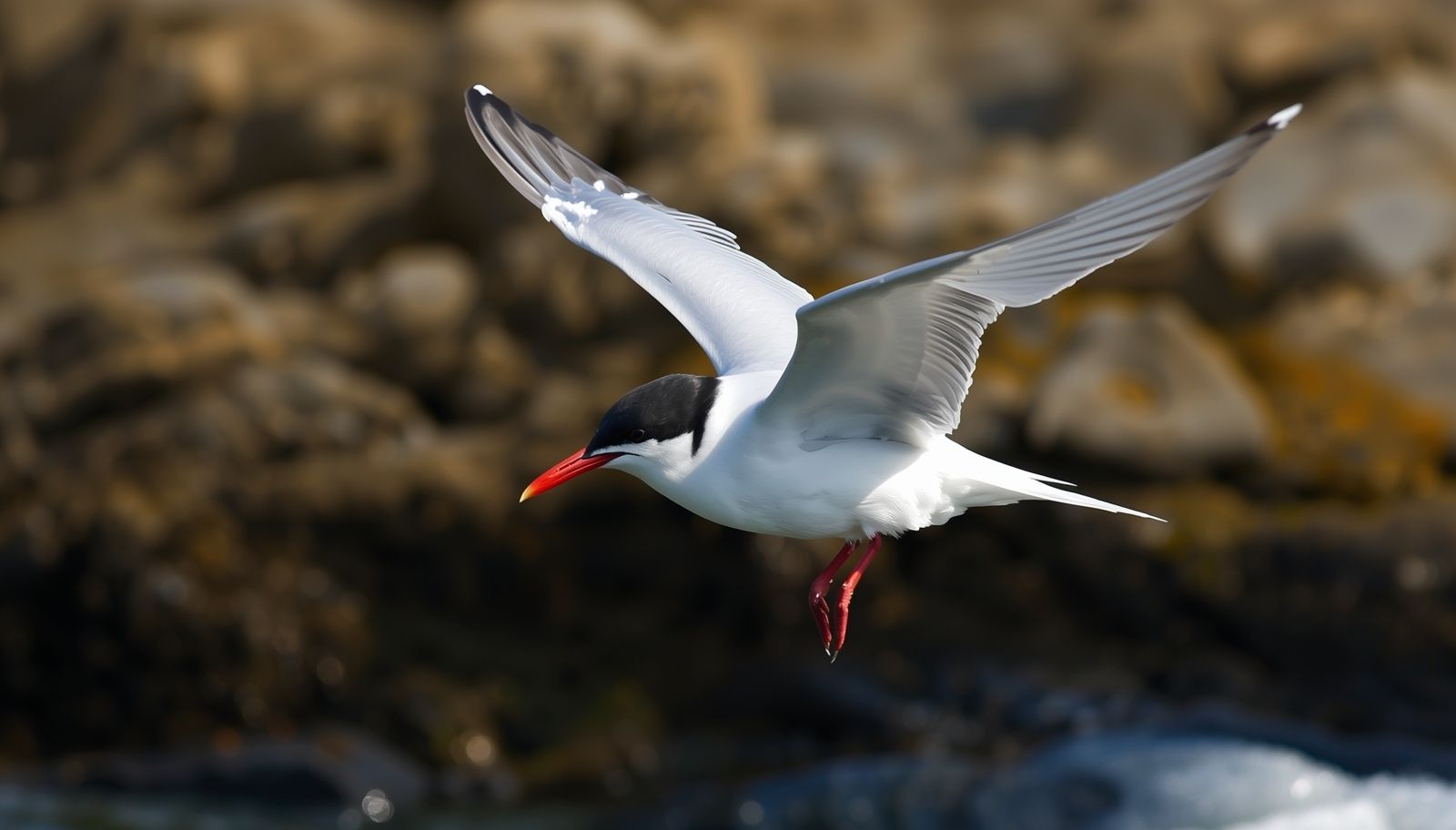 The Arctic tern
In Antarctica, ecology is shaped by the fact that it is a continent buried beneath thick ice and devoid of terrestrial mammals, so its ecosystems rely entirely on the ocean. The most iconic inhabitants are penguins. Emperor penguins are the only birds to breed in the severe Antarctic winter, gathering in colonies on the ice and huddling together for warmth against temperatures plunging far below zero. Adélie penguins, by contrast, nest during the summer when snow and ice retreat, using exposed rocks for breeding. Penguins live in highly social colonies, and this collective behavior is their survival strategy in such an extreme environment.
Seals form another important group in Antarctica. Weddell seals can dive beneath the ice for long periods, feeding on fish and krill, while leopard seals are fierce predators that hunt penguins and other seabirds. These seals are both predators and prey within the food web, and their presence helps maintain ecological balance.
At the foundation of Antarctic ecology lies krill. These tiny crustaceans exist in immense numbers, forming the bedrock of the marine food chain. Penguins, seabirds, seals, and whales all depend on krill to sustain their populations. due to their abundance, Antarctica—though lacking land animals—supports vast marine communities.
In the surrounding seas, whales such as humpbacks and blue whales migrate seasonally to Antarctic waters, taking advantage of the summer’s rich krill supply. Their arrival turns the Southern Ocean into one of the most vibrant ecological stages on Earth, albeit for a brief season.
Compared with the Arctic, Antarctica’s ecology is simpler: no land mammals, fewer layers in the food web, yet a stable “ocean-driven system” built upon the sheer abundance of krill. Though structurally simple, it demonstrates remarkable resilience in one of the planet’s most extreme environments.
In the Arctic, several Indigenous peoples are distributed across the region, the most widely known being the Inuit. They primarily inhabit Greenland, northern Canada, and Alaska, with a culture rooted in reliance on marine and ice resources: hunting seals and whales, and subsisting on fish and reindeer. Inuit language, mythology, and crafts—such as bone carvings and leatherwork—reflect a profound connection with nature.
In the Eurasian Arctic, other groups include the Sámi and the Chukchi. The Sámi live mainly in northern Norway, Sweden, Finland, and Russia, with reindeer herding at the heart of their culture. Reindeer serve not only as a source of food but also as transport and a cultural symbol. The Chukchi inhabit Russia’s Chukchi Peninsula, likewise depending on reindeer and marine mammals, while preserving distinctive traditions of song, dance, and oral storytelling.
A shared characteristic of these peoples is “living in symbiosis with nature.” In an environment of limited resources, they developed intricate survival knowledge—how to build temporary shelters from snow and ice (igloos), how to hunt during the polar night, and how to preserve food to endure the long winters. These practices are not merely survival skills but integral parts of cultural identity.
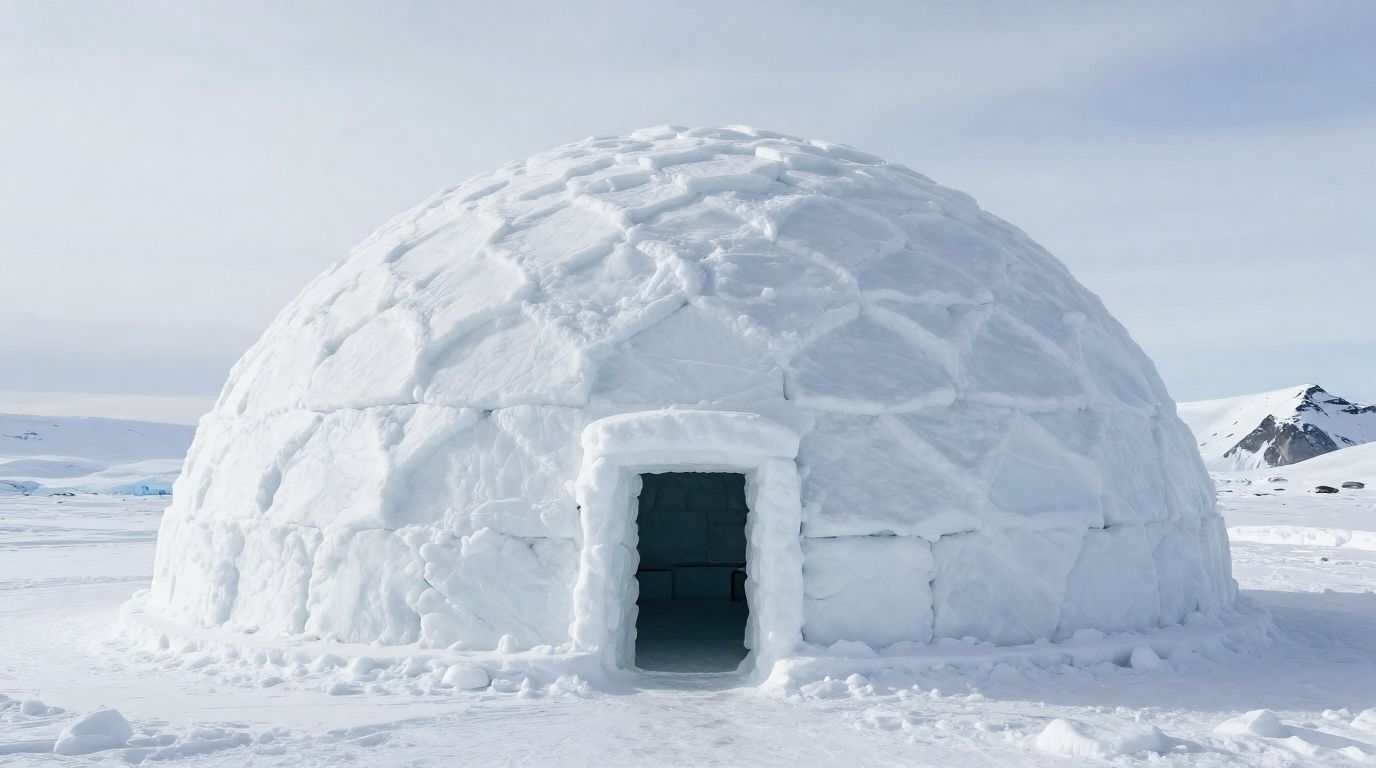 A beautiful igloo
Although modernity has gradually entered the Arctic, bringing urbanization, energy extraction, and improved transportation, Indigenous communities continue to strive to maintain their traditions. The Inuit and Sámi actively promote language education and cultural preservation, ensuring that their identities do not vanish amid the tides of globalization.
In terms of human presence, Antarctica stands in stark contrast to the Arctic. There are no Indigenous peoples here, nor any long-term settlements, because the extreme cold, the absence of stable food sources, and the high-altitude ice-sheet environment make it impossible to establish traditional ways of life. Human presence in Antarctica consists mainly of scientists, explorers, and support staff, who are distributed across research stations established by various nations, forming a kind of “temporary community.”
These research stations—such as the United States’ McMurdo Station, Russia’s Vostok Station, and multinational Antarctic bases—serve as footholds for humanity on the frozen continent. Personnel typically rotate in shifts or stay seasonally, with larger populations in summer and only a minimal core staff in winter. Living conditions are harsh, dependent on external supplies, and centered on cooperation, scientific exploration, and international exchange.
In the Arctic, the political landscape is shaped primarily by the surrounding nations. Because the Arctic is not a single continent but rather an ocean encircled by land, countries such as the United States (Alaska), Canada, Russia, Norway, and Denmark (Greenland) are all involved. Each asserts different claims over sovereignty, resource extraction rights, and control of shipping routes.
As the ice recedes, Arctic sea lanes are gradually opening, and competition over energy and fisheries has made the region a focal point of geopolitics. Nations both cooperate and compete here, creating a political scene of “intersecting national interests.” Indigenous peoples such as the Inuit and Sámi are also increasingly asserting autonomy and cultural protection, becoming part of the Arctic’s political fabric.
Antarctica, by contrast, presents an entirely different political situation. There are no neighboring states and no Indigenous peoples; instead, its governance is defined by the Antarctic Treaty. Signed in 1959 and later joined by many nations, the treaty’s core principles prohibit military activity and resource exploitation, designating Antarctica as a “domain of scientific research and peaceful cooperation.”
Thus, the political culture of Antarctica is one of “international cooperation.” Nations establish research stations and pursue scientific exploration rather than territorial expansion. Although some countries have made territorial claims, these are frozen under the treaty framework, preventing conflict.
In summary, the Arctic is a geopolitical stage of “multinational sovereignty and resource competition,” while Antarctica is a treaty-based “international cooperative domain.” Their differences reflect contrasting geographical realities and human activities, showcasing two distinct political models in extreme environments: one a world of intersecting interests, the other an ideal of peace and science.
| Arctic | Antarctica | |
|---|---|---|
| Geography🏔️ | Composed of the Arctic Ocean and surrounding lands, with sea ice floating on the surface. Tundra spreads across adjacent regions; the terrain is dominated by low plains, permafrost, and coastal areas. | An independent continent with high average elevation, most of it covered by thick ice sheets. Its landscape features vast ice fields, glaciers, mountain ranges, and limited exposed rock. |
| Climate❄️ | Winters are severe, summers short with seasonal melting. The climate is relatively milder, with modest precipitation, mostly snow. | The coldest and driest region on Earth, with winter temperatures plunging to –80°C. Strong winds prevail year-round, and precipitation is minimal, making it a “cold desert.” |
| Ecology🫎 | Rich biodiversity. Land animals include reindeer, musk oxen, and lemmings; predators such as polar bears, Arctic foxes, and gray wolves; marine life includes walruses, whales, and Arctic cod; birds such as snowy owls and Arctic terns. The food web is complex, interweaving land and sea. | Lacking terrestrial mammals, its ecology is ocean-centered. Penguins are the most iconic birds; seals include leopard seals and Weddell seals; whales migrate seasonally; krill form the foundation of the food chain. The ecosystem is simple but stable. |
| Humans👥 | Home to Indigenous peoples such as the Inuit, Sámi, and Chukchi. Their cultures rely on reindeer herding, fishing, and hunting marine mammals, forming a “nature-symbiotic culture.” | No Indigenous peoples; only scientists and explorers reside in research stations. Human presence is centered on scientific exploration and international cooperation, forming “temporary communities.” |
| Politics🏛️ | Governed by surrounding nations—the United States, Canada, Russia, Norway, and Denmark—who compete and cooperate over sovereignty, resource extraction, and control of shipping routes. Indigenous groups also seek autonomy and cultural protection, becoming part of the political landscape. | Governed by the Antarctic Treaty, which prohibits military activity and resource exploitation, ensuring the continent remains a domain of science and peace. Its political culture is rooted in international cooperation, with territorial claims frozen. |
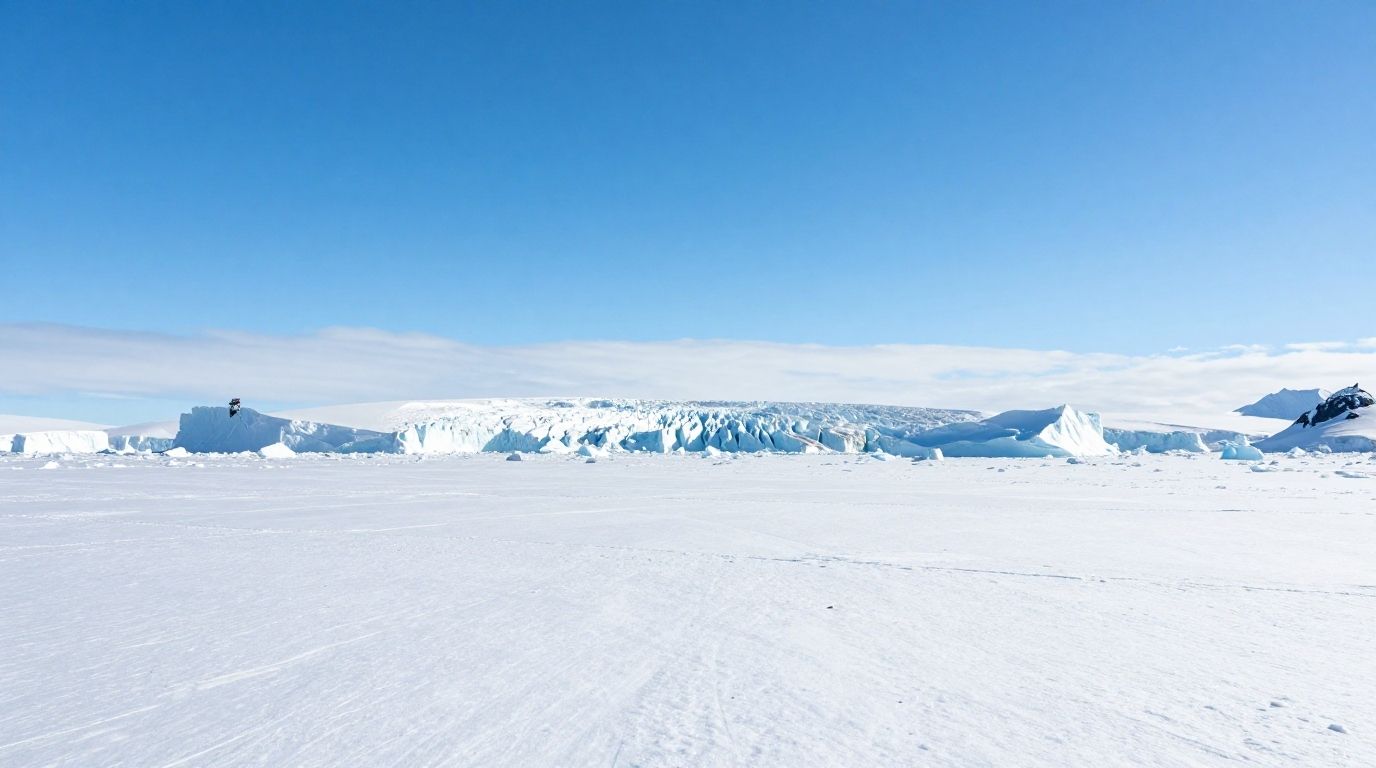 Antarctica’s land area is larger than that of the Arctic
We leverage big data to bring you the most fascinating and mind-blowing trivia. Follow us for regular updates—prepare to be amazed while leveling up your knowledge.


Whether bizarre and fantastical events or ordinary, trivial matters, they all appear in our dreams. Some dreams are so vivid that we remember them clearly after waking, while others vanish instantly

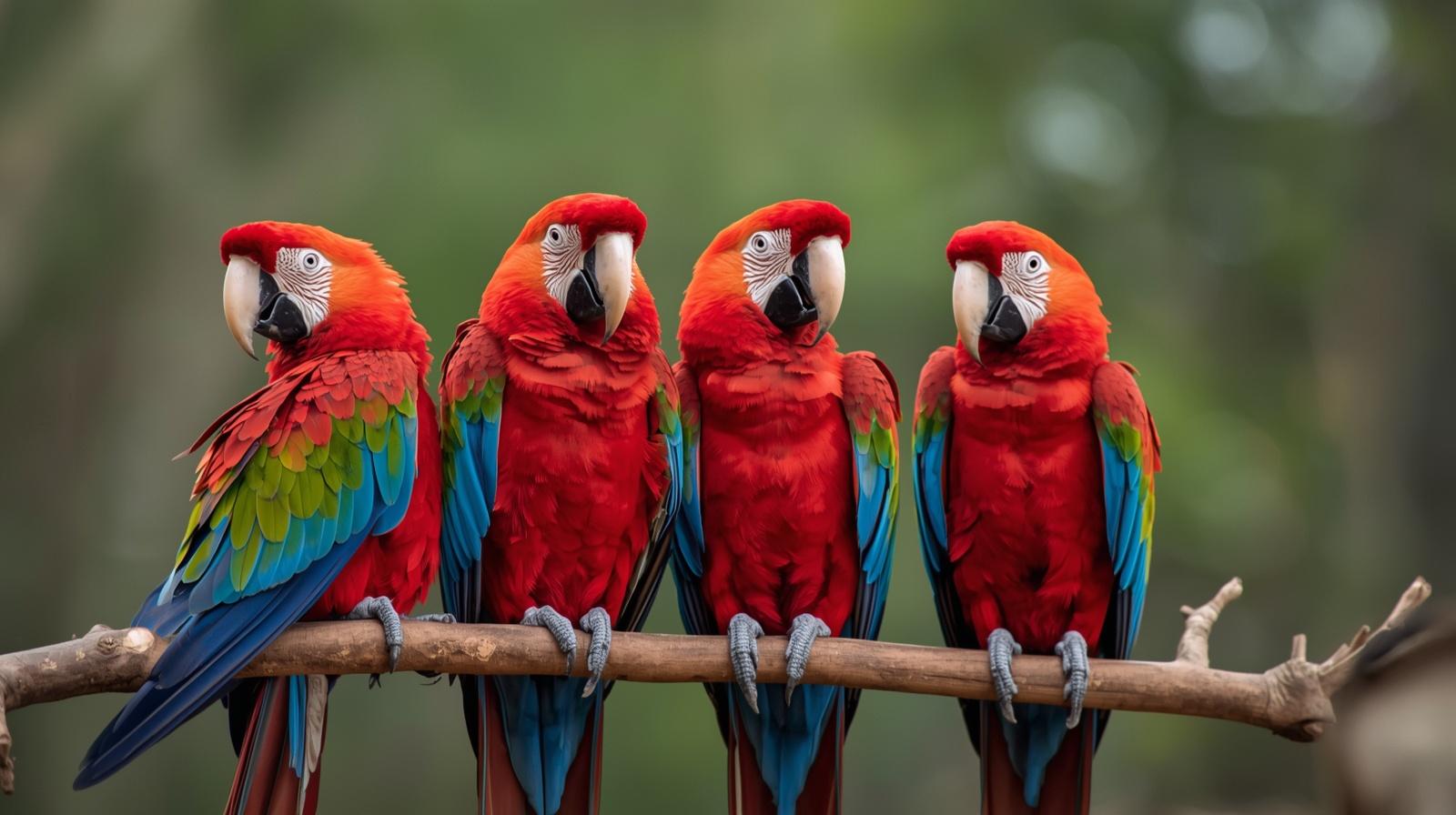
People often think the birds are stupid, yet parrots completely overturn this stereotype. They are not only capable of learning sounds but can also reproduce human speech with striking clarity,
On an airplane, flight attendants are constantly reminding us of various instructions: fasten your seatbelt, stow your tray table, adjust your seatback, and even raise the window shades. What is the

Tattooing is a form of bodily marking that has carried multiple meanings throughout human history. In ancient societies, it could signify religious devotion, serve as a symbol of tribal identity, or

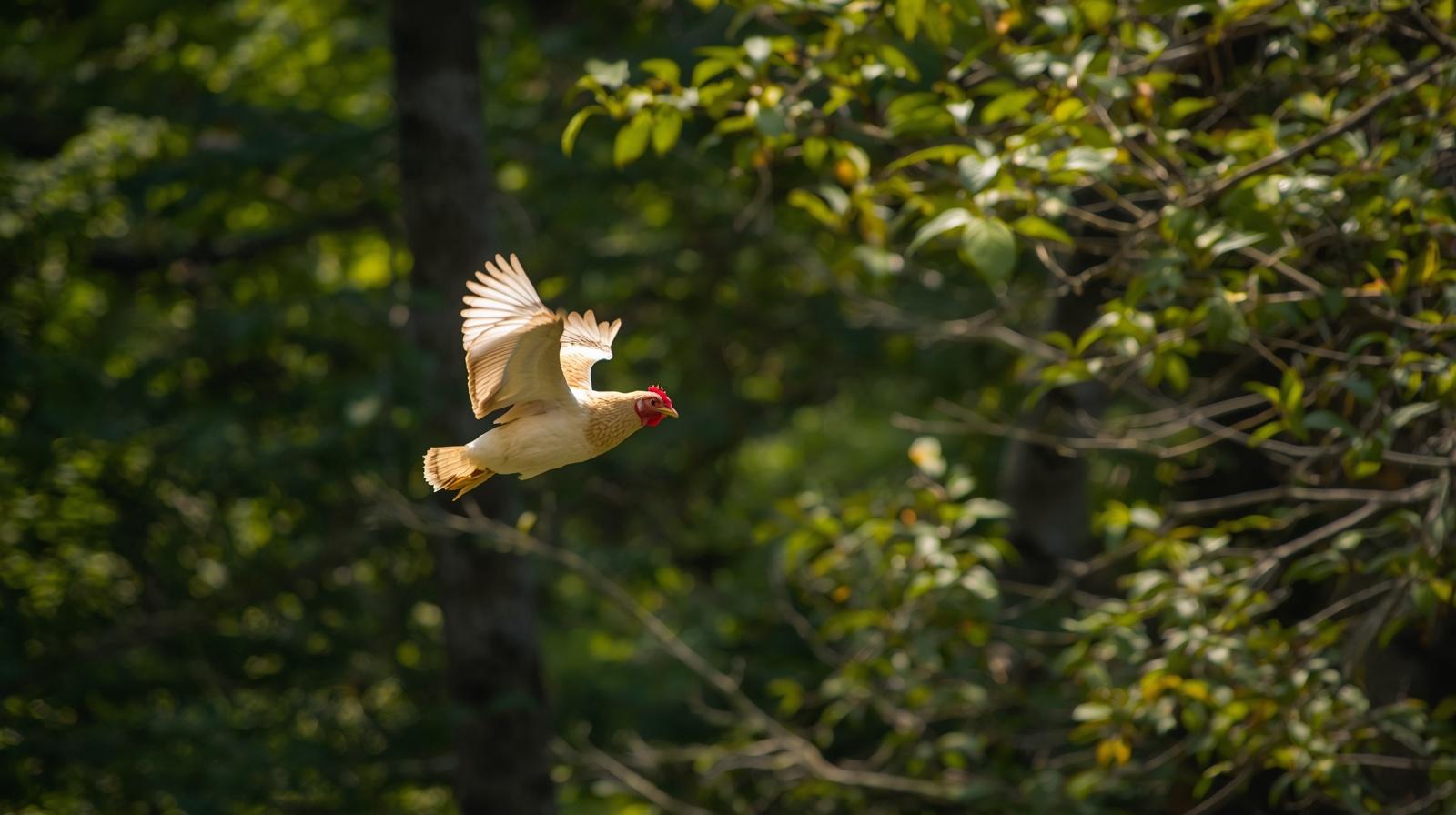
The chicken’s body is likewise covered with feathers and equipped with wings, giving the outward impression of being suited for flight. Yet why is it that they cannot soar into the sky like other
The Renaissance was a cultural and intellectual movement that arose in Europe between the fourteenth and sixteenth centuries. It first unfolded in Italian cities such as Florence, Venice, and Milan,

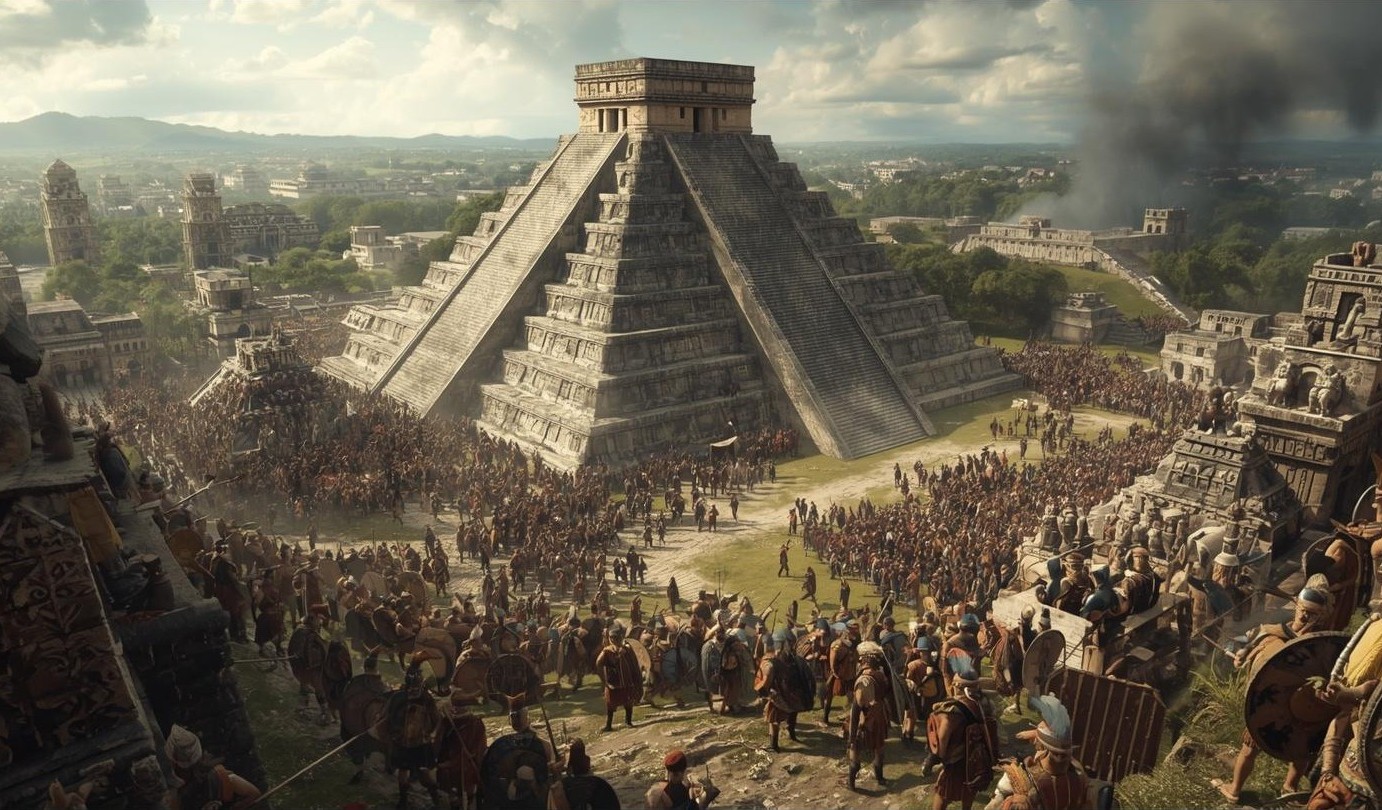
The Maya civilization was once highly advanced, achieving remarkable accomplishments in science and technology that surpassed many contemporary cultures. Yet, why was it still invaded and ultimately
The droplets that fall from the sky are not always the same. At times they are raindrops, striking eaves and streets; at other times they are snowflakes, gently covering rooftops and fields. Both

Follow us for quirky updates, fun discoveries, and a front‑row seat to the weird and wonderful world we live in.