
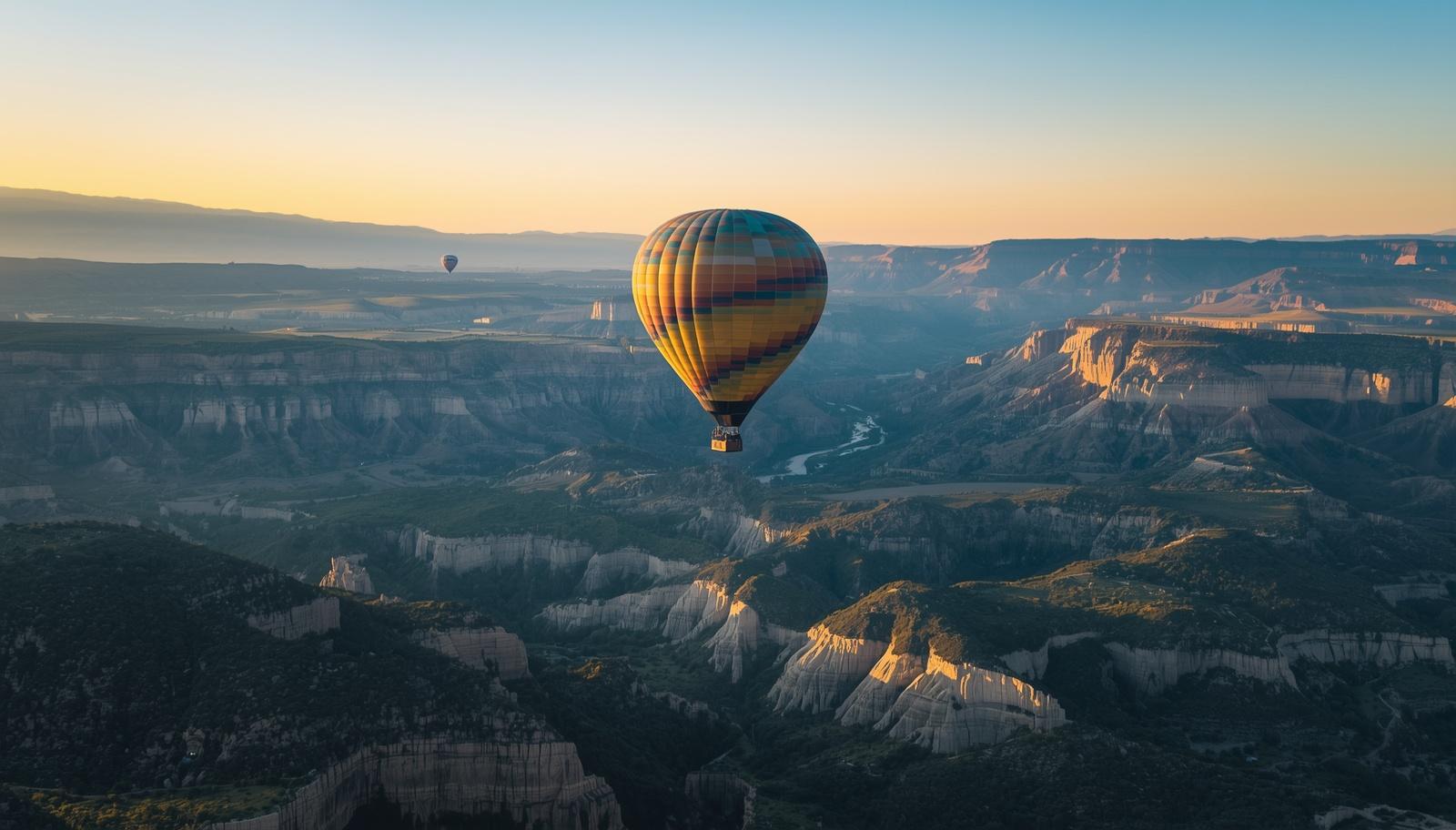
A hot air balloon is a large and graceful aircraft, symbolizing humanity’s earliest attempts to explore the sky. In eighteenth‑century France, the Montgolfier brothers first launched such a fabric envelope into the air, marking the beginning of human flight. Why can a hot air balloon fly? And if it were to develop a hole mid‑flight, would it plunge rapidly to the ground?
The balloon rises because heated air becomes less dense, creating buoyancy. When the burner heats the air inside the envelope, the molecules move faster, the air expands, and its mass per unit volume decreases. As a result, the air inside becomes lighter than the cooler air outside, and the entire system experiences an upward force.
This process follows Archimedes’ principle: any object immersed in a fluid is buoyed up by a force equal to the weight of the displaced fluid. The balloon’s envelope displaces a large volume of cooler outside air, while the hot air inside weighs less. The buoyant force therefore exceeds the balloon’s weight, allowing it to ascend.
The pilot controls altitude by adjusting the burner flame. Stronger heat raises the temperature, increasing lift and causing the balloon to rise; weaker heat lets the air cool, reducing lift and causing descent. Direction, however, cannot be steered directly—it depends on wind currents at different altitudes.
Ordinary balloons are usually filled with high‑pressure gases such as helium or compressed air. Their envelopes are thin and tightly stretched, so once punctured, the internal gas is released abruptly due to the pressure differential, causing an instantaneous burst. This violent rupture occurs because the balloon relies entirely on internal pressure to maintain its shape; once the balance is broken, the envelope collapses at once.
Hot air balloons are fundamentally different. Their envelopes are not sustained by high‑pressure gas but are instead filled with low‑pressure hot air. The fabric is broad and flexible, and the air inside is less dense than the cooler air outside, which generates buoyancy. Even if a small tear appears during flight, the hot air only escapes gradually, and the balloon does not burst suddenly like an ordinary balloon.
In simple terms, ordinary balloons depend on pressure differences to hold their form, so rupture leads to instant collapse. Hot air balloons, by contrast, ascend through the principle of buoyancy, with a structure that permits airflow, meaning small tears do not result in catastrophic failure. This is precisely why hot air balloons can navigate the skies safely.
The envelope of a hot air balloon is typically made from heat‑resistant, abrasion‑resistant synthetic fibers such as nylon or polyester fabric. These materials are treated with special coatings that allow them to withstand high temperatures without igniting, while also providing strength and flexibility. Because a hot air balloon must retain heated air for extended periods during flight, the envelope needs to resist sunlight exposure, friction, and the pull of wind forces; the chosen fabrics are therefore both lightweight and durable.
The advantages of these materials lie in their balance of safety and efficiency. Nylon fabric is light in weight, reducing the overall load and making it easier for buoyancy to exceed the system’s mass. The coatings add waterproofing and thermal protection, preventing damage in humid or high‑temperature environments. Moreover, the fabric’s pliability ensures that even if a small tear occurs, hot air will leak only gradually rather than causing an abrupt rupture. This design makes the balloon more stable in flight and significantly enhances safety.
The choice of materials for hot air balloons is the result of long periods of experimentation and refinement. They must be light enough to facilitate ascent, strong enough to guarantee safety, and resilient enough to endure high temperatures and the challenges of natural environments.
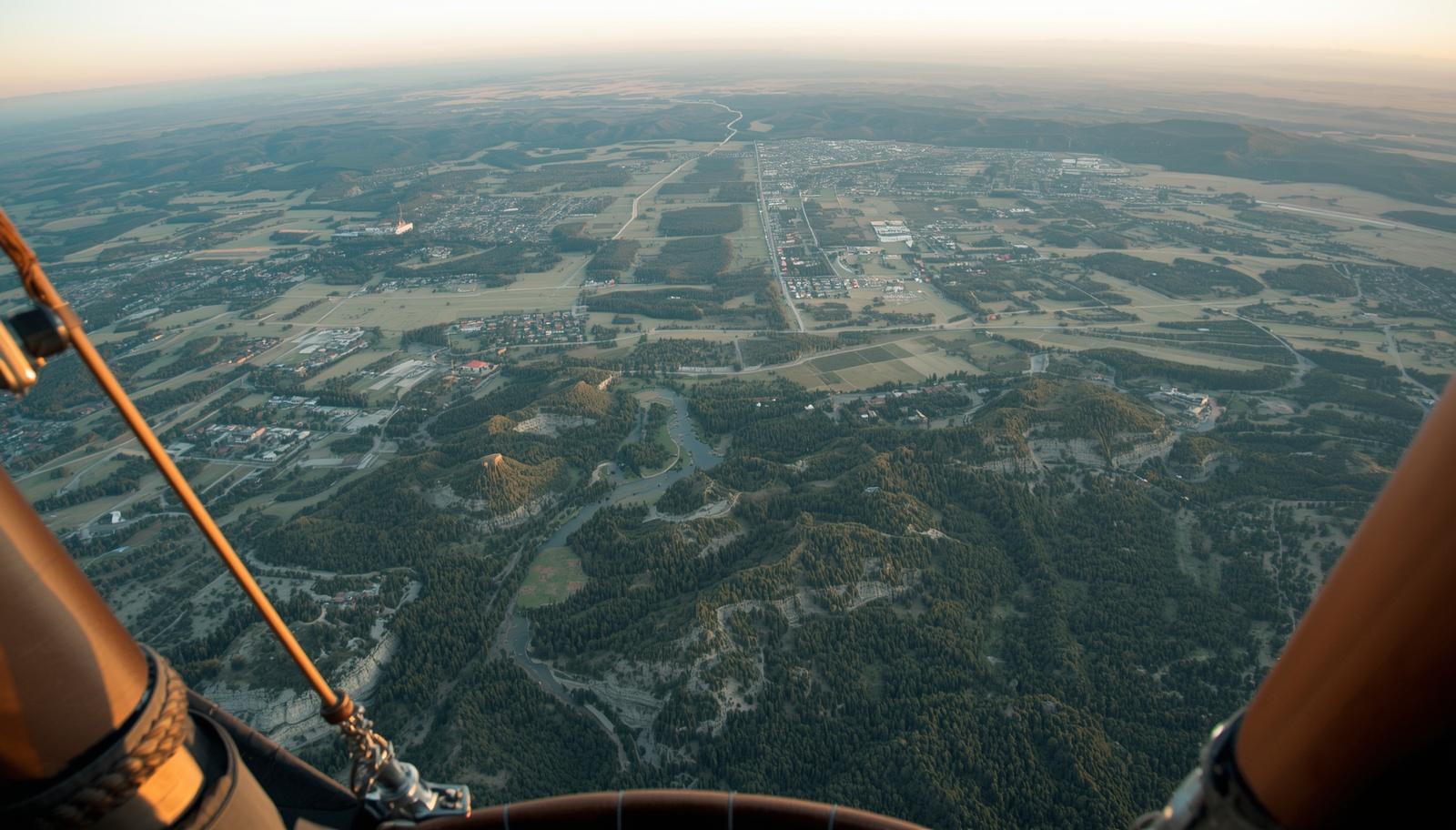
If a hot air balloon develops a tear during flight, the consequences vary significantly depending on the size and location of the rupture.
When the envelope sustains a small crack, hot air escapes gradually and buoyancy decreases step by step. Because the fabric is constructed with a ripstop weave, minor punctures are unlikely to spread into large gashes. This gives the pilot time to adjust burner output, either maintaining altitude or controlling the rate of descent. Under such circumstances, passengers can usually land safely.
If the rupture is large, hot air will escape rapidly, leaving insufficient buoyancy to support the system, and the balloon may descend sharply. A tear occurring along load tapes or seams compromises structural strength, increasing the risk of further tearing and greatly heightening danger. In such cases, the pilot must initiate an emergency landing immediately.
The fabric and structural design of hot air balloons inherently account for safety. Ripstop material limits the spread of tears, load tapes distribute stress, and vent systems allow controlled airflow. These features prevent small punctures from causing sudden explosions. Combined with pilot intervention and ground support, they provide a margin of safety even in the presence of damage.
Beyond ruptures, hot air balloons face other hazards. Flames can get out of control—if the burner malfunctions or fuel leaks, the envelope fabric may ignite. Collisions with power lines are another danger, since balloons cannot steer precisely; flying too low over towns or countryside can lead to tearing or electrocution.
Weather is also unpredictable. Sudden strong winds or unstable air currents can upset balance, forcing hard landings or even overturning the basket. Equipment failures, such as burner breakdowns or fuel shortages, can prevent the envelope from staying hot, eliminating lift. These incidents are rare but often irreversible once they occur.
Indeed, history records many balloon accidents with casualties.
In June 2025, Brazil suffered a severe hot air balloon disaster. That morning, a group of tourists ascended for what seemed a routine sightseeing trip. Mid‑flight, smoke appeared from the envelope, flames spread rapidly, and the fabric tore open. Hot air escaped, lift vanished, and the balloon began a steep descent.
Passengers panicked as the burner failed to restore control. The basket plunged with the collapsing envelope and struck the ground in a rural area. Eight people were killed and thirteen injured. The tragedy shocked Brazil and drew wide international coverage.
Yet despite such dangers, hot air balloons continue to attract riders. Their appeal lies in the unique experience: the gentle ascent, the sensation of leaving the earth behind, and the unfolding panorama of cities, countryside, or mountains beneath. The vast and majestic view from above is unlike anything offered by other forms of travel.
For many, ballooning is more than tourism—it is a symbol of romance, freedom, and adventure. It allows people to escape daily noise and immerse themselves in the quiet beauty of the sky. Floating aloft and gazing at the landscape is an experience that inspires lasting wonder.
We leverage big data to bring you the most fascinating and mind-blowing trivia. Follow us for regular updates—prepare to be amazed while leveling up your knowledge.



Majestic mountain ranges bring extraordinary landforms to the Earth. From an initial stretch of flat ground to towering peaks that pierce the clouds, how did they rise from beneath the surface and

The most captivating aspect of twins lies in their striking resemblance in appearance. When encountering twins in a crowd, the first impression is the shock of seeing two faces that look almost

Giant cruise ships, cargo vessels, and oil tankers may weigh hundreds of thousands of tons, yet they can still travel freely across the sea. By contrast, a stone with a volume and weight far smaller

Throughout the course of human history, the spread of electricity has symbolized a leap in civilization. Its emergence not only provided an entirely new source of energy but also fundamentally
A vaccine is a specially designed medical tool whose purpose is not to directly cure disease, but to “pre-train” the immune system so that the body can respond more quickly and effectively when it

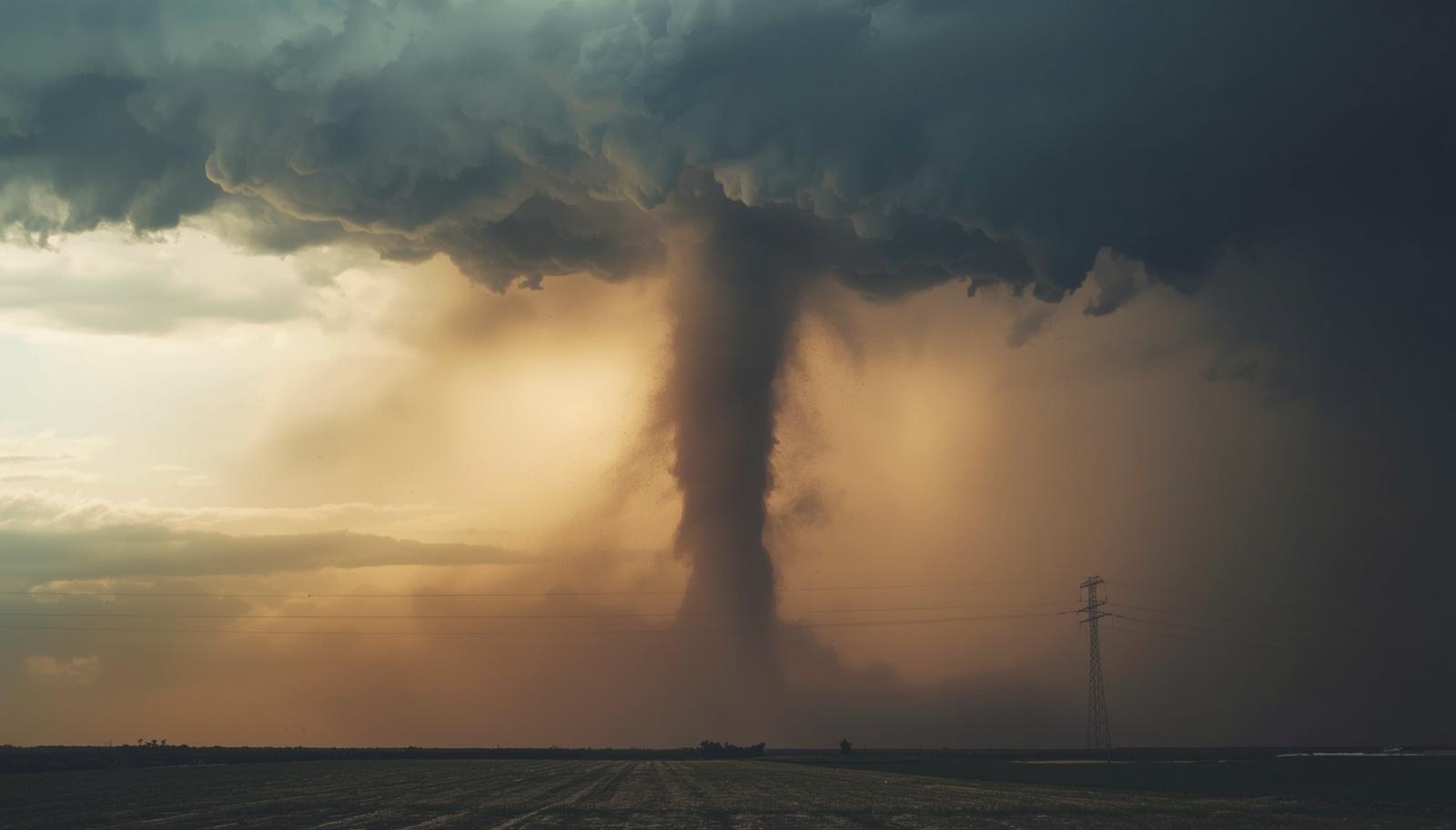
A tornado is an extreme weather phenomenon, essentially a rapidly rotating column of air formed within intense convective thunderstorm clouds. When warm, moist air collides violently with cold, dry
Venice is a city in northeastern Italy, lying close to the Adriatic Sea. What makes it unique is that the entire city is composed of numerous small islands, separated by canals, linked by bridges,

In human society, the most immediate differences often arise from appearance. Walking down the street or browsing through historical images, we find that human looks display astonishing diversity.



Follow us for quirky updates, fun discoveries, and a front‑row seat to the weird and wonderful world we live in.