
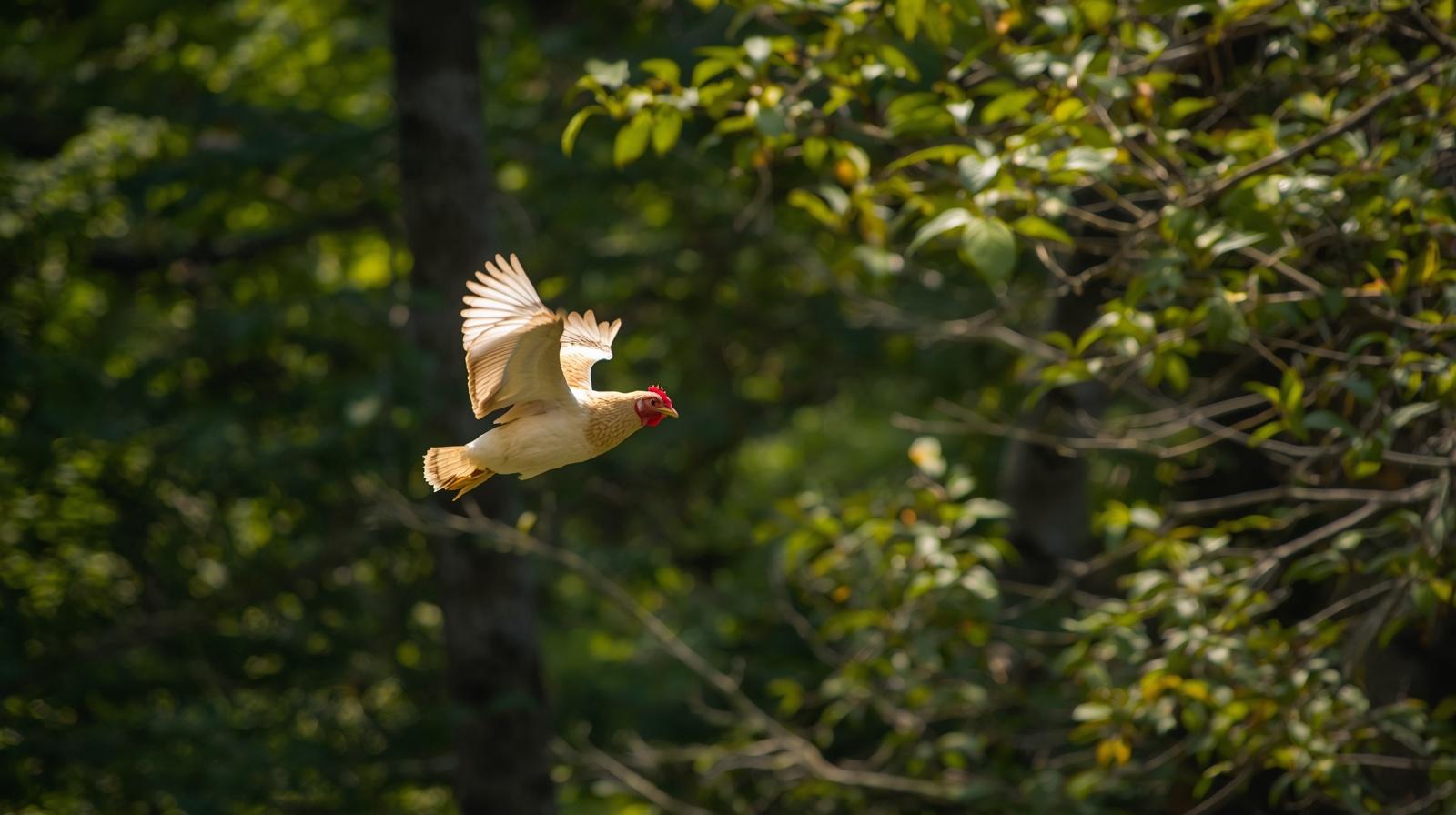
The chicken’s body is likewise covered with feathers and equipped with wings, giving the outward impression of being suited for flight. Yet why is it that they cannot soar into the sky like other birds? Is it that the shape of their wings is ill‑adapted, or that the structure of their feathers differs in some crucial way?
When we watch a chicken beating its wings, it can indeed leap briefly into the air or glide a short distance. But such movements are markedly distinct from true flight. What, then, is the underlying reason that confines chickens to mere “hopping” rather than genuine “flying”?
Although chickens possess feathers and wings, several key features make true flight difficult for them. First, their torso is relatively heavy, with body weight far exceeding the lift their wings can generate. This imbalance means that even when they beat their wings, they can only manage brief leaps rather than sustained flight.
Second, their bones are denser than those of pigeons or swallows, which have light, hollow skeletons. The thicker, heavier bones add to the overall weight. While this structure provides stability for life on the ground, it diminishes the possibility of flight.
Third, their feathers are not designed for long-distance flying. Instead, they serve primarily for protection and insulation. Their arrangement and form do not create the aerodynamic lift seen in birds specialized for flight, whose feathers are longer and shaped to maximize air flow.
Finally, their wings are relatively short, with limited span and surface area, insufficient to support their bulky bodies. Wingbeats may help them jump or glide a short distance, but they cannot sustain genuine flight.
The evolutionary history of chickens can be traced back to their ancestors—the red junglefowl (Gallus gallus) and other closely related pheasant species. These ancestors originally lived along forest edges and in grassy habitats, possessing the ability for short-distance flight. They could leap onto branches or glide briefly to evade predators.
However, as environments gradually changed, food resources on the ground became increasingly abundant, reducing the necessity of flight. Under such ecological conditions, flying turned into an energy‑consuming burden. Ancestors that could run swiftly, scratch the soil, and efficiently gather grains, insects, and seeds on the ground had a survival advantage.
Consequently, their body structure shifted toward ground‑based living: the torso grew heavier, bone density increased, wings became relatively shorter, and legs developed greater strength for sustained activity on land. Feathers also evolved more for protection and insulation rather than generating lift.
These changes represent an evolutionary trade‑off: in a food‑rich terrestrial environment, flight ceased to be the core survival skill, while stable foraging and rapid escape became more important. Over time, the ancestors of chickens gradually abandoned long‑distance flight, reinforcing traits suited to ground life, and ultimately gave rise to the body structure of the domestic chicken we see today.
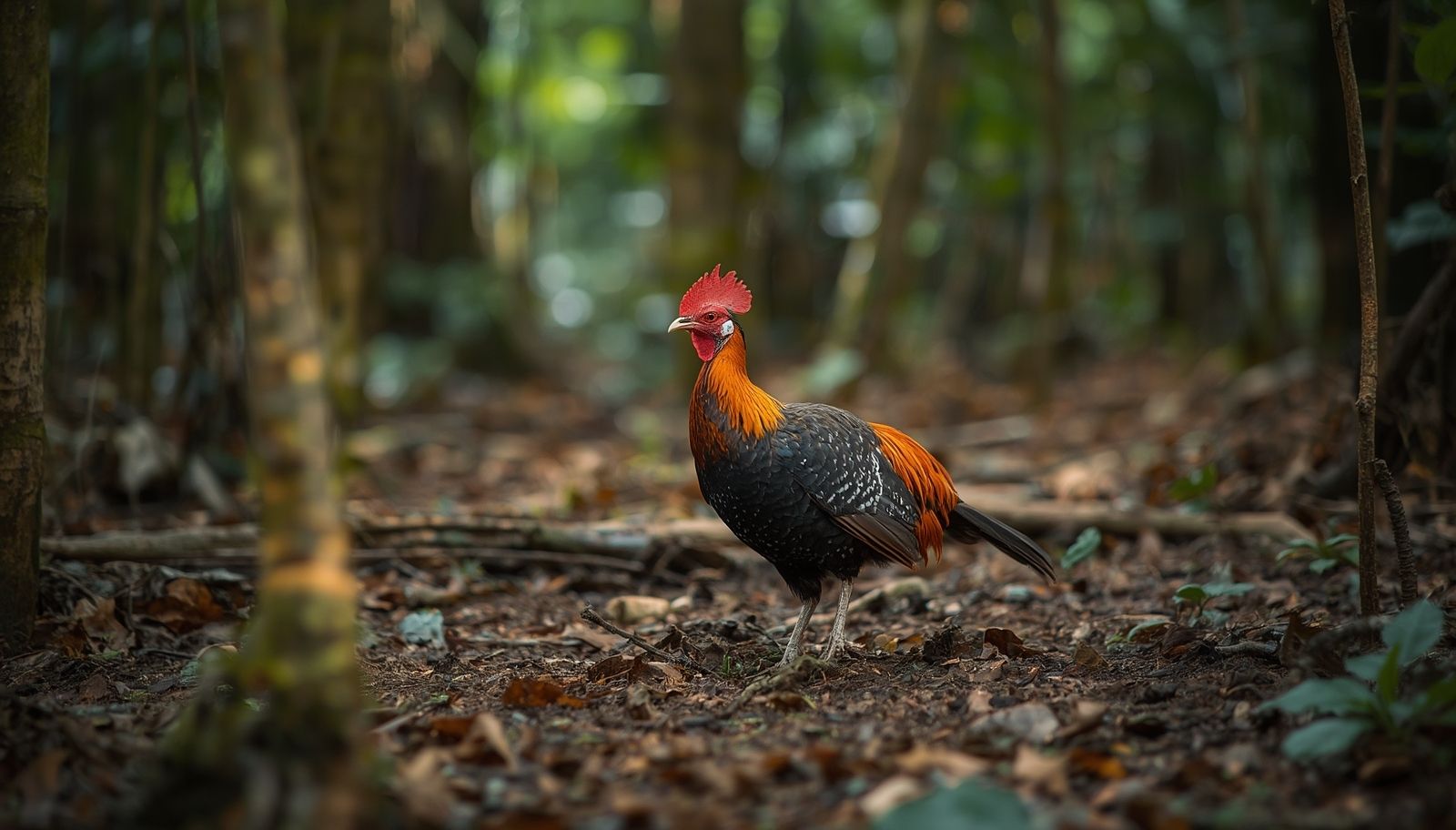 Red junglefowl
The most decisive factor behind chickens losing the ability to fly stems from human domestication. At first, people domesticated chickens for practical reasons: they provided a reliable source of eggs and meat, and were easy to confine and manage.
To make chickens better suited to human needs, selective breeding was carried out over many generations. Larger bodies, higher egg production, and richer meat were favored traits. This direction gradually altered their physical structure—torsos grew heavier, bone density increased, and wings became proportionally shorter.
Within enclosed environments, chickens no longer needed to fly to forage or escape predators. Food was supplied by humans, and safety was guaranteed. Under such conditions, flight lost its survival value and instead became an unnecessary drain on energy. As a result, the evolutionary trajectory of chickens came fully under human control: they were bred into high‑yield, ground‑dwelling poultry, while their flight capacity steadily diminished.
The “ultimate impact” of domestication is that chickens abandoned flight altogether, becoming a species dependent on human care. Their body structure, lifestyle, and even reproductive patterns were reshaped by human demands, culminating in the modern domestic chicken—an animal valued primarily for consumption, molded to serve human appetite and commercial interests.
Free‑range chickens display clear differences in body condition and behavior compared with those kept in confinement. Because they can move freely in larger spaces, their leg muscles and breast muscles receive more exercise, resulting in greater overall physical fitness. This activity also allows them to generate slightly stronger wing power, enabling longer leaps and higher glides than caged chickens—sometimes even reaching tree branches or managing brief flights.
Nevertheless, even with this relative improvement, their flight ability remains limited. Free‑range chickens still carry heavy bodies, dense bones, short wings, and feathers not optimized for long‑distance flight. These constraints mean that, although they surpass confined chickens in mobility, their flying is restricted to short hops or glides rather than sustained aerial movement.
The cost of raising free‑range chickens is typically higher. They require larger areas, more land resources, and additional management. Farmers must provide secure enclosures, protective structures, and regularly maintained grounds. Feed consumption may also rise, since free‑range chickens expend more energy and thus demand greater nutritional support.
Despite the higher expense, many countries today actively promote free‑range practices. The motivations are diverse: improving animal welfare by allowing chickens to live in more natural conditions; enhancing the quality of eggs and meat, which consumers often perceive as healthier; and addressing broader concerns about sustainability and food safety. As a result, free‑range farming has become not only an agricultural method but also a policy and market trend aligned with ethical, environmental, and consumer priorities.
Humans, in pursuit of a steady supply of meat and eggs, have long engaged in domestication and selective breeding, favoring chickens with larger bodies and higher egg yields. This direction gradually reshaped their physical structure: torsos grew heavier, wings shortened, bones became denser, and ultimately their ability to fly was lost entirely.
Behind this transformation lies a deeper truth: humanity, as the planet’s most intelligent species, holds dominion over the lives of other creatures. The disappearance of chickens’ flight was not a natural accident but the result of human needs and desires imposed upon them. To satisfy dietary preferences, people rewrote the evolutionary path of chickens, turning them into poultry wholly dependent on human care.
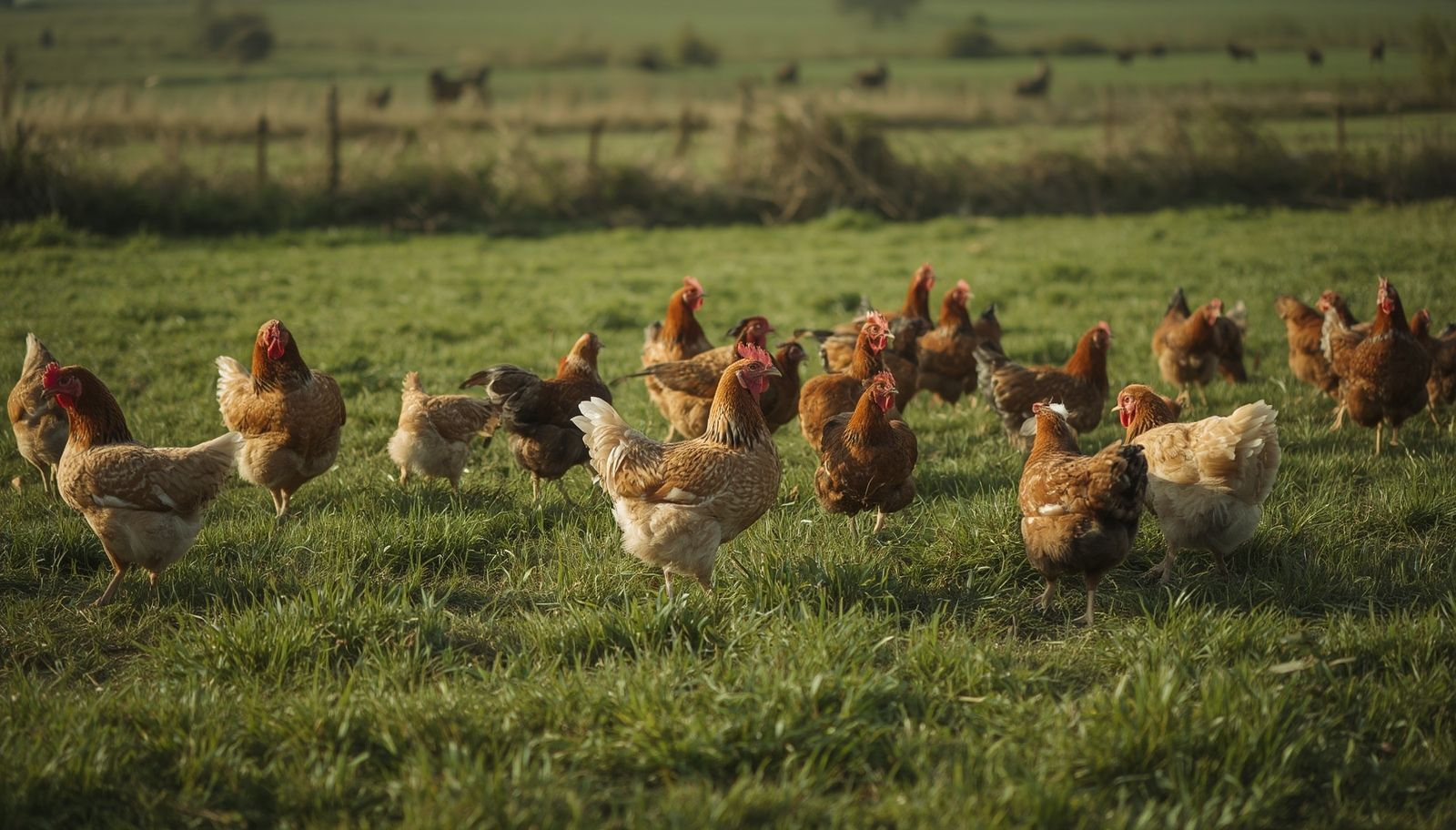 Free‑range farming is considered a more humane method of raising chickens and is endorsed by many countries.
We leverage big data to bring you the most fascinating and mind-blowing trivia. Follow us for regular updates—prepare to be amazed while leveling up your knowledge.


Majestic mountain ranges bring extraordinary landforms to the Earth. From an initial stretch of flat ground to towering peaks that pierce the clouds, how did they rise from beneath the surface and

Earthquakes often exact a heavy toll, not only causing casualties but also destroying houses, roads, and infrastructure, plunging entire communities into chaos and loss. In an instant, people may

During the Second World War, the Manhattan Project, led by American theoretical physicist Robert Oppenheimer, successfully produced the world’s first atomic bomb. The first test was conducted on July

Many people tend to confuse “bacteria” and “viruses” when talking about them. Some believe that a common cold must be caused by a bacterial infection and that taking antibiotics will cure it; others
In everyday life we often hear the terms “sugar” and saccharide,” “carbohydrate” and “starch.” These words appear similar, yet they are easily confused. Is sugar the same as carbohydrate? Is

For many people, losing weight feels like a lifelong mission. In today’s world of abundance, food shortages are no longer a concern. Instead, overnutrition has led to widespread obesity. ###

In our daily lives and studies, we often encounter situations where we forget things. It might be that we planned to bring something before leaving home but suddenly forgot, or that a piece of

The polar realms, shrouded in relentless cold and endless mystery, remain territories that most people will never set foot upon in their lifetime. The Antarctic and the Arctic lie at opposite ends of

Follow us for quirky updates, fun discoveries, and a front‑row seat to the weird and wonderful world we live in.