
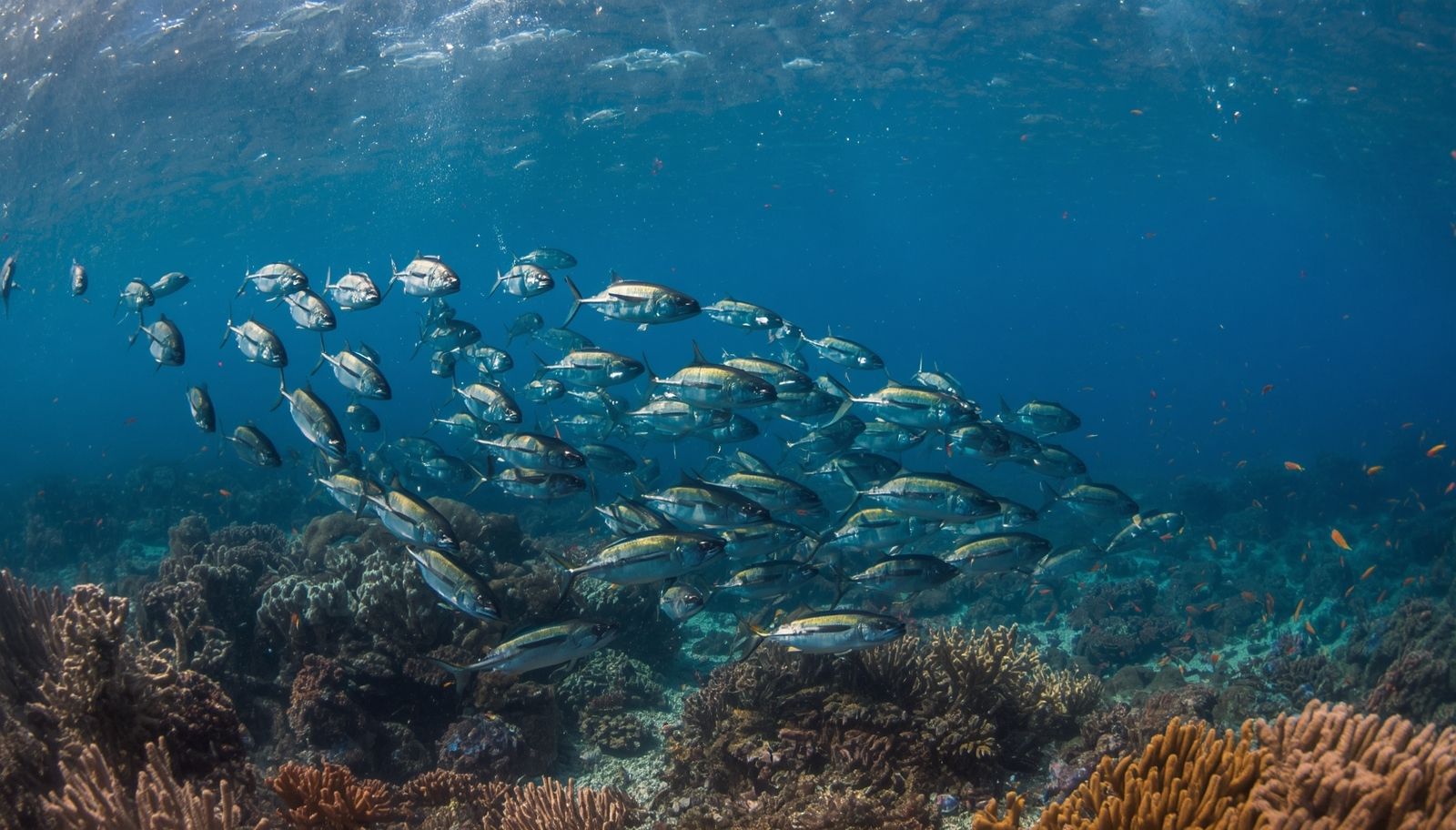
In the human world, rest and sleep are essential to life. Humans, mammals, and even most fish can conserve energy by remaining still. Yet in the vast ocean, there exists a group of creatures that can never stop: if they do, they face the danger of suffocation.
These creatures include tuna, great white sharks, and sailfish—apex predators whose breathing differs from that of ordinary fish. They must keep swimming so that seawater continually flows across their gills, enabling oxygen exchange. For them, stopping does not mean rest; it marks the beginning of death. This perpetual motion has made them symbols of speed and power in the ocean.
Scientists regard this phenomenon as a unique evolutionary strategy. Though it may seem harsh, it grants them extraordinary endurance and hunting efficiency, allowing them to rise to the very top of the marine food chain. Is this nature’s curse, or their ultimate gift?
In most fish, breathing does not require continuous swimming. They rely on buccal pumping, a mechanism that works like a natural water pump: when the fish opens its mouth, pressure in the oral cavity decreases and seawater flows in; when the mouth closes and the operculum opens, muscular contraction increases pressure, forcing water across the gill filaments for gas exchange. In this way, even when stationary, fish can obtain oxygen steadily. For species living in lakes, rivers, or reef environments, buccal pumping is an energy‑saving and reliable strategy.
By contrast, tuna, sailfish, and great white sharks—so‑called “obligate ram ventilators”—are entirely different. They depend on ram ventilation, a breathing mode akin to the intake of a jet engine: constant motion is required to maintain airflow. As they swim at high speed, seawater is naturally “rammed” into the mouth and across the gills, completing oxygen exchange. This mechanism eliminates the need for buccal and opercular pumping, allowing more muscular power to be devoted to speed and predation. The trade‑off, however, is severe: once they stop swimming, water flow ceases, respiration halts, and life is immediately endangered.
Buccal pumping represents a strategy of “survival at rest,” whereas ram ventilation embodies an evolutionary choice of “survival through perpetual motion.” The former suits stable, slow‑flowing waters; the latter has shaped obligate ram ventilators into the ocean’s speed‑driven predators, whose very existence depends on ceaseless swimming.
In ordinary fish, the swim bladder is a vital organ. It functions like a gas‑filled sac that helps regulate buoyancy, allowing fish to rise or sink in the water without relying heavily on muscular effort. This “natural buoyancy controller” enables most fish to maintain a stable posture in the water, or even remain motionless.
The pectoral fins mainly serve as “steering rudders.” Fish use them to control direction, maintain balance, and even hover in place. Because ordinary fish possess a swim bladder to adjust buoyancy, the pectoral fins do not bear much of the burden of support; instead, they are used for fine movements, such as agile turns among reefs or stabilizing the body in currents. This allows them to hold position without sinking, even when at rest.
By contrast, tuna, sailfish, and great white sharks—obligate ram‑ventilating fish—lack a functional swim bladder. Their body design has taken a different evolutionary path: abandoning the swim bladder and relying instead on powerful muscles and continuous swimming to maintain buoyancy and posture. Without a swim bladder, they cannot “float” in place like ordinary fish; if they stop swimming, gravity pulls them downward into the cold depths.
In these perpetual swimmers, the role of the pectoral fins becomes far more critical. Since they cannot depend on a gas sac to regulate buoyancy, the pectoral fins must act as “lift‑generating wings.” When tuna or sailfish swim at high speed, the angle and shape of their pectoral fins generate upward force in the water, counteracting their natural tendency to sink. This design is comparable to the ailerons of an aircraft, stabilizing the body during rapid forward motion.
The pectoral fins of perpetual swimmers are typically longer, stiffer, and capable of fine angle adjustments. They are used not only to maintain buoyancy but also to execute precise maneuvers during high‑speed predation, such as sharp turns or sudden chases. This structure allows them to combine streamlined speed with remarkable agility.
Among them, tuna have pushed pectoral fin evolution to an extreme. Tuna possess a special adaptation: they can fold their pectoral fins tightly against the body, like retractable wings. This feature is rare in ordinary fish but is a crucial secret behind tuna’s success as speed‑driven predators.
When tuna swim at high velocity, extended pectoral fins increase drag and reduce hydrodynamic efficiency. By folding them, the body becomes smoother, friction decreases, and swimming speed increases further. This “retractable pectoral fin” function is akin to a fighter jet tucking in its wings during high‑speed flight to maintain optimal aerodynamic form.
Yet when tuna need to turn, adjust depth, or stabilize, they spread their pectoral fins again, using their angles to generate lift or control direction. This flexible “open‑close mechanism” enables tuna to sustain extreme speed in straight‑line sprints while still displaying astonishing maneuverability when pursuing prey.
The “sleep” of perpetual swimmers is not the familiar state of motionless rest, but rather a form of slumber that occurs during continuous movement. Because they lack a swim bladder and rely on ram ventilation for breathing, stopping would mean suffocation; they must therefore rest while swimming.
During sleep, their swimming speed decreases noticeably, and their movements become monotonous and rhythmic, resembling an automatic cruise through the ocean. This slower pace maintains the water flow needed for respiration while reducing muscular energy expenditure, achieving a restorative effect. Their brain activity also shifts into a low‑activity state, sensory responses become dulled, and reactions to external stimuli are delayed—hallmarks of genuine sleep.
Scientific studies suggest that perpetual swimmers may enter a state of unihemispheric sleep: one hemisphere of the brain remains alert to guard against predators or sudden environmental changes, while the other hemisphere rests. This “half‑brain sleep” resembles the sleep strategies of dolphins and certain birds, representing a specialized evolutionary adaptation.
In addition, their red muscle and myoglobin play a crucial role during sleep. Even at reduced swimming speeds, red muscle continues to utilize oxygen efficiently, ensuring that they do not suffer from oxygen deprivation while in a low‑activity state.
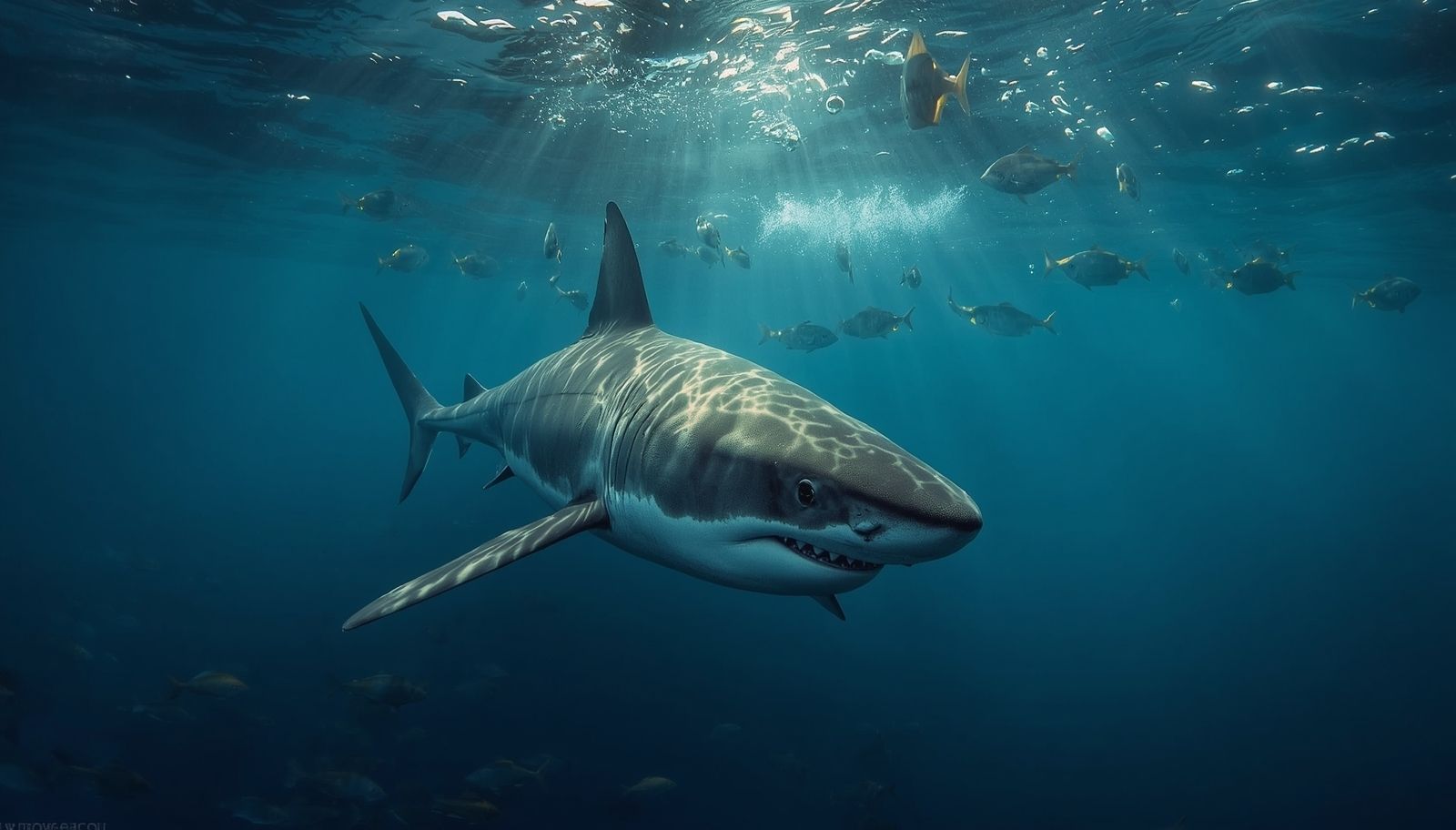 The great white shark is considered an apex predator of the ocean, but recent studies have revealed that orcas can challenge and even overturn its dominance.
Perpetual swimmers must keep moving in order to breathe, and through evolution they have acquired a remarkable set of adaptations. These traits not only compensate for their inability to stop, but also elevate them to the status of apex predators in the marine food chain.
They possess streamlined body structures. Lacking a swim bladder means they cannot rely on buoyancy to hover, but this also makes their bodies more compact and hydrodynamic, reducing drag and enabling them to slice through the water at tremendous speeds. Tuna can even fold their pectoral fins, further minimizing friction—much like a fighter jet retracting its wings to maximize efficiency.
Their respiratory system and oxygen uptake are optimized to the extreme. Through ram ventilation, seawater rushes continuously into the gill chamber during high‑speed swimming, delivering abundant oxygen. This mechanism allows sailfish to reach astonishing speeds without oxygen deprivation, making them the fastest predators in the ocean.
Their muscle structure is highly specialized. Tuna and sailfish possess large amounts of red muscle, rich in blood vessels and myoglobin, which store and transport oxygen efficiently. This supports long‑duration, endurance‑based high‑speed swimming, enabling them to combine explosive bursts of speed with prolonged pursuit of prey.
Some perpetual swimmers, such as great white sharks and tunas, have evolved a vascular system known as the retia mirabilia. This counter‑current network conserves heat, allowing them to maintain elevated body temperatures in frigid deep waters. By keeping their muscles warm and responsive, this form of regional endothermy grants them a decisive predatory advantage across diverse marine environments.
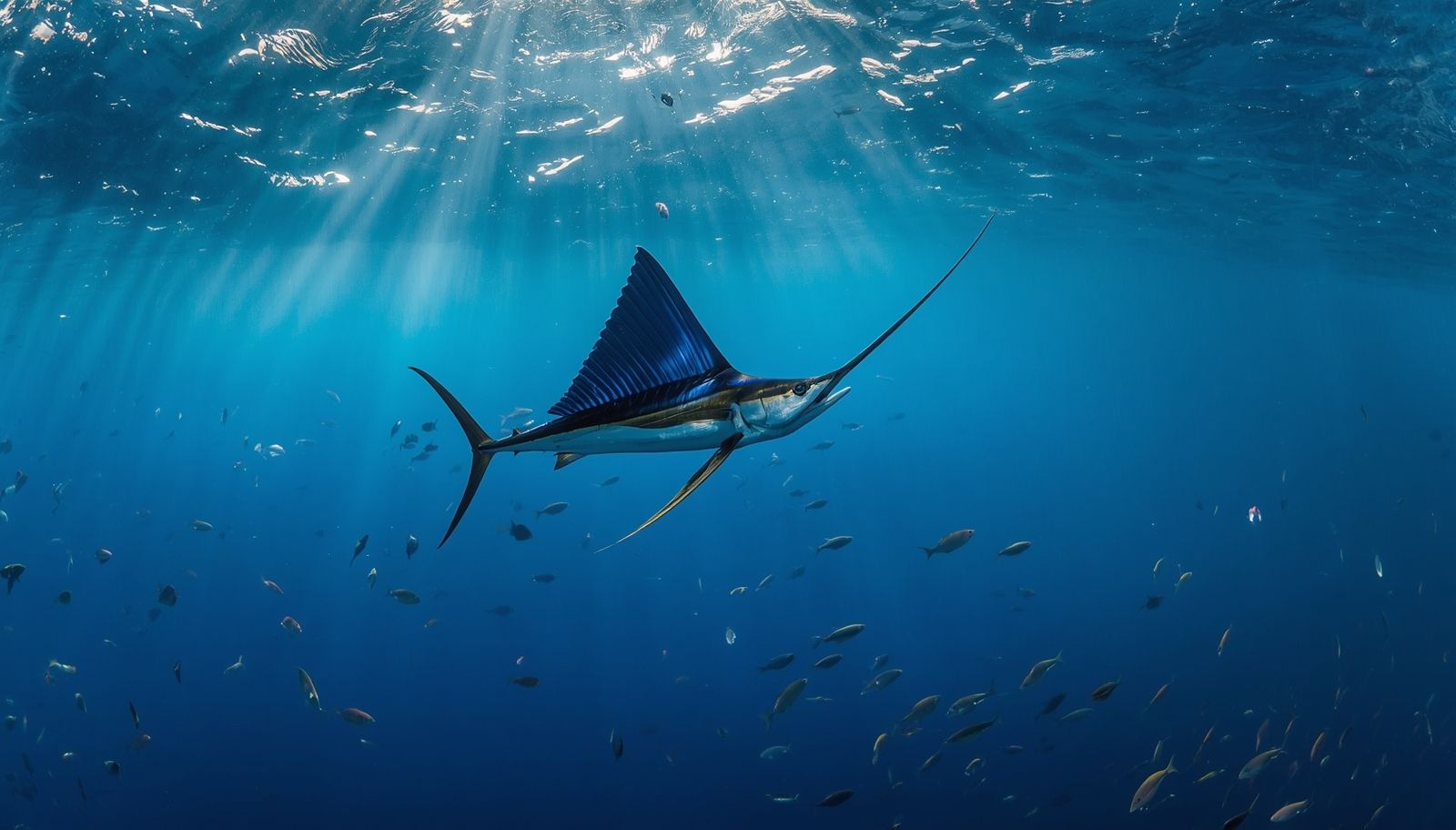 The sailfish is renowned for its incredible speed
The lives of perpetual swimmers are destined never to stop. Lacking a swim bladder, they must rely on continuous motion to breathe. This fate of “unceasing movement” has driven them, through evolution, to acquire extraordinary speed, endurance, and strength. Their very existence is a symbol of relentless forward motion.
In the human world, many people resemble these perpetual swimmers. They are born carrying immense talent and mission, fated never to live a stable or stagnant life. Scientists push the boundaries of the unknown, artists ride the waves of inspiration, and leaders shoulder responsibility in the currents of society. Their breath comes from progress; their strength arises from challenge.
Such a life may be arduous, for it offers no freedom to pause, yet it shines all the brighter because of it. Just as perpetual swimmers embody speed and power in the ocean, those who cannot stop become forces that drive civilization and innovation on the world stage. Their mission compels them to keep racing forward—but it is precisely this ceaseless pursuit that makes the world different because of them.
We leverage big data to bring you the most fascinating and mind-blowing trivia. Follow us for regular updates—prepare to be amazed while leveling up your knowledge.


The most captivating aspect of twins lies in their striking resemblance in appearance. When encountering twins in a crowd, the first impression is the shock of seeing two faces that look almost

Exfoliation, as the term suggests, refers to the process of treating the outermost layer of the skin—the stratum corneum. But what exactly is keratinized skin? What role does it play in maintaining

Alcohol has become almost indispensable in many cultures and social settings. Whether at workplace gatherings, dinners with friends, or even business negotiations, it often serves as a social

Antibiotics are a class of drugs specifically designed to combat bacteria. They interfere with vital bacterial processes, such as damaging the cell wall, blocking protein synthesis, or disrupting DNA

Teeth are among the hardest tissues in the human body, capable of withstanding immense pressure during chewing and resisting everyday wear. Yet within such a resilient structure, why does corrosion

Magnetic Levitation (Maglev) trains are famous for their high speed, but how can such heavy trains float? And why do they need to float at all? ### Operating Principle A maglev train is a

A hot air balloon is a large and graceful aircraft, symbolizing humanity’s earliest attempts to explore the sky. In eighteenth‑century France, the Montgolfier brothers first launched such a fabric

Venice is a city in northeastern Italy, lying close to the Adriatic Sea. What makes it unique is that the entire city is composed of numerous small islands, separated by canals, linked by bridges,



Follow us for quirky updates, fun discoveries, and a front‑row seat to the weird and wonderful world we live in.