

Tattooing is a form of bodily marking that has carried multiple meanings throughout human history. In ancient societies, it could signify religious devotion, serve as a symbol of tribal identity, or even function as a form of punishment; in certain cultures, it became associated with gangs or criminal groups. In more recent times, tattoos have gradually evolved into an artistic expression, a way for individuals to convey personal stories and aesthetics.
Yet one intriguing question remains: how does tattoo ink manage to stay fixed within the skin, resisting the natural cycles of metabolism and renewal?
The epidermis, dermis, and subcutaneous tissue are the three principal layers of the skin, each differing in location, function, and renewal capacity.
The epidermis forms the outermost layer, directly exposed to the external environment. Its cells undergo continuous renewal, completing a metabolic cycle roughly every three to four weeks. This process replaces aging keratinocytes and maintains the protective barrier. The epidermis primarily prevents pathogens, ultraviolet radiation, and water loss from penetrating the body.
Beneath it lies the dermis, a thicker layer rich in collagen and elastic fibers, which provide the skin with strength and resilience. Within the dermis are blood vessels, nerves, sweat glands, and hair follicles, all essential for sensation, temperature regulation, and secretion. Unlike the epidermis, the dermis does not renew on a fixed schedule; instead, it relies on repair mechanisms that activate when damage occurs.
The deepest layer is the subcutaneous tissue, composed mainly of fat and connective tissue. It cushions against external force, stores energy, and aids in insulation, while anchoring the skin to muscles or deeper structures. This layer does not follow a regular renewal cycle but changes in response to metabolic activity and energy storage.
Together, these three layers cooperate to ensure that the skin can continually refresh its outer barrier while providing stable support and protection from within.
The outcome of tattoo ink depends entirely on which layer of the skin it reaches, and only when the ink is correctly deposited into the dermis can a tattoo endure and display a clear design.
If the ink remains confined to the epidermis, the cells there will continue to renew and shed, completing a cycle roughly every three to four weeks. As the keratinized cells are replaced, the ink is lost along with them, preventing any lasting pattern from forming.
If the ink penetrates into the subcutaneous tissue, it enters the zone of fat and connective tissue. This layer is not suited to hold pigment; the ink tends to spread or form irregular blotches, making it unstable and aesthetically undesirable.
The true permanence of a tattoo comes from ink deposited in the dermis. Unlike the epidermis, the dermis does not undergo regular renewal. Its stable structure, rich in collagen and connective fibers, can encapsulate the pigment particles and keep them fixed within the skin. This is why tattoos can remain sharp and visible for many years.
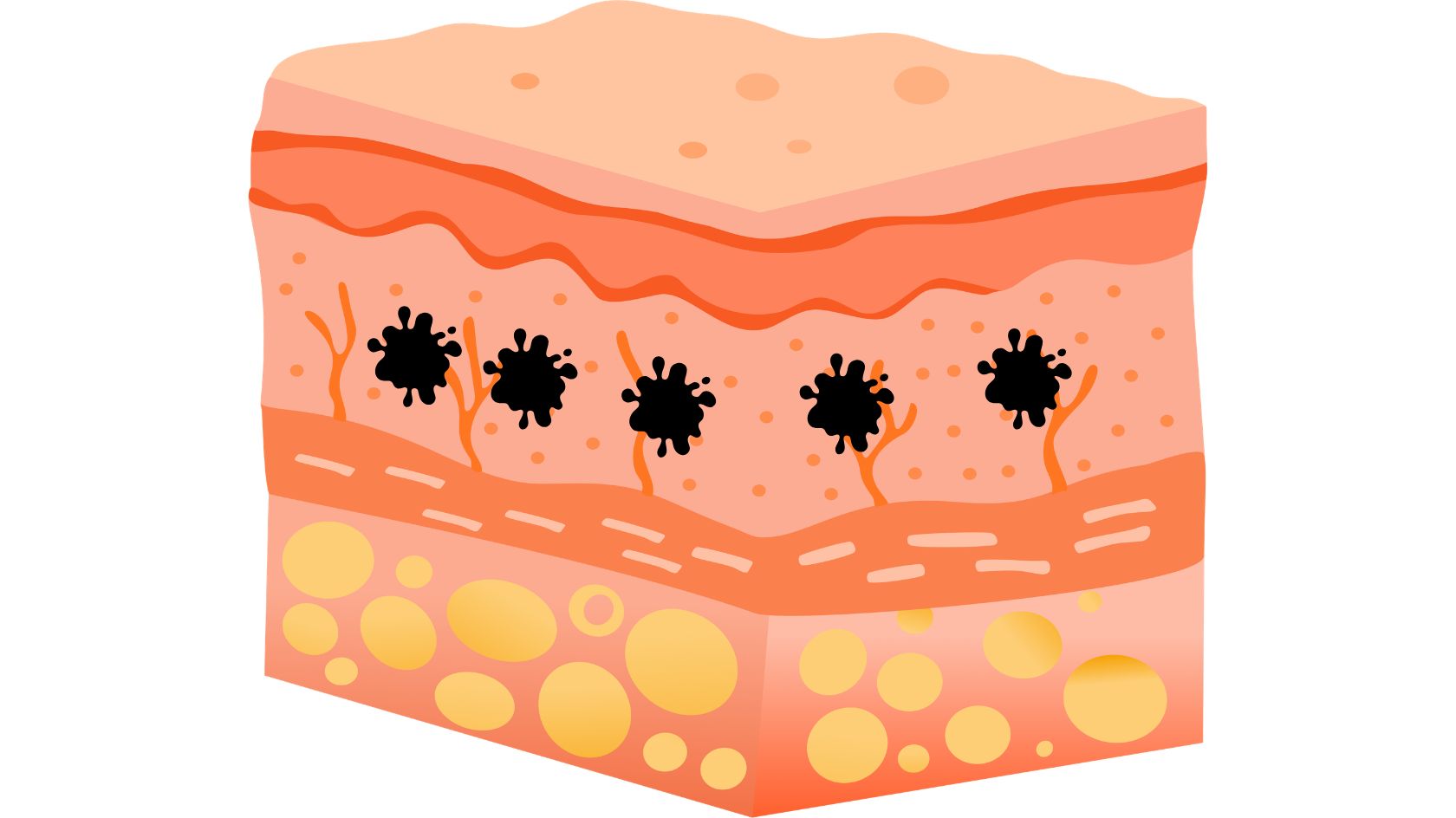 Tattoo ink must be precisely deposited into the dermis in order to remain long‑lasting.
Tattooing is essentially a precise technique of “delivering ink into the skin.” As the needle rapidly punctures the surface, it penetrates beyond the epidermis and deposits ink directly into the dermis.
During the procedure, the needle does not simply plunge once but moves in and out at high speed, gradually pushing ink into the spaces between dermal cells. In this way, pigment particles become lodged within the dermal structure.
Once the ink is introduced into the dermis, the body’s immune system immediately mounts a defensive response. Macrophages play the central role here. These immune cells specialize in engulfing foreign material, normally clearing bacteria, dead cells, or other unwanted debris. When ink particles appear, macrophages treat them as invaders, attempting to surround and ingest the pigment.
Yet tattoo ink is chemically stable and relatively large in size, unlike bacteria or cellular fragments that can be broken down. Macrophages may succeed in swallowing the pigment, but they cannot digest it into disposable components. Instead, they encapsulate the ink, trapping it inside themselves and immobilizing it within the dermis.
Macrophages, however, are not immortal. Over time they age, lose function, and eventually die. When a pigment‑laden macrophage reaches the end of its life, its membrane breaks down, releasing the ink particles back into the dermal tissue.
These freed pigments do not vanish; they attract new macrophages, which repeat the same cycle—engulfing, failing to digest, and encapsulating the ink once more. As a result, tattoo pigment persists in the dermis through a continuous “relay” of macrophages, passing from one cell to another, ensuring the design remains visible for years.
When it comes to removing tattoos, several methods exist. The most traditional is surgical excision, in which the inked skin is cut away and sutured. While this guarantees complete removal, it inevitably leaves scarring and is therefore used mainly for small tattoos.
Another option is dermabrasion, which employs mechanical abrasion or chemical agents to strip away the upper layers of skin, carrying the pigment with them. However, this approach is limited in effectiveness and often results in uneven skin texture. By contrast, the most widely used modern technique is laser removal, valued for its ability to gradually fade tattoos without severely damaging the surrounding skin.
The principle behind laser removal is “selective photothermolysis.” Different ink pigments absorb specific wavelengths of laser light. When the laser energy is concentrated on the pigment, the particles heat up rapidly and shatter into smaller fragments. Once reduced in size, these fragments can be more readily engulfed by macrophages, which then transport them through the lymphatic system for clearance. Because the ink must be broken down in stages, multiple treatment sessions are usually required, each progressively lightening the tattoo.
The response of tattoo ink to laser treatment varies by color. Black and blue pigments absorb energy most efficiently and are therefore easier to remove, while lighter shades such as yellow or green require more precise wavelengths to achieve fragmentation. This technique combines physical energy with the body’s immune clearance, allowing tattoos to fade gradually while preserving the integrity of the skin.
Even so, laser removal does not guarantee complete erasure. The size, color, and depth of pigment particles all influence the outcome. Dark inks generally respond well, but lighter or specialty pigments may resist absorption, leaving residual traces. In addition, ink deposited deep within the skin may lie beyond the reach of laser energy, resulting in partial persistence. Although the immune system continues to clear fragments, the process is not absolute, often yielding only fading rather than total disappearance.
For this reason, many individuals find that even after extensive treatment, faint shadows or pigment residues remain.
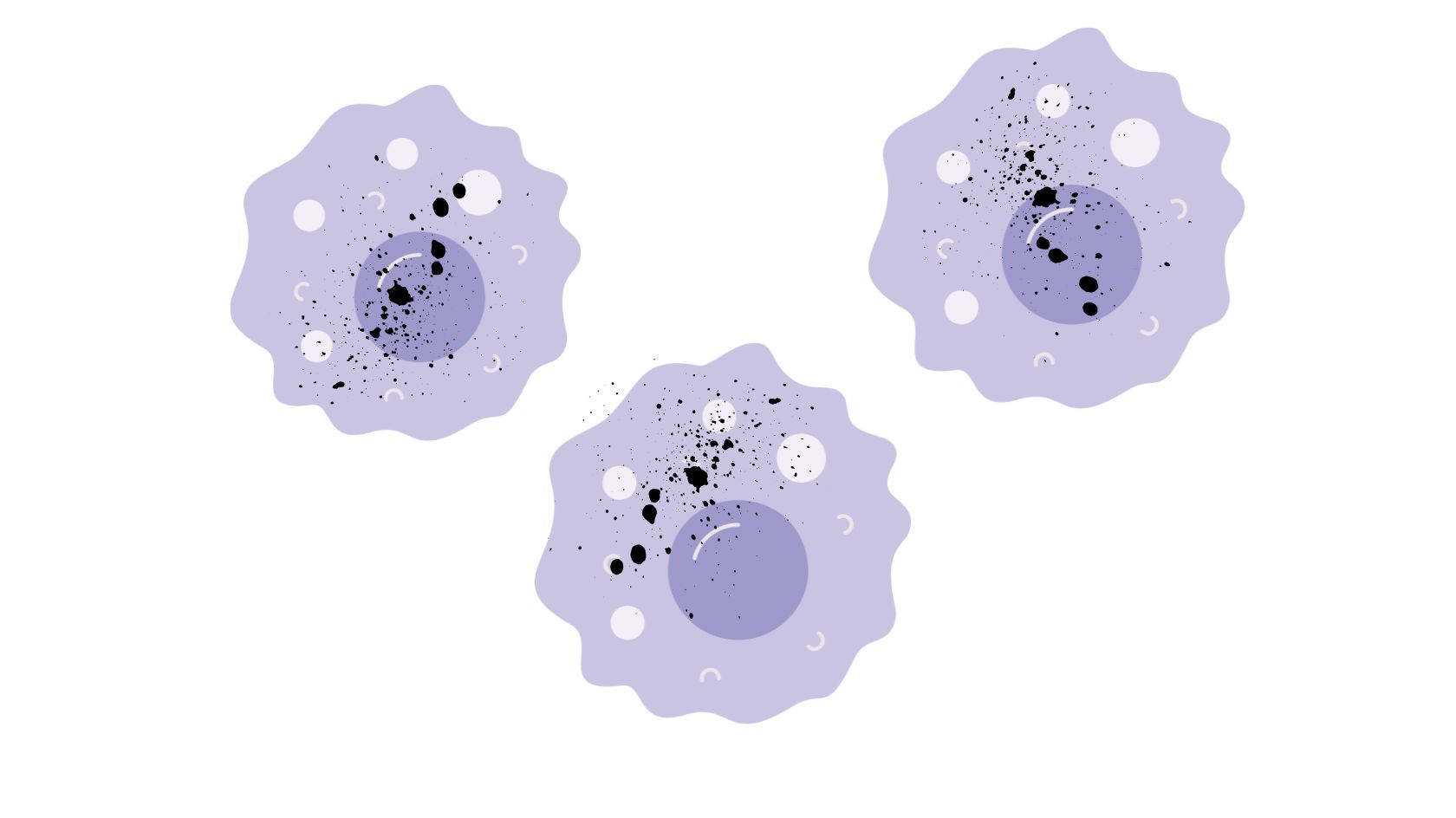 If ink particles are shattered into smaller fragments by laser pulses, macrophages can more readily engulf them and facilitate their clearance from the body.
At its core, tattooing is the forcible insertion of pigment particles into the dermis. The presence of these foreign bodies immediately provokes an immune response. Macrophages repeatedly attempt to engulf the ink, yet they cannot break it down, and so they encapsulate the particles instead. When these cells die, the pigment is released back into the tissue, drawing new macrophages to repeat the same futile cycle. This creates a perpetual loop that continues throughout life.
Such a cycle means the body is locked in a state of “struggle without victory.” The immune system expends resources endlessly, while the skin endures the constant burden of foreign material. Although this may not always lead to overt disease, it represents a form of chronic irritation.
In other words, while tattoos serve as expressions of culture and art, physiologically they embody the body’s lifelong confrontation with foreign particles—a challenge that persists indefinitely and, in a sense, constitutes a subtle form of harm.
We leverage big data to bring you the most fascinating and mind-blowing trivia. Follow us for regular updates—prepare to be amazed while leveling up your knowledge.


On an airplane, flight attendants are constantly reminding us of various instructions: fasten your seatbelt, stow your tray table, adjust your seatback, and even raise the window shades. What is the

Volcanoes are breathtakingly majestic, drawing countless visitors to admire their scenery. But what would happen if someone were to slip and fall into one? ### Density The density of lava is
The Sun we see every day brings us warmth, light, and vitality. Yet while we take it for granted, have we ever wondered why the Sun can continuously provide energy without end? Where does its

Earthquakes often exact a heavy toll, not only causing casualties but also destroying houses, roads, and infrastructure, plunging entire communities into chaos and loss. In an instant, people may

Human sex is not only a fundamental biological trait but also a force that profoundly shapes the structure and functioning of society, influencing family roles, cultural norms, and institutional

The current global situation of myopia has become a significant public health issue. With the advance of urbanization and the widespread use of technology, human lifestyles have undergone profound

In our daily lives and studies, we often encounter situations where we forget things. It might be that we planned to bring something before leaving home but suddenly forgot, or that a piece of

The Maya civilization was once highly advanced, achieving remarkable accomplishments in science and technology that surpassed many contemporary cultures. Yet, why was it still invaded and ultimately



Follow us for quirky updates, fun discoveries, and a front‑row seat to the weird and wonderful world we live in.