
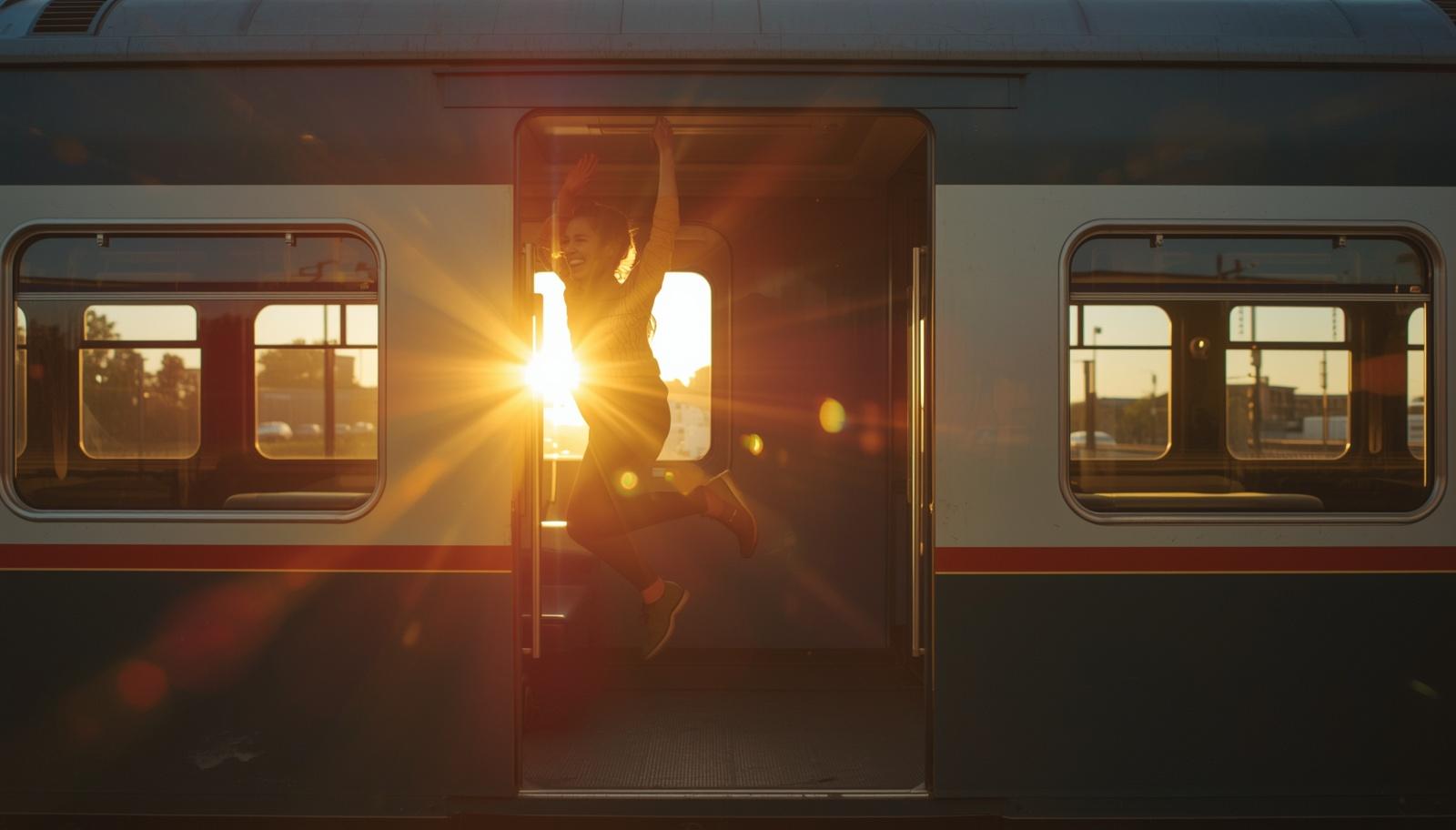
For many people, trains are part of everyday life. Why is it that when you jump inside a train carriage, you land back in the same place instead of falling backward? And what happens if you jump on top of the train instead?
When you jump inside a train carriage, you usually land in the same spot. This is due to inertia and relative motion. As the train moves forward at a certain speed, both the passengers and the air inside the carriage move with it. When you jump, your body temporarily leaves the floor but still retains the train’s forward velocity, so you continue “moving with the train” while in the air. By the time you land, your position relative to the floor has barely changed, making it appear as though you landed exactly where you started.
If the train suddenly accelerates or decelerates, the situation changes. Because your body maintains its original speed, a sudden stop may cause you to fall forward, while a sudden acceleration may make you shift backward. These outcomes are explained by the law of inertia: an object will maintain its state of motion unless acted upon by an external force.
Jumping on the roof of a train is entirely different. Although you initially retain the train’s forward speed when you leap, the surrounding air does not move with the train. Once you leave the roof, you are immediately met with strong air resistance, which gradually slows your forward velocity. As the train continues moving ahead, your relative speed decreases, causing you to land farther back—or even be thrown toward the rear of the train.
This phenomenon is essentially the combined effect of inertia and air resistance. Inertia allows you to keep the train’s speed when you jump, but the stationary air exerts drag that reduces it. Since the train keeps moving quickly, your position relative to the roof is no longer fixed, so you cannot land in the same spot as you would inside the carriage. This is why jumping outside a fast-moving vehicle is extremely dangerous: beyond the risk of falling, you are also exposed to intense airflow.
But what if the train’s windows are opened, allowing outside air to rush into the carriage?
In that case, the situation becomes more complex. Although passengers and the carriage still move forward with the train, the inflow of stationary air creates turbulence and drag. This reduces your forward speed slightly while you are in the air.
As a result, you would still land roughly in the same place, but with minor displacement or instability. The extent of this effect depends on the train’s speed and how wide the windows are opened: small openings cause little change, while wide-open windows at high speed let in stronger airflow, making you feel as though the wind is pushing you backward during the jump.
Human beings on Earth are not truly stationary. Although we feel as if we are standing still on the ground, in reality we are moving forward at tremendous speed with the Earth itself. As the Earth rotates, a person at the equator is spinning at over a thousand kilometers per hour; at the same time, the Earth revolves around the Sun, carrying us along at about thirty kilometers per second. We do not sense these velocities because inertia keeps us moving in perfect synchrony with the Earth.
In other words, our bodies are already “programmed” with the Earth’s motion. Whether we walk, sit, or sleep, all of these everyday actions take place against the backdrop of the Earth’s rapid movement—yet we remain unaware of it. It is much like being inside a smoothly running train: passengers appear still, but they are in fact moving with the train. Our apparent stillness on Earth is only relative to its surface; on the cosmic scale, we are always in motion.
This inertia not only ensures that we are not flung off the planet, but also shapes the rhythm of our lives. The alternation of day and night and the cycle of the seasons are direct results of Earth’s inertial motion. Human biological rhythms, agricultural practices, and even cultural festivals have all taken form within this ongoing movement. From this perspective, our existence is essentially a “journey carried forward by Earth,” a voyage so steady that we often forget we are traveling at high speed.
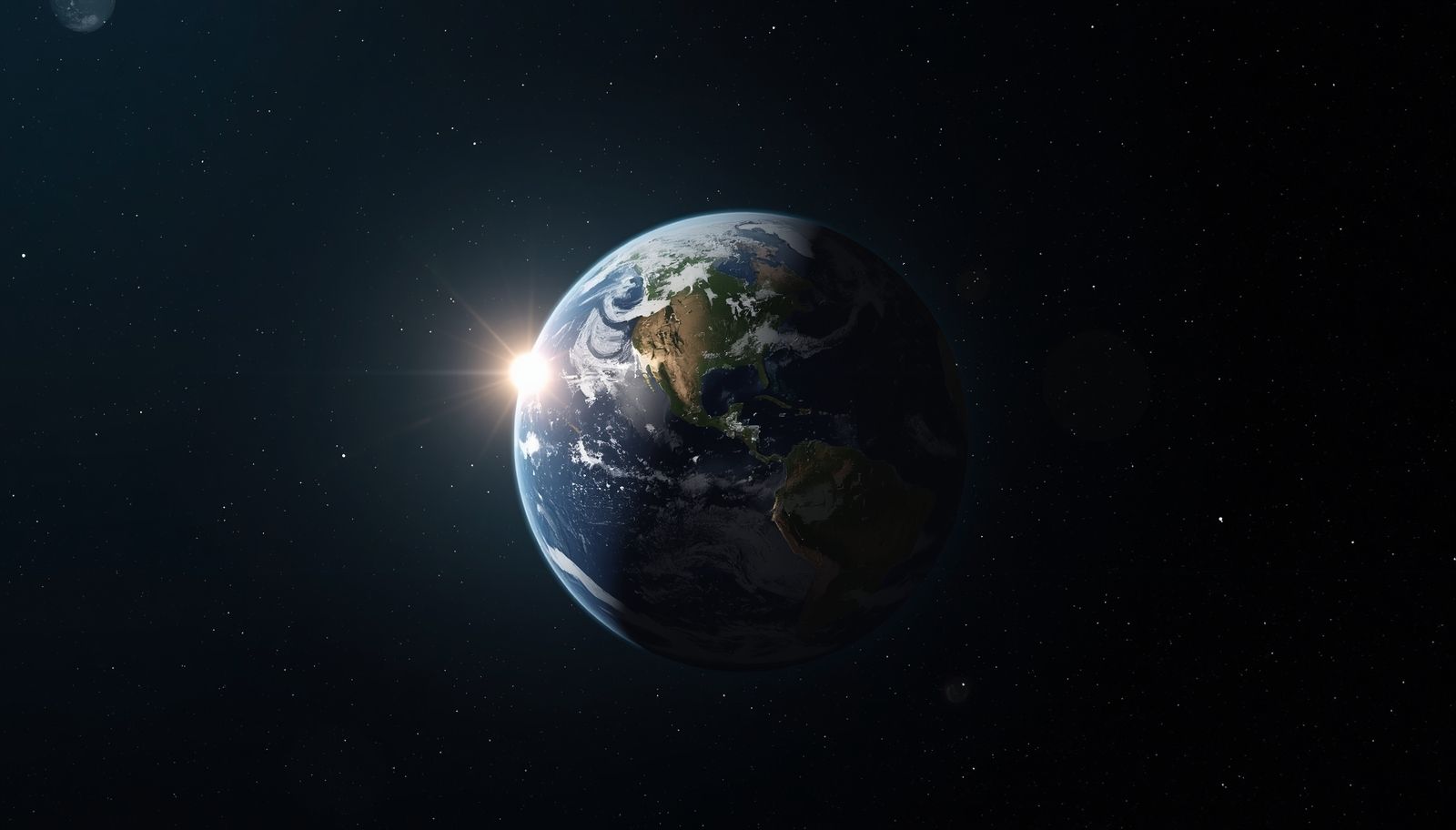 The Earth is in fact carrying us forward at high speed
We leverage big data to bring you the most fascinating and mind-blowing trivia. Follow us for regular updates—prepare to be amazed while leveling up your knowledge.


Whether bizarre and fantastical events or ordinary, trivial matters, they all appear in our dreams. Some dreams are so vivid that we remember them clearly after waking, while others vanish instantly
Human sex is not only a fundamental biological trait but also a force that profoundly shapes the structure and functioning of society, influencing family roles, cultural norms, and institutional

The current global situation of myopia has become a significant public health issue. With the advance of urbanization and the widespread use of technology, human lifestyles have undergone profound

A breeze drifts by, as if pushing away the stifling air and bringing with it a refreshing coolness. The leaves sway in response, a gentle touch brushes the cheeks, invigorating the spirit and easing

The tender green of spring, the heat of summer, the golden hues of autumn, and the chill of winter—people have long grown accustomed to this cycle. Yet how many have paused to wonder: what force lies

In our daily lives and studies, we often encounter situations where we forget things. It might be that we planned to bring something before leaving home but suddenly forgot, or that a piece of

Exfoliation, as the term suggests, refers to the process of treating the outermost layer of the skin—the stratum corneum. But what exactly is keratinized skin? What role does it play in maintaining

Venice is a city in northeastern Italy, lying close to the Adriatic Sea. What makes it unique is that the entire city is composed of numerous small islands, separated by canals, linked by bridges,



Follow us for quirky updates, fun discoveries, and a front‑row seat to the weird and wonderful world we live in.