
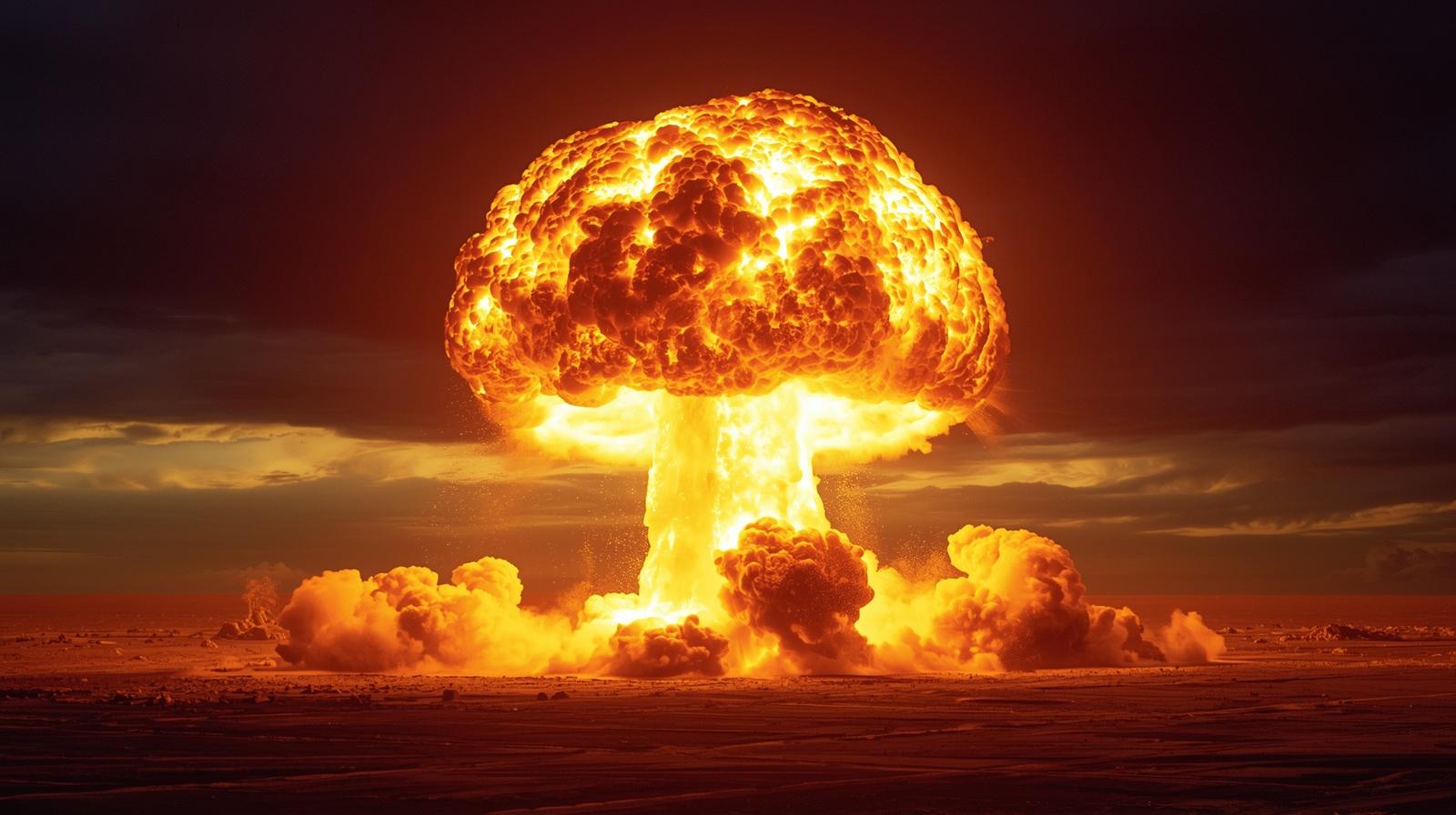
During the Second World War, the Manhattan Project, led by American theoretical physicist Robert Oppenheimer, successfully produced the world’s first atomic bomb. The first test was conducted on July 16, 1945. The United States eventually used atomic bombs to strike Hiroshima and Nagasaki, forcing Japan into unconditional surrender and bringing the war to an end. From the moment the atomic bomb appeared, the world had entered the nuclear age.
The destructive power of the atomic bomb is beyond imagination, and after years of development, its force has only increased, to the point where it could annihilate civilization. Why does it possess such immense power?
The visible matter in the world is primarily composed of atoms. At the center of each atom lies a nucleus, which is made up of protons and neutrons. Protons carry a positive charge, while neutrons are electrically neutral. The number of protons in the nucleus determines the element: oxygen has 8 protons, carbon has 6. Within a single element, atoms may contain different numbers of neutrons; these variations are called isotopes. For example, carbon-12 has 6 protons and 6 neutrons, while carbon-13 has 6 protons and 7 neutrons. Thus, carbon-12 and carbon-13 are isotopes: they share the same number of protons but differ in neutrons. Isotopes not only differ in mass but may also vary in stability.
Because protons are positively charged, they repel one another under Coulomb force. Neutrons, however, provide a “glue-like” effect through the strong nuclear force, binding protons together and counteracting their repulsion, thereby stabilizing the nucleus. This explains why isotopes differ in stability.
Although neutrons can enhance stability, having too many disrupts the balance and increases instability. Each element has an optimal ratio of protons to neutrons for stability—for instance, oxygen-16 (8 protons and 8 neutrons), iron-56 (26 protons and 30 neutrons), and uranium-238 (92 protons and 146 neutrons). In general, the greater the number of protons, the stronger the repulsive force, and thus more neutrons are required to maintain stability.
In certain heavy elements, the nucleus becomes unstable because it contains too many protons and neutrons, and under such conditions nuclear fission may occur. The process of fission can be understood as the nucleus being “torn apart” into two smaller nuclei when struck by an external force or a neutron, while simultaneously releasing additional neutrons and an immense amount of energy.
Take uranium‑235 or plutonium‑239 as examples: when a neutron enters the nucleus, the balance among the nucleons is disrupted, causing the nucleus to split into two lighter fragments. This division not only releases several new neutrons but also liberates a vast quantity of energy. The newly produced neutrons may then collide with other nuclei, triggering a chain reaction. It is precisely this cascading effect that allows nuclear fission to unleash extraordinary energy in an extremely short time.
The source of this energy lies in the principle of mass–energy equivalence: the total mass of the fission products is slightly less than the combined mass of the original nucleus and the incoming neutron. This “missing mass” is converted into energy. Because the square of the speed of light is an enormous number, even a minute difference in mass can be transformed into tremendous energy. This is why, when heavy elements undergo fission in an unstable state, they can release a force powerful enough to obliterate an entire city.
When an atomic bomb explodes, the energy released is not only light and heat but also an immensely powerful shockwave. This shockwave arises from the sudden heating and expansion of air at the moment of detonation, creating a high‑pressure zone that surges outward like a massive “wall of air” moving at supersonic speed. Its force is strong enough to demolish buildings, snap trees, and even hurl people through the air.
Near the epicenter, the rise in pressure is staggering—within just a few milliseconds it can exceed normal atmospheric pressure by dozens of times. Such a pressure differential causes walls to collapse instantly, shatters window glass, and can even twist metal structures. As the shockwave propagates outward, its speed gradually decreases, yet it remains capable of inflicting large‑scale destruction across several kilometers.
Even more terrifying is that the shockwave is not a single instantaneous push, but a sequence of compression followed by suction. After the high‑pressure front passes, a low‑pressure backflow follows, pulling loose objects back toward the blast center and creating “secondary destruction.” Thus, the shockwave from an atomic bomb is not merely a violent thrust but a compound force of devastation, powerful enough to reduce an entire city to ruins in a matter of moments.
When an atomic bomb explodes, in addition to the shockwave, another devastating force is thermal radiation. At the instant of detonation, nuclear reactions release extremely high temperatures—reaching millions to tens of millions of degrees in a fraction of a second. This energy radiates outward in the form of light and heat. The most immediate effect is the formation of a dazzling fireball that illuminates the sky and sears everything around it almost instantly.
Near the epicenter, the intensity of thermal radiation is sufficient to ignite buildings and trees in an instant, and to cause severe burns to human skin. In areas farther away, while objects may not ignite immediately, widespread fires can still occur because the intense heat and light can penetrate windows or reflect off surfaces to ignite indoor materials. Such large‑scale fires often last longer than the shockwave’s destruction, creating a “sea of flames” effect that spreads devastation across the city.
Even more significant is that thermal radiation travels at nearly the speed of light, meaning its destructive impact occurs almost instantaneously. By the time people see the flash, the searing energy has already arrived, leaving no time to escape. This is why, following an atomic bomb explosion, the collapse of buildings is often accompanied by massive fires and severe burns, plunging an entire city into unimaginable catastrophe.
After an atomic bomb explodes, beyond the shockwave and thermal radiation, the most enduring and invisible threat is nuclear radiation. Nuclear radiation primarily originates from the high‑energy particles and radioactive substances released during the blast, spreading outward in the form of electromagnetic waves or particles. Unlike the instantaneous shockwave and fireball, the effects of radiation can persist for days, weeks, or even longer.
Near the epicenter, intense gamma rays and neutron radiation penetrate human tissue in an instant, damaging cells and DNA, and causing acute radiation symptoms such as vomiting, bleeding, and immune system collapse. As radioactive fallout drifts through the air, it settles on soil, water, and food, creating long‑term contamination. Radioisotopes such as iodine‑131, cesium‑137, and strontium‑90 can remain in the environment for years, continuing to pose serious health risks.
This contamination cannot be eliminated quickly. Even when the surface appears to have returned to normal, radiation may linger in the environment, inflicting chronic harm such as increased cancer risk or genetic mutations. Because these isotopes accumulate in the food chain, plants and animals are also affected, further destabilizing the entire ecosystem.
The terrifying aspect of nuclear radiation lies in its invisibility—it has no color or odor, making it difficult to detect, yet it can cause fatal damage without warning. Beyond its direct health effects, it also brings psychological and social trauma, leaving survivors to live in prolonged fear and uncertainty.
Areas struck by atomic bombs often become “forbidden zones,” forcing residents into long‑term evacuation and reducing once‑thriving cities to desolation. Such consequences are not only physical destruction but also social and cultural rupture, as communities may be unable to resume normal life for decades.
In military strategy, the “nuclear triad” refers to a nation’s possession of three distinct nuclear delivery systems—land‑based, sea‑based, and air‑based—forming a comprehensive framework for nuclear strike and deterrence. The purpose of this structure is to ensure that even if one component is destroyed, the others can still maintain retaliatory capability, thereby achieving a balance of “assured destruction.”
Land‑based nuclear forces consist primarily of intercontinental ballistic missiles (ICBMs) deployed in underground silos or on mobile launch platforms. They have extremely long ranges and can reach targets within minutes, making them the most direct means of nuclear attack. However, because their locations are relatively fixed, they are vulnerable to being targeted first.
Sea‑based nuclear forces rely on nuclear submarines armed with submarine‑launched ballistic missiles (SLBMs). Submarines can travel undetected in the depths of the ocean, giving them exceptional survivability. Even if land and air forces are neutralized, sea‑based forces can still guarantee the possibility of a “second strike,” making them the most reliable retaliatory element of the triad.
Air‑based nuclear forces are carried out by strategic bombers equipped with nuclear bombs or cruise missiles. Their advantage lies in flexibility: bombers can alter their targets mid‑flight and can visibly demonstrate deterrence through patrol missions. Their drawback is slower speed compared to missiles and greater vulnerability to air defenses, yet they remain an important strategic tool.
Taken together, land‑based forces provide rapid strike capability, sea‑based forces ensure concealed survivability, and air‑based forces offer flexible deterrence. These three components complement one another to form the nuclear triad of land, sea, and air, making nuclear weapons not merely a single instrument but a complete strategic system that guarantees deterrence under any circumstances.
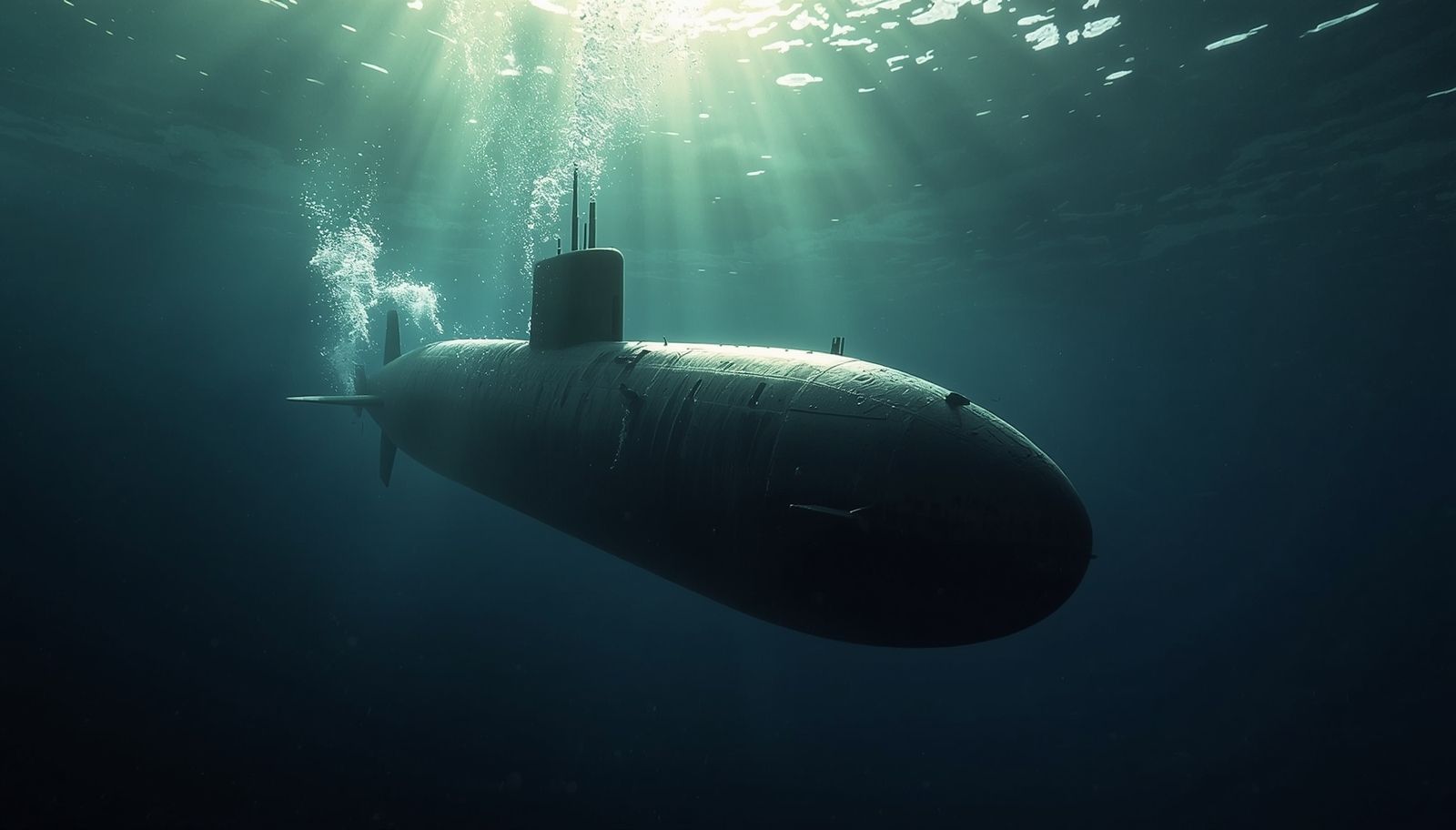 Nuclear submarines offer high stealth and a potent nuclear deterrent
After leading the Manhattan Project to successfully develop the atomic bomb, J. Robert Oppenheimer found himself caught in profound conflict and regret. Although the achievement marked an unprecedented scientific breakthrough, the devastation wrought in Hiroshima and Nagasaki made him realize that what he had advanced was not only a triumph of science but also a catastrophe for human civilization. He famously quoted a line from the Bhagavad Gita: “Now I am become Death, the destroyer of worlds,” to express his anguish and remorse.
The terrifying aspect of the atomic bomb lies in its dual impact: it can annihilate a city in an instant, while also contaminating the environment for generations. Such power is capable of altering the course of human history and even threatening the survival of civilization itself.
The atomic bomb thus stands as a profoundly paradoxical symbol. On one hand, it represents the pinnacle of scientific and technological achievement, proving humanity’s ability to probe the deepest structures of matter and transform theory into reality. On the other hand, it exposes the fragility of human civilization, for this same power can obliterate cities and imperil the very existence of humankind.
Its creation forced humanity to confront, for the first time, the possibility of self‑annihilation. This existential threat makes nuclear weapons not merely instruments of war, but a trial of human nature and civilization itself.
We leverage big data to bring you the most fascinating and mind-blowing trivia. Follow us for regular updates—prepare to be amazed while leveling up your knowledge.


Whether bizarre and fantastical events or ordinary, trivial matters, they all appear in our dreams. Some dreams are so vivid that we remember them clearly after waking, while others vanish instantly

The most captivating aspect of twins lies in their striking resemblance in appearance. When encountering twins in a crowd, the first impression is the shock of seeing two faces that look almost

In everyday life we often hear the terms “sugar” and saccharide,” “carbohydrate” and “starch.” These words appear similar, yet they are easily confused. Is sugar the same as carbohydrate? Is

The chicken’s body is likewise covered with feathers and equipped with wings, giving the outward impression of being suited for flight. Yet why is it that they cannot soar into the sky like other

Antibiotics are a class of drugs specifically designed to combat bacteria. They interfere with vital bacterial processes, such as damaging the cell wall, blocking protein synthesis, or disrupting DNA

Cars are the daily means of transport for many people, and during a journey it is inevitable to encounter sudden situations that require braking. But what actually happens when a car brakes abruptly

Venice is a city in northeastern Italy, lying close to the Adriatic Sea. What makes it unique is that the entire city is composed of numerous small islands, separated by canals, linked by bridges,

Christianity, Catholicism, Orthodoxy and Protestantism Christianity is a faith centered on Jesus Christ, emphasizing salvation and the relationship with God. It is also one of the religions with



Follow us for quirky updates, fun discoveries, and a front‑row seat to the weird and wonderful world we live in.