
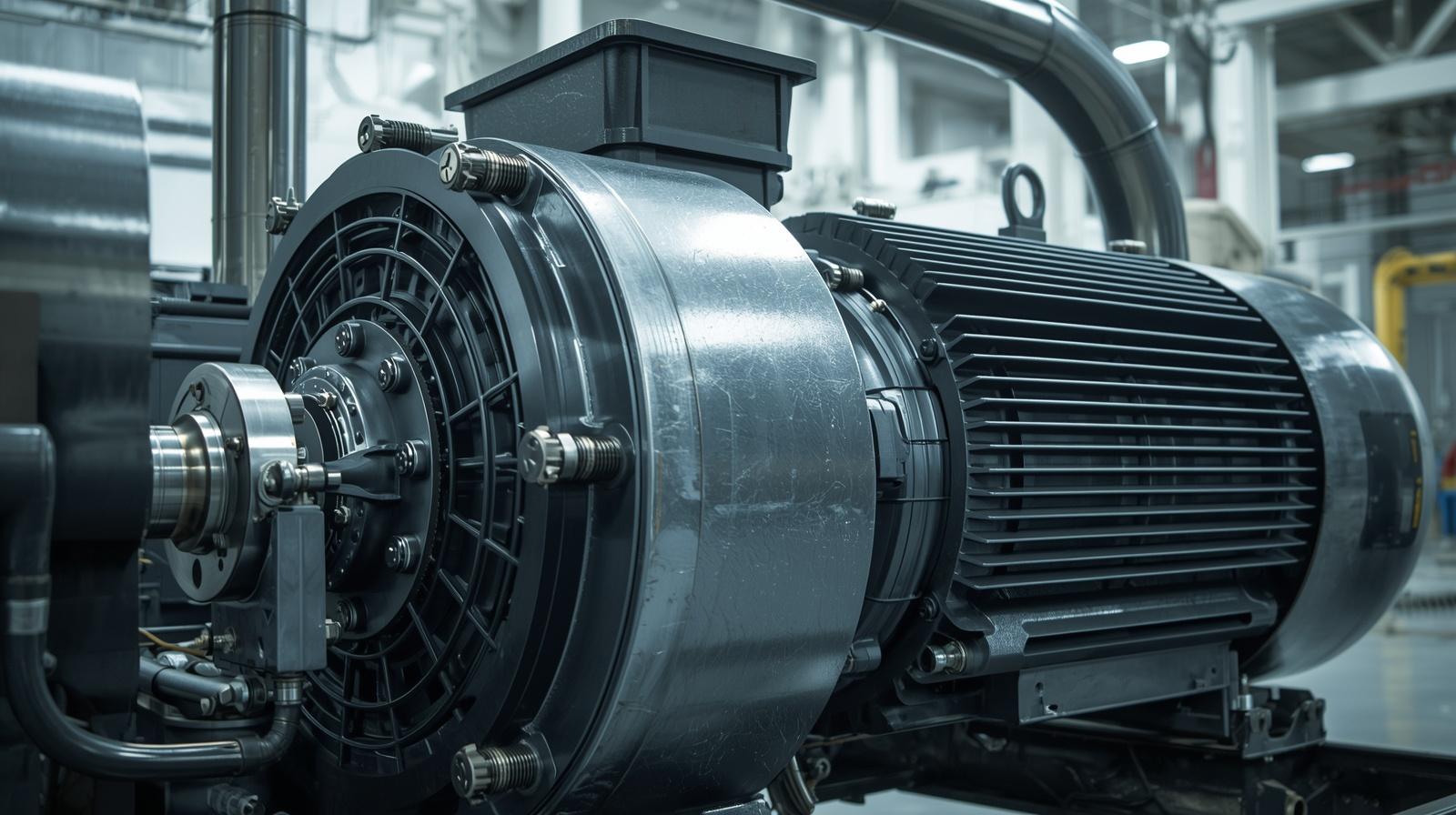
In today’s society, motors are virtually everywhere. They drive robotic arms in factories, keeping production lines running at high speed; they power elevators and automatic doors, making urban life more convenient; and they are embedded in household appliances, from washing machines to fans, quietly sustaining the rhythm of daily living.
Transportation relies even more heavily on motors: electric cars, subways, and even certain systems in airplanes depend on them to deliver power. In this sense, motors are the invisible muscles of modern civilization, supporting both industry and everyday life.
But how exactly are motors driven by electricity? Once current flows into a motor, by what mechanism is it transformed into rotational force? And what principle allows such heavy metallic structures to spin with apparent ease?
The flow of electric current generates a magnetic field, and the fundamental reason lies in the fact that moving charges alter the structure of the surrounding electromagnetic field. A stationary charge produces only an electric field in space, but once the charge begins to move, the distribution of the field is no longer static; instead, it changes with the direction of motion. This change “distorts” the field into a magnetic component. In essence, current is the collective motion of electrons, and such motion inevitably gives rise to a magnetic field. This is the principle of electricity producing magnetism.
Conversely, variations in a magnetic field can induce current in a conductor—this is magnetism producing electricity. The two phenomena influence each other, showing that electricity and magnetism are not independent but are unified within a single electromagnetic field. This interplay forms the foundation for devices such as generators and transformers.
As for direction, the flow of current determines the orientation of the magnetic field, while the force exerted by the magnetic field on charged particles follows the law of the Lorentz force: the force is always perpendicular both to the current (or particle’s motion) and to the magnetic field. This triad of mutually perpendicular relationships makes electromagnetic force both predictable and controllable.
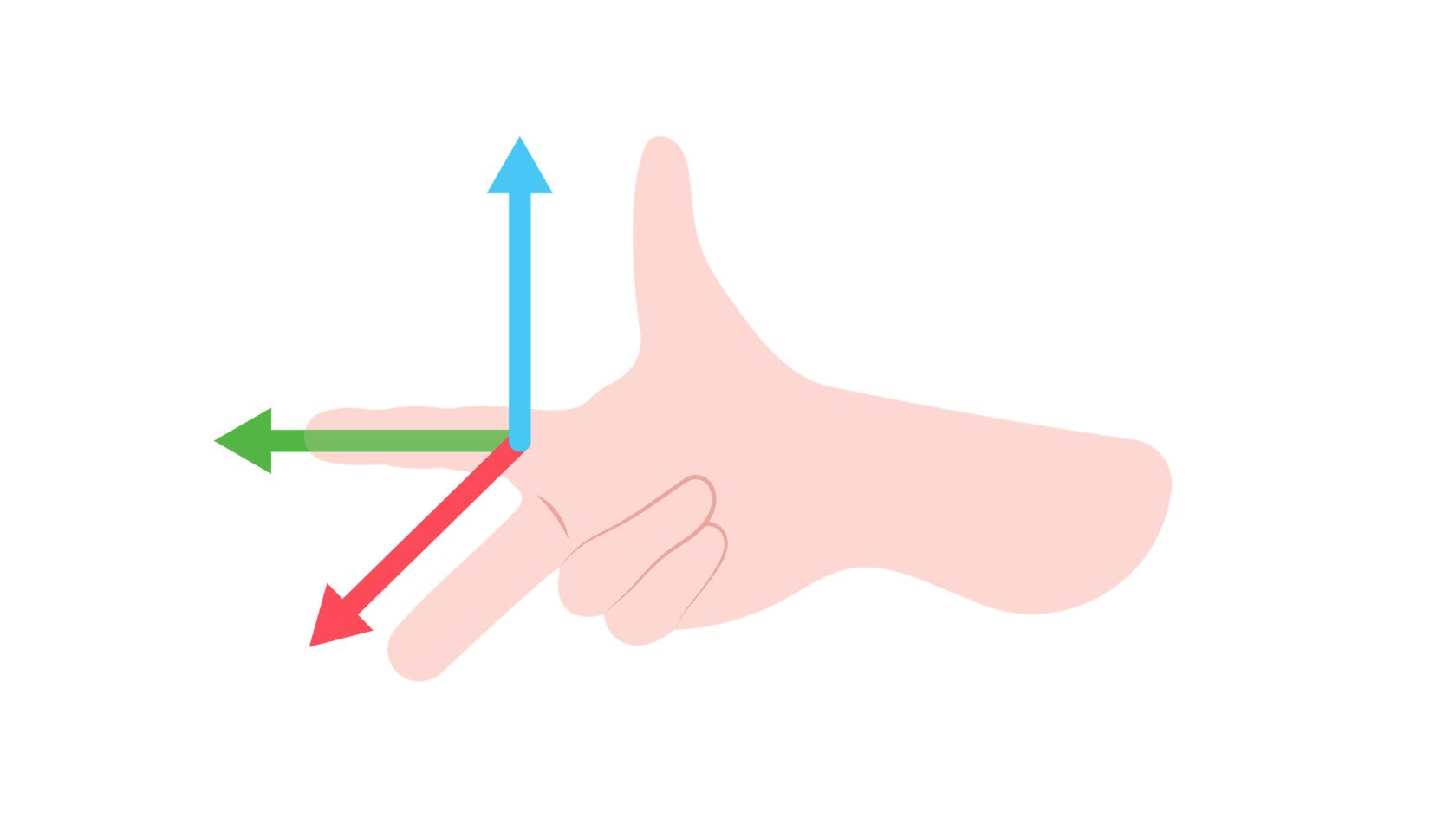 The right-hand rule can be used to understand the directions of current, magnetic field, and force: the red arrow indicates the direction of current, the green arrow shows the direction of the magnetic field, and the blue arrow represents the direction of the force.
In a magnetic field, the interaction between poles follows the principle of “like poles repel, unlike poles attract.” When the north pole of one magnet approaches the north pole of another, they push each other away; the same occurs when two south poles come close. This is because the magnetic field lines between like poles run in the same direction and press against each other. Unable to pass directly through, the lines bend aside, producing a lateral repulsive effect.
By contrast, when a north pole and a south pole approach, the magnetic field lines naturally flow from north to south, forming a continuous and stable structure. This manifests as an attractive force.
This phenomenon is not only a property of magnets but also a fundamental law of electromagnetic fields. The magnetic field generated by current obeys the same polarity principle: one end of a coil behaves like a “north pole,” while the other behaves like a “south pole.” Thus, two electromagnets with the same polarity repel each other, while opposite polarities attract. This directional rule makes magnetism a predictable and controllable natural force.
Taking the traditional brushed DC motor as an example, its structure consists of several core components: the stator, the rotor, the commutator, and the brushes. These elements work together to convert electrical energy into mechanical energy.
In its most basic structure, a motor consists of a stator and a rotor. The stator usually contains permanent magnets or electromagnetic coils to establish a stable magnetic field, while the rotor is the rotating part wound with coils. When an external power source supplies current to the rotor coils, the current-carrying conductors experience electromagnetic force (Ampère’s force) within the stator’s magnetic field. This force produces torque on both sides of the shaft, driving the rotor into rotation.
However, if the current direction remains constant, the rotor will eventually reach a balance position perpendicular to the magnetic field, where the force either vanishes or reverses. To sustain rotation, traditional DC motors employ a commutator and brushes. The commutator is a specialized mechanical switch that periodically reverses the current in the coils as the rotor turns, ensuring the electromagnetic force continues to act in the same driving direction. The brushes deliver current from the external power source steadily into the rotating commutator.
Looking deeper, a motor’s efficiency and performance depend on multiple factors: the winding method and number of turns in the coils affect magnetic field strength; the design of the magnetic poles determines field distribution; and the conductivity of materials, core losses, and heat dissipation directly influence energy conversion efficiency.
In summary, the stator provides the fixed magnetic field, the rotor responds with rotational motion, the commutator periodically reverses current direction, and the brushes deliver external electrical energy into the rotor. Together, these four components enable the motor to reliably transform electricity into continuous mechanical rotation.
| Components | Function |
|---|---|
| The stator | The stationary part, usually containing permanent magnets or electromagnets that provide a stable magnetic field. This field is the foundation of motor operation, as the rotor experiences magnetic forces while rotating within it. |
| The rotor | The rotating part, typically composed of coils and an iron core. When current flows through the rotor coils, a magnetic field is generated. This field interacts with the stator’s magnetic field—like poles repel, unlike poles attract—producing torque that sets the rotor in motion. |
| The commutator | Reverse the direction of current in the rotor coils at the appropriate moment. When the rotor turns past half a revolution (the balance position), if the current direction remained unchanged, the magnetic force would oppose further rotation. The commutator reverses the current at this critical moment, ensuring the rotor continues to spin in the same direction. |
| The brushes | Conductive components that maintain sliding contact with the rotating commutator, transmitting current from the external DC power source to the rotor coils. Typically made of carbon (graphite) or metal, brushes wear down over time due to friction, yet they are essential for keeping the rotor supplied with current during rotation. |
Traditional brushed DC motors rely on mechanical commutators to maintain rotation; modern brushless DC motors (BLDC) replace them with electronic controllers to switch current; and AC motors utilize the inherent periodic variation of alternating current to generate a “rotating magnetic field,” eliminating the need for mechanical commutation altogether.
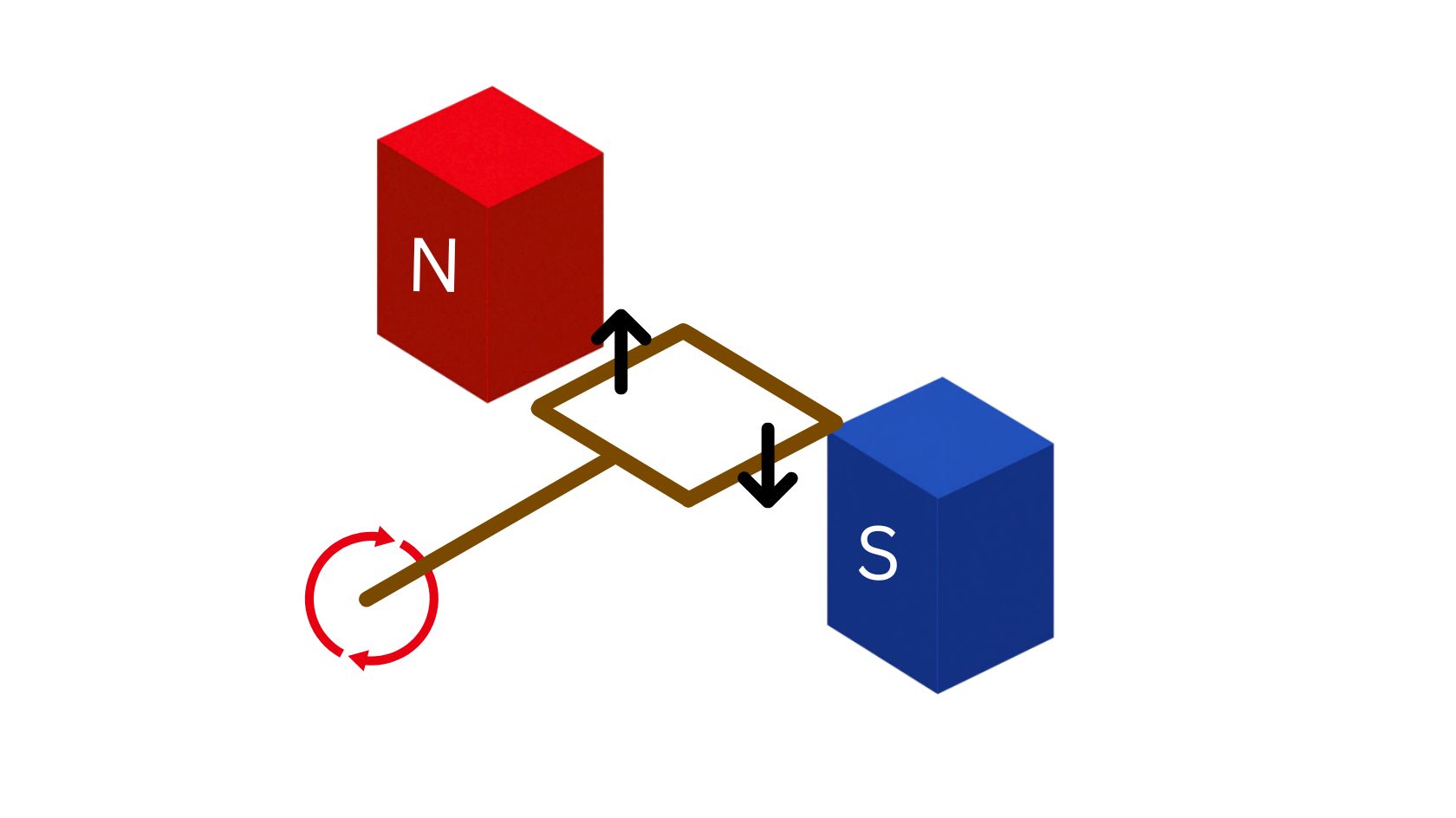 When a coil carrying current is placed in a magnetic field, the two sides experience magnetic forces in opposite directions (black arrows pointing upward and downward). These forces create a torque that drives the shaft to rotate clockwise (red arrow). This is the fundamental principle of how a motor works.
Motors of the future will no longer be merely “rotating mechanical cores,” but integrated systems that combine high efficiency, intelligence, and sustainable materials. They will play a pivotal role in electric vehicles, Industry 5.0, automated production, and emerging transportation technologies—enhancing performance while meeting global demands for carbon reduction and sustainability.
High Efficiency and Energy Saving
Intelligence and Digitalization
New Energy Vehicles and Transportation
We leverage big data to bring you the most fascinating and mind-blowing trivia. Follow us for regular updates—prepare to be amazed while leveling up your knowledge.


Many people have experienced hiccups—those sudden spasms that come in bursts and make us feel uncomfortable. If hiccups occur at the wrong moment, they can be quite embarrassing. So why do hiccups

During the Second World War, the Manhattan Project, led by American theoretical physicist Robert Oppenheimer, successfully produced the world’s first atomic bomb. The first test was conducted on July

A breeze drifts by, as if pushing away the stifling air and bringing with it a refreshing coolness. The leaves sway in response, a gentle touch brushes the cheeks, invigorating the spirit and easing

In our daily lives and studies, we often encounter situations where we forget things. It might be that we planned to bring something before leaving home but suddenly forgot, or that a piece of

Alcohol has become almost indispensable in many cultures and social settings. Whether at workplace gatherings, dinners with friends, or even business negotiations, it often serves as a social

The Maya civilization was once highly advanced, achieving remarkable accomplishments in science and technology that surpassed many contemporary cultures. Yet, why was it still invaded and ultimately

Venice is a city in northeastern Italy, lying close to the Adriatic Sea. What makes it unique is that the entire city is composed of numerous small islands, separated by canals, linked by bridges,

Christianity, Catholicism, Orthodoxy and Protestantism Christianity is a faith centered on Jesus Christ, emphasizing salvation and the relationship with God. It is also one of the religions with

Follow us for quirky updates, fun discoveries, and a front‑row seat to the weird and wonderful world we live in.