
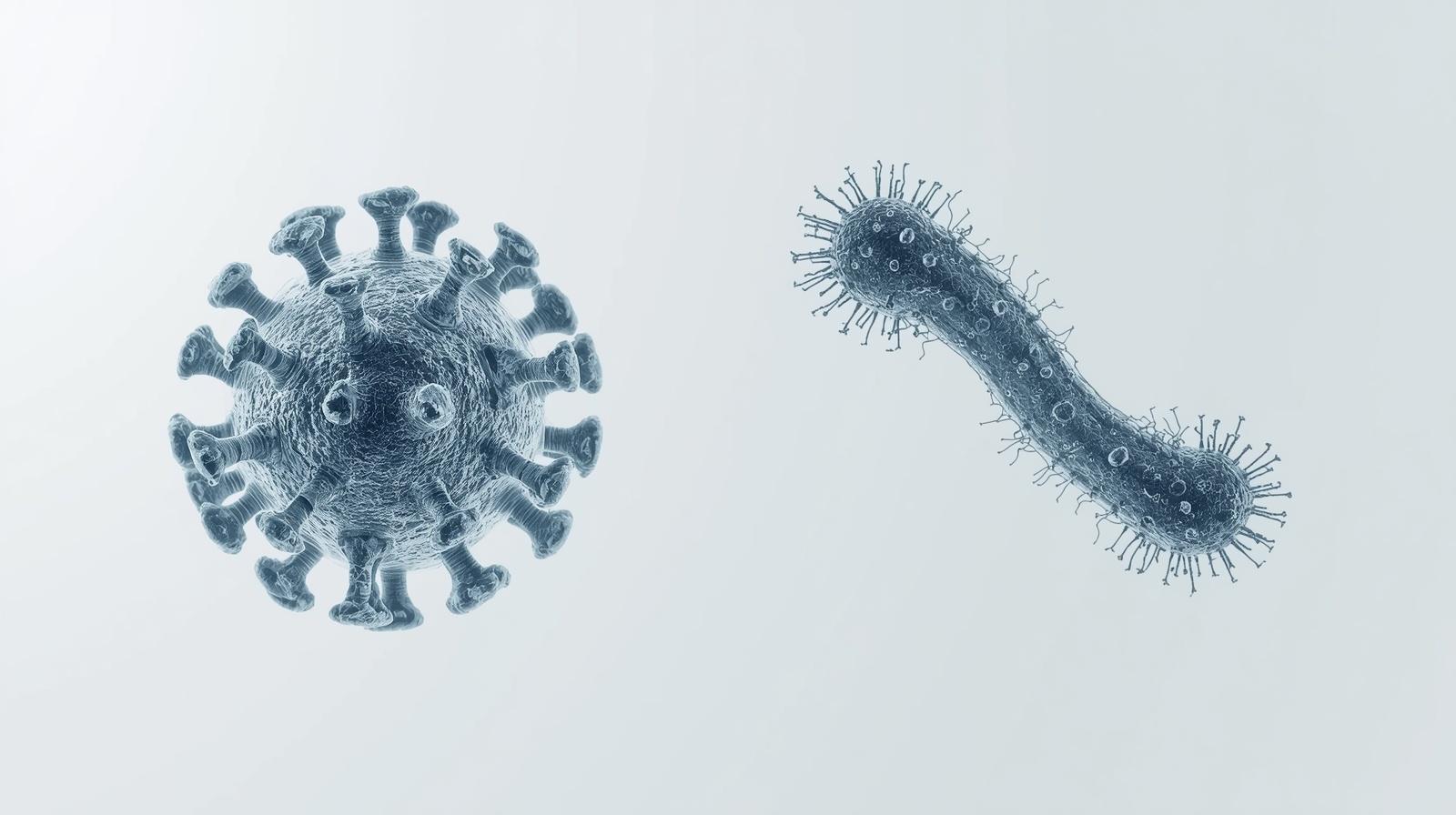
Many people tend to confuse “bacteria” and “viruses” when talking about them. Some believe that a common cold must be caused by a bacterial infection and that taking antibiotics will cure it; others assume that viruses, like bacteria, are small organisms that can freely reproduce inside the body.
Why is it that antibiotics can treat certain illnesses but are completely ineffective against others? Why do some diseases require vaccines for prevention rather than medication for treatment? What fundamental differences exist between bacteria and viruses that make their methods of control so distinct?
Although both bacteria and viruses can cause illness, the scientific stories behind them are entirely different.
The fundamental structural difference between bacteria and viruses lies in the fact that bacteria are living organisms, whereas viruses are merely carriers of genetic material.
Bacteria are complete cells. They possess a cell membrane, a cell wall, cytoplasm, and ribosomes, enabling them to carry out metabolism, synthesize proteins, and reproduce independently. Their genetic material is usually a circular strand of DNA concentrated in the nucleoid region, and they may also carry plasmids that provide additional functions such as antibiotic resistance.
These structures give bacteria the ability to survive on their own and reproduce in diverse environments, making them truly “living microorganisms.”
Viruses, by contrast, are entirely different. They lack a cell membrane, cytoplasm, and ribosomes, and have no metabolic system. Their core consists only of DNA or RNA, encased in a protein shell, with some types also surrounded by a lipid envelope.
Because they lack the basic structures of a cell, viruses cannot synthesize or reproduce on their own; they must rely on the machinery of a host cell to replicate. In other words, a virus is more like “genetic material wrapped in a shell,” showing signs of life only after entering a host cell.
Put simply, bacteria are cell-based life forms capable of independent existence, while viruses are parasitic carriers of genetic information.
Bacteria are capable of replicating independently. They typically reproduce through binary fission: a single bacterium first duplicates its DNA, then elongates and divides into two daughter cells.
This is an autonomous and highly efficient process that allows bacteria to multiply rapidly in a short period of time. Because they possess complete metabolic systems and the ability to synthesize proteins, bacteria do not rely on other organisms and can proliferate quickly in suitable environments.
Viruses, by contrast, are entirely different. They lack cellular structures and have no metabolic or synthetic capacity, which means they cannot replicate on their own. A virus must first attach to and invade a host cell, inject its DNA or RNA, and then exploit the host’s ribosomes and enzymes to synthesize viral proteins and replicate its genetic material.
Eventually, the host cell is forced to assemble new viral particles and may even rupture and die as a result. In other words, viral reproduction is a form of parasitic replication, wholly dependent on the biological machinery of the host.
Put simply, bacteria reproduce independently through cell division, while viruses must invade host cells and “trick” them into replicating viral genes. Even when the host cell believes it is carrying out normal replication, it is in fact producing large numbers of new particles carrying viral genetic material.
The difference in size between bacteria and viruses is striking—almost like comparing an elephant to an ant.
Bacteria typically measure between 0.5 and 5 micrometers. Although they still require a microscope to be seen, they are relatively “large” among microorganisms. Viruses, however, are much smaller, usually only 20 to 300 nanometers, making them tens to hundreds of times smaller than bacteria. Their size is so minute that they can only be observed with an electron microscope. Lacking any cellular structure, a virus is essentially just a “package of genetic material.”
In other words, if a bacterium were likened to a sparrow, then a virus would be like a speck of dust on its feather; if a bacterium were compared to a cow, a virus would be like a mosquito resting on its back.
| Bacteria | Viruses | |
|---|---|---|
| Basic Structure | Complete cellular structure: cell wall, cell membrane, cytoplasm, ribosomes, circular DNA; some also have flagella or capsules | No cellular structure; only a protein shell (capsid), sometimes with a lipid envelope; contains DNA or RNA |
| Genetic Material | Usually circular DNA, may carry plasmids (extra genetic fragments) | Either DNA or RNA, depending on type; not both |
| Metabolic Capacity | Possess full metabolic systems; can synthesize proteins and generate energy independently | No metabolic ability; entirely dependent on host cell machinery |
| Mode of Reproduction | Reproduce independently through cell division (e.g. binary fission) | Must invade host cells and use their replication systems |
| Form of Existence | Can survive independently in diverse environments; may form colonies or biofilms | Cannot survive alone; exist only as parasites within host cells |
| Size Range | Typically 0.5–5 micrometers | Typically 20–300 nanometers, much smaller |
| Biological Status | Regarded as complete living organisms | Often considered to exist “between living and non-living” |
Bacteria cause disease primarily through their growth and metabolic activity, which damage the host. Some bacteria secrete toxins that directly injure tissues or disrupt physiological functions; others multiply extensively within the body, consuming resources and triggering immune responses.
Common bacterial diseases include pneumonia, urinary tract infections, tuberculosis, gastroenteritis, and tetanus. The symptoms of these illnesses often depend on the type of bacterium and the site of infection—for example, pneumonia bacteria affect the respiratory system, while intestinal bacteria can lead to indigestion or diarrhea.
In terms of treatment, bacteria are complete cellular organisms with cell walls, membranes, and metabolic systems, which makes them susceptible to antibiotics targeting these structures or functions.
For instance, penicillin-class antibiotics inhibit cell wall synthesis, leaving bacteria unprotected and causing them to die; tetracyclines block ribosomal activity, preventing protein synthesis. Clinically, physicians select appropriate antibiotics based on the specific bacterial strain and the patient’s condition.
However, treating bacterial infections also faces challenges. Some bacteria acquire resistance through genetic mutations or plasmid exchange, rendering previously effective antibiotics useless. This is why medicine emphasizes the rational use of antibiotics, avoiding misuse, and continuing to develop new drugs.
Viruses cause disease in a way fundamentally different from bacteria. Because they lack independent metabolic and reproductive capacity, a virus must first enter a host cell, inject its DNA or RNA, and then exploit the host’s synthetic machinery to produce viral proteins and replicate its genetic material.
This process forces the host cell to generate large numbers of new viral particles, ultimately impairing or destroying the cell. When many cells are damaged, disease develops.
Common viral illnesses include influenza, measles, hepatitis, HIV/AIDS, dengue fever, and, more recently, COVID‑19. The symptoms of these diseases often depend on the site of viral invasion and the type of cells destroyed—for example, influenza viruses primarily attack respiratory cells, leading to coughing, fever, and breathing difficulties, while hepatitis viruses target liver cells, causing jaundice and impaired liver function.
In terms of treatment, antibiotics are completely ineffective against viruses because they lack cell walls and metabolic systems. Clinical approaches rely mainly on two strategies: vaccines and antiviral drugs. Vaccines work preventively by stimulating the immune system to establish defenses before infection occurs, while antiviral drugs target specific stages of viral replication—for instance, blocking viral attachment to host cells, inhibiting genetic replication, or interfering with protein synthesis.
Since viruses depend entirely on host cells, treatment is more challenging, and drug design must be highly precise to avoid harming normal cells while effectively suppressing the virus.
| Bacteria | Viruses | |
|---|---|---|
| How They Cause Disease | Cause damage through their own reproduction and metabolic activity; some secrete toxins that directly injure tissues or disrupt physiological functions; may also form colonies that consume resources and trigger immune responses | Invade host cells, inject their own DNA or RNA, and exploit the host’s synthetic machinery to replicate; the mass production of viral particles ultimately disrupts or kills the cell |
| Common Diseases | Pneumonia, urinary tract infections, tuberculosis, gastroenteritis, tetanus, syphilis, etc. | Influenza, measles, hepatitis, HIV/AIDS, dengue fever, COVID‑19, etc. |
| Treatment Methods | Primarily treated with antibiotics targeting cell walls, protein synthesis, or DNA replication; resistance is a major concern | Antibiotics are ineffective; prevention relies on vaccines, while antiviral drugs block viral entry into cells, inhibit genetic replication, or interfere with protein synthesis |
 The principle of vaccines is to stimulate the body’s own immunity and establish long‑term immune memory
Biologically speaking, bacteria are not all “bad”; they exist both as pathogens and as beneficial organisms.
Pathogenic bacteria are those that cause disease. They may secrete toxins or reproduce extensively within the body, leading to tissue damage and disrupting immune balance. Once they break through the defenses of the immune system, they can cause serious illness that requires antibiotics or other medical interventions.
Beneficial bacteria, on the other hand, have positive effects on the human body or the environment. The most typical example is probiotic bacteria in the gut, which help break down food, synthesize vitamins, and maintain microbial balance to prevent harmful bacteria from overgrowing. The resident bacterial communities on the skin also serve as beneficial bacteria, forming a natural barrier against invading pathogens.
Beyond the human body, beneficial bacteria are widely used in food fermentation. For instance, lactic acid bacteria are used to make yogurt, while acetic acid bacteria produce vinegar—clear demonstrations of the positive value of bacteria in everyday life.
Scientific studies show that the number of bacteria in the human body is enormous. The body contains tens of trillions of its own cells, and the bacteria coexisting in the gut and on the skin also number in the tens of trillions—nearly equal to, or even exceeding, the number of human cells.
Among these bacteria, the majority are neutral or beneficial, while truly pathogenic bacteria account for only a small fraction. In other words, although the bacterial population is vast, most are “friends” living in symbiosis with us, and only a minority are “enemies.”
In nature, the diversity and abundance of bacteria are far beyond human comprehension. They are found in virtually every environment: soil, oceans, freshwater, air, and even extreme habitats such as volcanic vents, deep‑sea hydrothermal springs, glaciers, and deserts.
These places are often inhospitable to other forms of life, yet bacteria thrive there due to their versatile metabolic pathways and remarkable adaptability.
So far, scientists have identified tens of thousands of bacterial species, but this represents only the tip of the iceberg. Genetic sequencing has revealed that countless undiscovered or unnamed bacteria still exist in nature, hidden in soil particles, deep ocean layers, or within plants and animals, quietly participating in ecological cycles.
These unknown bacteria may play crucial roles in breaking down organic matter, fixing nitrogen, or even influencing global climate.
 Bacteria are involved in many food fermentation processes
The type of virus most familiar to us is the harmful virus. These invade host cells and replicate extensively, ultimately causing cell death or dysfunction and leading to disease.
Beneficial viruses are comparatively rare, but they do exist in nature. Some viruses help regulate bacterial populations—for example, bacteriophages, which specifically infect and kill bacteria, playing an important role in maintaining microbial balance.
Other viruses are harnessed in genetic engineering and medical research as vectors to deliver specific genes into cells, enabling treatments for genetic disorders or the development of vaccines. In these cases, viruses become tools and allies for humanity.
Within the human body, viruses are present in vast numbers, but not all are “bad.” In addition to pathogenic viruses, there are numerous neutral viruses and a small proportion of beneficial ones.
Neutral viruses are those that exist in the body or environment without directly causing disease. They may parasitize certain cells or coexist with other microorganisms, but they have no obvious negative impact on human health. Neutral viruses make up a large share of the viral population in the body, far outnumbering truly pathogenic viruses. In other words, most viruses are “silent presences” that do not actively harm us.
Beneficial viruses, though fewer in number, still play important roles in both the human body and ecosystems. Bacteriophages are the clearest example, targeting and eliminating bacteria, thereby indirectly helping to maintain microbial balance in the gut and on the skin. While not dominant, these beneficial viruses can provide protection in specific contexts.
In nature, the abundance of viruses is almost limitless. Research shows that viruses are found in oceans, soil, air, and even extreme environments. For instance, a single liter of seawater may contain hundreds of millions of viral particles, underscoring their immense role in global ecological cycles.
Viruses in nature serve several key functions:
Modern genetic sequencing reveals that known viruses represent only the tip of the iceberg. Countless undiscovered viruses remain hidden in deep oceans, polar ice, soil particles, and within plants and animals. These unknown viruses may quietly shape ecosystems, influence global climate, and drive evolutionary processes.
In summary, viruses in nature exist in staggering numbers, with roles that are both destructive and regulatory. Human understanding of them remains limited, and the vast reservoir of undiscovered viruses reminds us that the microbial world is far more complex and profound than we imagine.
 Bacteria and viruses play indispensable and profound roles in nature
Whether facing bacteria or viruses, the decisive factor in controlling them lies in the powerful protective role of the human immune system. The immune system functions like a round‑the‑clock defense force, capable of actively identifying foreign invaders and launching multilayered attacks.
Against bacteria, the immune system deploys phagocytes to engulf and break them down, while antibodies target bacterial antigens to block reproduction or neutralize toxins. This enables most bacterial infections to be effectively contained at an early stage.
Against viruses, although they replicate inside host cells, the immune system still has effective countermeasures. Cytotoxic T lymphocytes can precisely recognize and destroy infected cells; antibodies prevent new viruses from entering other cells; and molecular signals such as interferons enhance antiviral defenses throughout the body.
Thus, the most fundamental protection against both bacteria and viruses does not rely solely on medication, but on cultivating and maintaining a strong immune system. Balanced nutrition, sufficient sleep, regular exercise, and stress reduction are all essential for keeping the immune system functioning efficiently.
Beyond resisting everyday infections, the immune system also builds immune memory, enabling faster and more effective responses when encountering the same pathogen again.
The immune system is the body’s most powerful guardian. Nurturing its health and stability is the long‑term path to resisting bacteria and viruses.
We leverage big data to bring you the most fascinating and mind-blowing trivia. Follow us for regular updates—prepare to be amazed while leveling up your knowledge.


Whether bizarre and fantastical events or ordinary, trivial matters, they all appear in our dreams. Some dreams are so vivid that we remember them clearly after waking, while others vanish instantly

Giant cruise ships, cargo vessels, and oil tankers may weigh hundreds of thousands of tons, yet they can still travel freely across the sea. By contrast, a stone with a volume and weight far smaller

The chicken’s body is likewise covered with feathers and equipped with wings, giving the outward impression of being suited for flight. Yet why is it that they cannot soar into the sky like other

The tender green of spring, the heat of summer, the golden hues of autumn, and the chill of winter—people have long grown accustomed to this cycle. Yet how many have paused to wonder: what force lies

In our daily lives and studies, we often encounter situations where we forget things. It might be that we planned to bring something before leaving home but suddenly forgot, or that a piece of

A vaccine is a specially designed medical tool whose purpose is not to directly cure disease, but to “pre-train” the immune system so that the body can respond more quickly and effectively when it

Cancer often strikes fear because it is not merely a disease, but a force that can completely alter the course of a person’s life. Once someone is diagnosed, the focus of daily living shifts

Venice is a city in northeastern Italy, lying close to the Adriatic Sea. What makes it unique is that the entire city is composed of numerous small islands, separated by canals, linked by bridges,



Follow us for quirky updates, fun discoveries, and a front‑row seat to the weird and wonderful world we live in.