
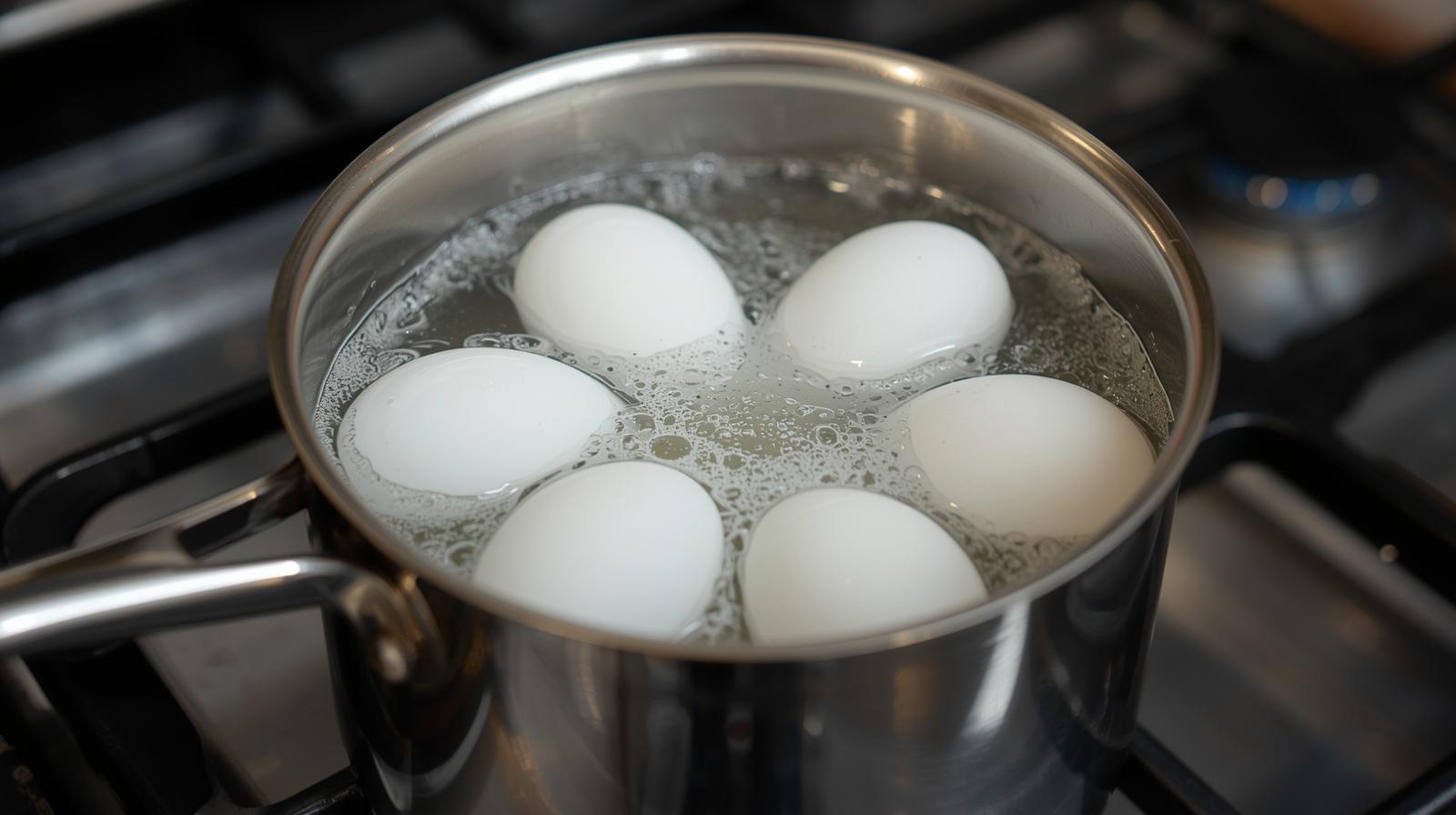
Eggs are a highly nutritious food. They contain high‑quality protein that provides the essential amino acids required by the human body. The yolk is rich in vitamins A, D, E, and K, as well as lutein, cholesterol, and phospholipids, all of which support eye health and the formation of cell membranes. In addition, eggs supply trace elements such as iron, zinc, and selenium, which play an important role in immunity and metabolic functions.
When boiling eggs, the shell often cracks and allows the egg white to leak into the water. Although this does not significantly reduce the nutritional value, it makes the egg less visually appealing and can affect its texture. Why do eggs crack during boiling, and are there ways to prevent it?
The air cell inside an egg is a small cavity located at the blunt end. It forms after the egg is laid, as moisture and gases gradually escape, causing the internal volume to shrink and leaving a gap between the shell membranes and the shell itself.
This air cell serves a natural function: it helps regulate internal pressure and acts as a buffer zone, preventing the yolk and albumen from being directly compressed by external pressure or temperature changes. The size of the air cell is also commonly used to judge the freshness of an egg, since it enlarges over time.
During boiling, however, the air cell can become one of the reasons the shell cracks. As the egg is heated, the air inside the cell expands rapidly, concentrating pressure on the weaker areas of the shell. If the heating is too abrupt or the temperature difference too great, this pressure may cause the shell to split.
Because the shell is not perfectly uniform, some areas are thinner or contain microscopic fissures. The expanding air can force these weak spots beyond their limit, causing the cracks to widen.
During the process of boiling eggs, the principle of thermal expansion and contraction directly affects the integrity of the shell and may lead to cracking.
When an egg is placed in hot water, the water molecules and gases inside rapidly expand as the temperature rises, increasing in volume and exerting outward pressure on the shell. Although the shell is hard, its structure is not perfectly uniform; some areas are thinner or contain microscopic fissures, which become points where pressure concentrates.
At the same time, the shell itself also expands when heated, but the degree and rate of expansion differ from those of the internal contents. This mismatch between the expansion of the shell and that of the interior creates tension. If the tension exceeds the shell’s capacity, existing fissures may widen, ultimately causing the shell to break.
This effect is especially pronounced when a cold egg is placed directly into boiling water. The extreme temperature difference intensifies the disparity in expansion rates, producing rapid pressure changes and greatly increasing the likelihood of the shell cracking.
During the process of boiling eggs, if the heat is too high, the water will boil violently, creating strong circulating currents inside the pot. These currents continuously push the eggs, causing them to tumble, spin, and even collide at high speed with the bottom, the sides of the pot, or with other eggs.
Although the eggshell is hard, its thickness is limited, and the surface may contain natural micro‑cracks or weak spots. When the egg is subjected to repeated external impacts in boiling water, these fragile areas are more likely to give way under pressure and crack.
This risk is especially pronounced when the water is at its most turbulent, as the eggs move faster and the collisions become more forceful. The pot’s bottom and walls are made of rigid metal, far stronger than the shell, so each impact concentrates stress on the shell’s surface. Frequent collisions gradually weaken the shell’s structure, turning small fissures into larger cracks that eventually cause breakage.
Furthermore, collisions between eggs themselves can create localized compression, further increasing the likelihood of the shell breaking.
If an egg already has cracks before being placed in the pot—for example, because it is not fresh and has gradually developed fine fissures during storage, or because it was struck by external force during transport or handling—these initial defects can quickly worsen during boiling.
Additionally, if an egg is dropped heavily into the pot, there is a high chance that cracks will form. Although the shell has a certain hardness, its thickness is limited, and the surface may contain natural micro‑fissures or weak spots.
When the egg strikes the bottom or sides of the pot with considerable force, even if the cracks are not immediately visible, the structural integrity has already been compromised, becoming a hidden risk that may lead to further breakage during boiling.
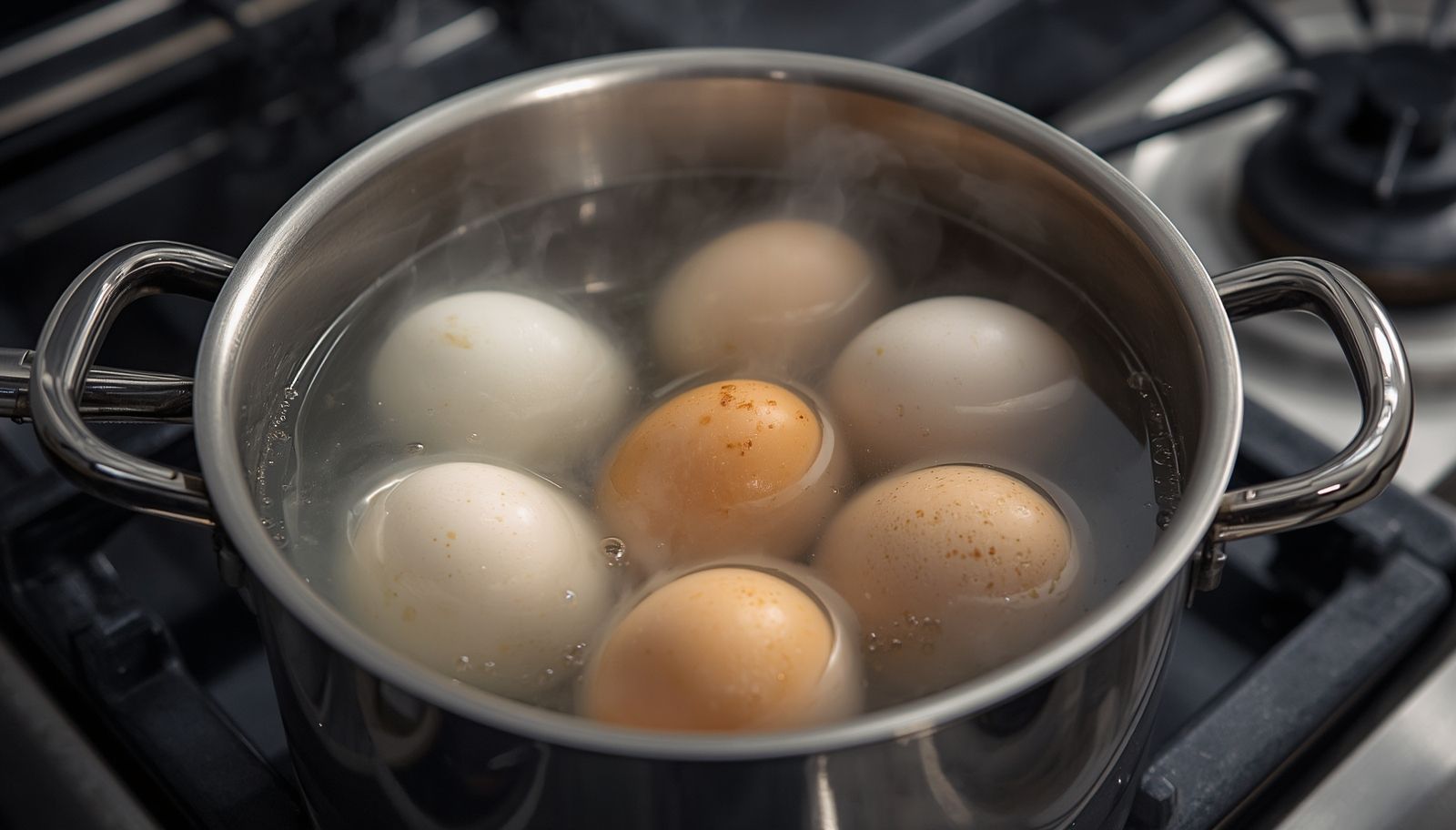 Starting with cold water and simmering over medium‑low heat can greatly reduce the likelihood of the eggshell cracking.
Using steaming as a method for cooking eggs can effectively resolve the common problem of shells cracking during boiling, because the heating process and environmental conditions in steaming differ significantly from those in boiling.
First, when eggs are steamed, they are not immersed in turbulent boiling water but are instead heated evenly by steam. This means the eggs are not pushed around by water currents, tumbling and colliding with the pot’s bottom or sides. As a result, the risk of “hard collisions” is greatly reduced, and the shell is more likely to remain intact.
Second, the heating effect of steam is relatively gentle. Although the temperature is high, the transfer of heat to the shell and the interior is more uniform, unlike the sudden shock of placing a cold egg directly into boiling water. This milder heating process reduces the stress caused by thermal expansion and contraction, preventing the rapid inflation of air in the air cell that could otherwise crack the shell.
Moreover, the enveloping nature of steam ensures that the shell is heated evenly, with pressure distributed more uniformly across its surface. This makes it less likely for stress to concentrate on a single weak spot. Even if the egg already has minor fissures, steaming is less likely than boiling to worsen them.
Therefore, steaming eggs avoids both the violent water currents and the extreme temperature shocks of boiling. As long as the eggs remain stable during steaming, the likelihood of shell breakage is greatly reduced.
Whether the egg is boiled in water or steamed, making the shell easier to peel afterward depends on two key factors: the cooling process after heating and the separation between the shell and the membrane.
When a cooked egg is immediately placed in cold or ice water, the thin membrane between the shell and the white contracts sharply due to the sudden drop in temperature, creating a fine gap. This gap reduces adhesion between the shell and the white, making peeling smoother. During cooling, the shell surface also develops tiny fissures from thermal expansion and contraction, further lowering resistance when peeling.
If the egg is left to soak in cold water for a period of time, moisture penetrates between the shell and the membrane, loosening the shell. This “water infiltration” effect allows the shell to flake off more easily instead of sticking tightly to the white.
Additionally, gently cracking the shell before immersing the egg in cold water enables water to enter through the fractures more quickly, accelerating the separation of shell and membrane. This method works for both steamed and boiled eggs, since in both cases heating causes the shell and membrane to adhere closely, while cooling treatment effectively reduces this adhesion.
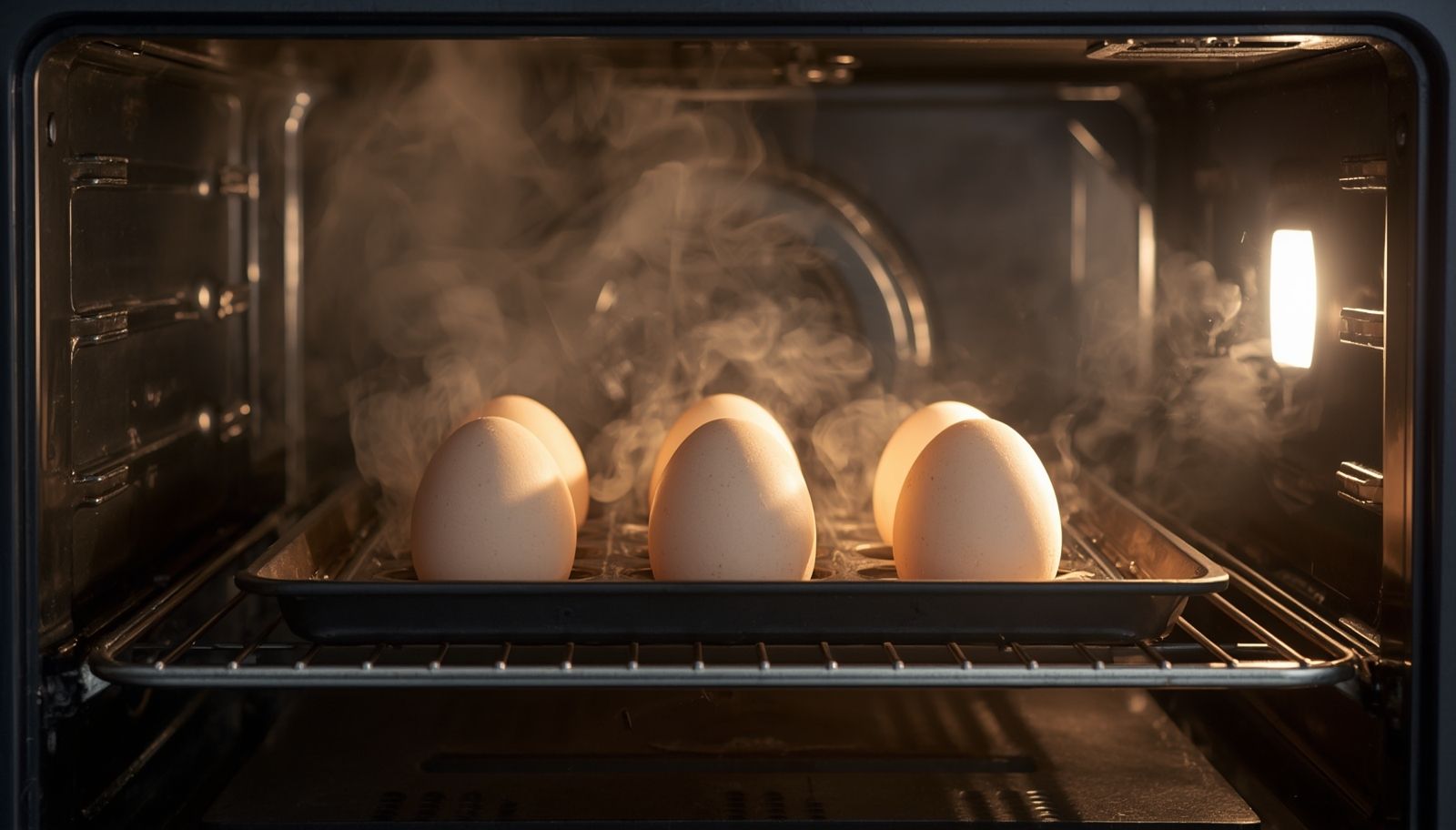 Steaming eggs can greatly reduce the likelihood of the shell cracking
We leverage big data to bring you the most fascinating and mind-blowing trivia. Follow us for regular updates—prepare to be amazed while leveling up your knowledge.


On an airplane, flight attendants are constantly reminding us of various instructions: fasten your seatbelt, stow your tray table, adjust your seatback, and even raise the window shades. What is the

Teeth are among the hardest tissues in the human body, capable of withstanding immense pressure during chewing and resisting everyday wear. Yet within such a resilient structure, why does corrosion
Cocktail therapy is a strategy of combination drug treatment, built on the principle of administering medications with different mechanisms of action at the same time so that they complement one

Magnetic Levitation (Maglev) trains are famous for their high speed, but how can such heavy trains float? And why do they need to float at all? ### Operating Principle A maglev train is a

The Renaissance was a cultural and intellectual movement that arose in Europe between the fourteenth and sixteenth centuries. It first unfolded in Italian cities such as Florence, Venice, and Milan,

Cars are the daily means of transport for many people, and during a journey it is inevitable to encounter sudden situations that require braking. But what actually happens when a car brakes abruptly

The droplets that fall from the sky are not always the same. At times they are raindrops, striking eaves and streets; at other times they are snowflakes, gently covering rooftops and fields. Both

In human appearance, hair is often the most striking feature. It not only shapes our image but also carries cultural and aesthetic significance. Yet not everyone can maintain a full head of hair over



Follow us for quirky updates, fun discoveries, and a front‑row seat to the weird and wonderful world we live in.