

In our daily lives and studies, we often encounter situations where we forget things. It might be that we planned to bring something before leaving home but suddenly forgot, or that a piece of knowledge we had just memorized quickly became blurry. Such forgetting often causes frustration and even makes us question whether our focus or memory is failing.
During the learning process, forgetting is especially noticeable: after spending hours organizing notes, the mind may go blank during an exam; or after feeling confident in understanding a lecture, only fragmented impressions remain when reviewing at home. In everyday life, forgetting an important appointment or neglecting instructions from others frequently leads to inconvenience or even embarrassment.
Why do we always forget? Why does knowledge and information we strive to remember slip away like sand through our fingers? How exactly does the human brain handle memory? And is it possible to prevent forgetting altogether?
Short-term memory is a system the brain uses to temporarily store information. Its defining features are limited capacity and brief duration, usually lasting only a few seconds to a few minutes. When we hear a phone number, see a newly presented image, or read a sentence, these pieces of information are first placed into short-term memory so that we can immediately use or process them.
Its function is to support our real-time thinking and actions. For instance, short-term memory helps us maintain coherence in conversation, since we need to remember the previous sentence to understand the next one. In calculation or problem-solving, it allows us to temporarily hold intermediate steps so we can complete the entire process. In other words, short-term memory acts like a temporary workbench, providing the brain with space to handle information.
Short-term memory is not designed for long-term storage of knowledge. Without further organization, repetition, or connection to existing knowledge, these temporary traces quickly fade. Its true value lies in enabling us to meet immediate demands and laying the groundwork for the eventual transfer into long-term memory.
Long-term memory is the system in the brain responsible for storing enduring information. It preserves our knowledge, experiences, skills, and emotions over extended periods, sometimes lasting a lifetime. Unlike short-term memory, long-term memory has virtually no apparent limit in capacity, allowing it to hold vast amounts of information that can be retrieved whenever needed.
Its functions are wide-ranging. First, long-term memory forms the foundation of learning, since only when new knowledge is consolidated into long-term memory can we apply it flexibly in the future. It also supports daily life: remembering language, navigating familiar environments, and mastering skills all depend on the sustained preservation of long-term memory. Moreover, it carries our personal identity and life experiences, enabling us to recall the past, understand ourselves, and maintain continuity in social interactions.
Operationally, long-term memory is not a simple “storage unit.” It emerges through the coordinated activity of different brain regions, which gradually consolidate short-term memory and embed it into neural networks. This consolidation process transforms fleeting electrical activity into stable synaptic connections. As a result, long-term memory resists the erosion of time and becomes the core source of our knowledge and experience.
The hippocampus is a small, curved structure located deep within the temporal lobe of the brain, and it plays a central role in the formation and transformation of memory. It is not simply a “storage unit,” but rather a relay station that re-encodes and integrates newly received short-term memories, gradually guiding them into the long-term memory system.
When new information enters short-term memory, the hippocampus first reorganizes these fragmented pieces into coherent sequences, giving them a more complete structure. It then strengthens the connections between neurons, so that the information is no longer just fleeting electrical activity but begins to form stable synaptic links.
Over time, these connections are repeatedly activated and replayed. During sleep or rest, the hippocampus “replays” patterns of neural activity from the day, progressively transmitting the information to the cerebral cortex, where it becomes integrated into long-term memory.
The hippocampus also has the ability to differentiate and complete patterns. It can separate similar experiences to prevent confusion, and during recall, it can reconstruct full memories from partial cues. These functions ensure that short-term memories, once transformed, are not only preserved but can also be retrieved accurately in the future.
In summary, the hippocampus processes, strengthens, and integrates fleeting experiences, turning them from fragile short-term memories into enduring long-term ones. It serves as the foundation for our knowledge, skills, and life experiences.
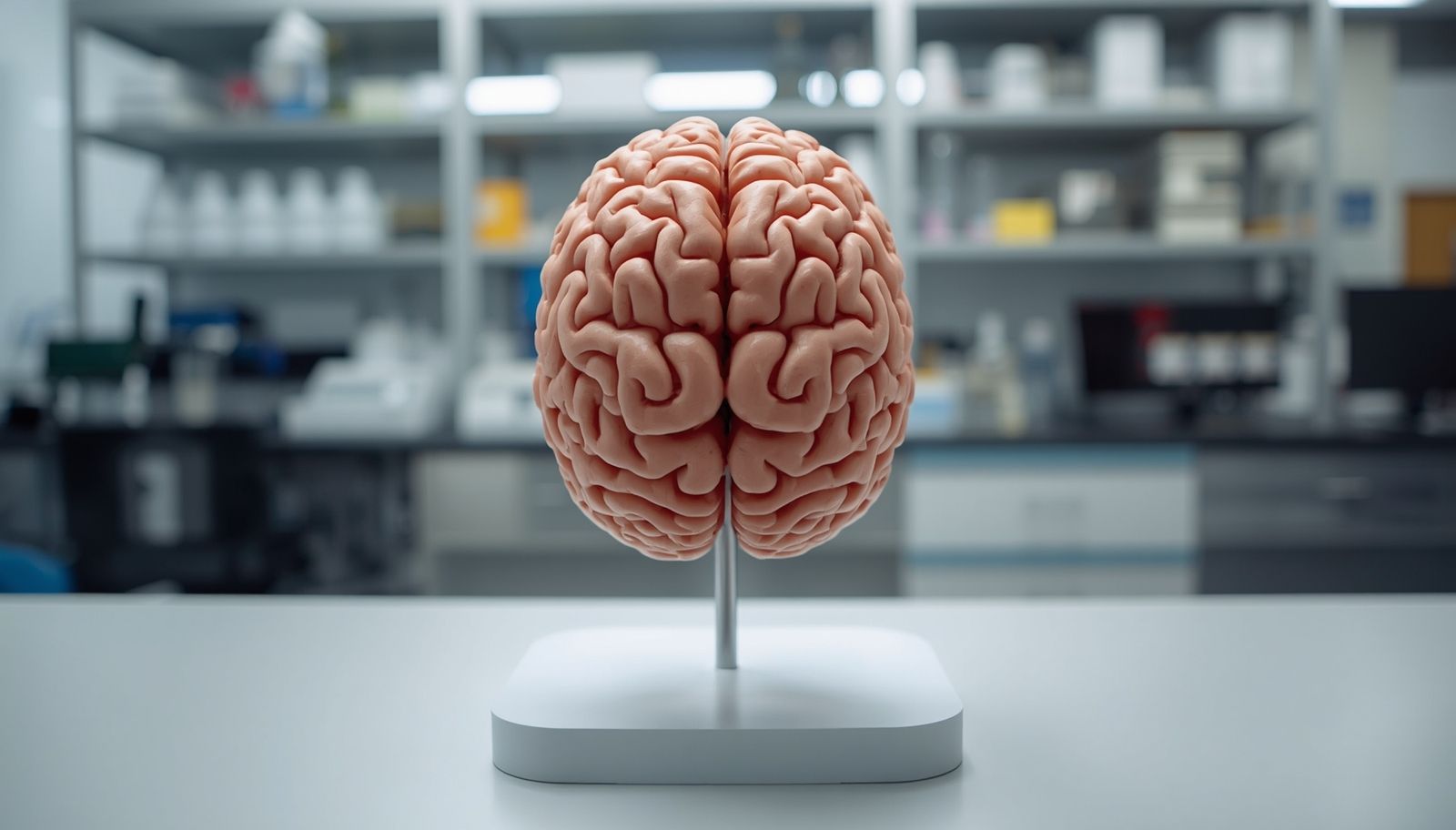 The cerebral cortex is covered with intricate folds because it must maximize surface area within the limited space of the cranial cavity, thereby accommodating more neurons and synaptic connections. The cortex functions both as the brain’s “computational platform” and as the primary region for storing long‑term memory.
Active retrieval is a method of strengthening memory that helps the brain transfer and consolidate short-term memories into long-term storage. Instead of passively rereading or rewatching information, active retrieval involves deliberately trying to “pull it out” from the mind. This process reactivates the hippocampus and associated neural networks, repeatedly engraving the memory trace and deepening synaptic connections, which in turn enhances the stability of memory.
Functionally, active retrieval forces the brain to search for already encoded information, requiring cooperation between the hippocampus and the cerebral cortex. Each successful retrieval becomes an opportunity for “re-encoding”: fragments of short-term memory are reinforced and woven more tightly into existing knowledge networks. As retrieval occurs more frequently, the information gradually shifts away from reliance on the hippocampus and embeds itself into the cortex, becoming part of long-term memory.
For example, after learning new material, instead of simply rereading notes, one might attempt to recall the content, explain it aloud, or write down the key points. These actions are all forms of active retrieval. Their effectiveness surpasses passive review because the act of searching allows the brain to identify which connections are strong and which require reinforcement, thereby promoting synaptic strengthening and pruning.
High-quality sleep is a fundamental condition for the brain to transfer and consolidate short-term memories into long-term storage. During deep sleep and rapid eye movement (REM) sleep, the hippocampus reactivates patterns of neural activity from the day, repeatedly replaying fragments of memory.
This “replay” ensures that short-term memories are no longer just fleeting electrical signals but are gradually embedded into the neural networks of the cerebral cortex. The process is akin to moving temporarily stored data into a more stable archive, guaranteeing its preservation for the future.
In deep sleep, the brain engages in synaptic strengthening and pruning: important connections are reinforced, while unnecessary ones are weakened or eliminated. This allows short-term memories not only to be transformed into long-term ones but also to be integrated more efficiently into existing knowledge structures. Meanwhile, REM sleep helps bind memory with emotion, making learning experiences more meaningful and easier to retrieve later.
Without high-quality sleep, the hippocampal replay process is disrupted, leaving short-term memories unstable and prone to fading—even within a single day. Maintaining a regular sleep schedule, avoiding bright screens or stimulants before bedtime, and ensuring sufficient deep sleep are therefore essential for the brain to effectively complete memory consolidation.
Spaced repetition is a learning strategy that helps the brain transfer and consolidate short-term memories into long-term storage. Its core principle lies in the fact that the brain needs to activate the same memory trace multiple times for synaptic connections to gradually deepen and stabilize.
If repetition is concentrated within a short period, the memory may linger briefly but will soon fade. In contrast, distributing review across different intervals forces the hippocampus and cerebral cortex to collaborate repeatedly, gradually embedding short-term memories into the long-term memory system.
In practice, spaced repetition provides the brain with opportunities for “re-encoding.” Each recall or test reactivates the relevant neural networks, strengthening synaptic stability. This repeated retrieval not only prevents memory traces from fading but also allows new knowledge to form tighter links with existing knowledge. As the intervals lengthen, the brain interprets the information as persistently important and transfers it into long-term memory.
For example, when learning a new word, recalling and testing it the next day, three days later, a week later, and even a month later ensures that each retrieval deepens synaptic connections. This process is far more effective than simple rereading, because it leverages the forgetting curve—reactivating the memory just as it is about to fade, thereby maximizing consolidation.
When the brain learns, it must grow and strengthen new synapses, and this is a demanding—even “painful”—process. Synapse formation requires significant energy expenditure, redistribution of neurochemical resources, and reorganization of neural networks.
Whenever we challenge ourselves to grasp unfamiliar concepts or memorize complex information, the hippocampus and cortical regions come under strain. This strain often manifests as mental fatigue, difficulty maintaining focus, and even emotional discomfort. That is why learning so often feels arduous.
Yet this very “pain” is the signal of synapses growing and being reinforced. Each effort to recall, each round of practice, compels neurons to forge stronger connections. Over time, these connections stabilize, transforming knowledge from a fleeting impression into a durable skill. In other words, pain is the necessary stage of the brain’s “upgrade.”
If we can grow accustomed to and accept this pain, treating it as an essential condition for growth, the brain will continually strengthen its synapses through repeated challenges, eventually reaching mastery. At that point, knowledge that once felt difficult becomes fluid and natural, and both thought and action become more efficient. The pain of learning is thus converted into the elevation of ability, enabling us to operate at a higher level with the knowledge we have acquired.
 Learning is a painful process for the brain
Forgetting is, in fact, a necessary form of wisdom in the brain. It is not a flaw but a way of maintaining efficiency in thought. If we were to preserve every piece of information indefinitely, our minds would be flooded with redundant or trivial details, hindering judgment and decision-making.
Forgetting functions like cleaning a filing system, removing temporary or low-value content so that limited resources can be devoted to truly important memories. In this way, the brain remains agile and avoids being overwhelmed by “information clutter.”
The benefit of forgetting lies in its ability to help us focus on the knowledge and skills we need in the moment. If we were to retain every insignificant conversation detail or random number, our thinking would become chaotic. Through forgetting, the brain automatically filters useful information and discards the unnecessary, allowing us to draw upon valuable memories more quickly when facing new challenges.
On a physiological level, this clearing process is closely tied to synaptic pruning. Synaptic pruning is a natural adjustment mechanism in the brain, designed to make neural networks more streamlined and efficient. During growth and learning, the brain creates a vast number of connections, but not all of them are equally important or lasting.
Synaptic pruning acts as a “selection system,” gradually eliminating synapses that are rarely used, inefficient, or no longer needed, while preserving and strengthening those that are genuinely useful.
Its operation can be likened to a gardener trimming branches: the brain decides which synapses to keep and which to cut based on usage. Connections linked to frequently recalled memories or skills are reinforced, while those left dormant weaken and are eventually pruned away. This process keeps neural networks flexible, prevents wasted resources, and opens space for new learning.
The advantage of synaptic pruning is that it allows the brain to concentrate on truly significant information, enhancing both memory and cognitive efficiency. By balancing deletion and preservation, the brain not only clears away the unnecessary but also ensures that our cognitive system remains in optimal condition when confronted with new challenges.
| Criterion | Pruned Synapses | Retained or Strengthened Synapses |
|---|---|---|
| Frequency of Use | Synapses that remain inactive for long periods and rarely participate in thought or behavior | Synapses frequently used and repeatedly engaged in daily thinking or skills |
| Efficiency | Connections that transmit signals slowly, are error-prone, or redundant | Connections that transmit reliably and integrate information quickly |
| Relevance | Information no longer related to the current environment or needs (such as outdated or useless details) | Connections highly relevant to learning goals, life experiences, or essential knowledge |
| Resource Allocation | Connections overlapping with stronger ones, leading to wasted resources | Connections that cooperate with other neural networks, enhancing overall memory and skills |
| Emotion and Meaning | Fragments lacking emotional tone or significance, easily disregarded | Events marked by emotion or major significance, readily identified as “important” and reinforced |
If a person were to lose the ability to forget or prune synapses, retaining every detail of life both great and small, would that be regarded as genius—or as an unbearable burden?
Hyperthymesia is an exceptionally rare memory phenomenon in which individuals can recall vast amounts of personal detail with near-perfect accuracy, particularly experiences tied to dates and events. Those with hyperthymesia can often recount exactly what happened on a given day, the weather, their mood, and even minute conversations or scenes, as if replaying them in real time.
Its defining feature is that memories are not only enduring but can be retrieved with little or no deliberate effort. This stands in sharp contrast to ordinary memory, where most people gradually lose detail over time and retain only general impressions. In hyperthymesia, however, the brain seems to automatically and continuously consolidate daily experiences, preserving them for the long term.
Research suggests this may be linked to distinctive activity patterns in the hippocampus and related brain regions, which cause everyday events to be excessively reinforced and persistently stored.
Jill Price’s life story is one of the most striking and thought‑provoking episodes in the history of neuroscience.
Until the age of twelve, her childhood was no different from that of an ordinary girl. The turning point came in 1977, when she moved away from her familiar home with her parents. This upheaval brought her intense anxiety and insecurity, and deep inside she developed a desperate urge to hold on to everything happening around her.
That powerful emotion may have permanently altered the way her brain was wired. By February 5, 1980, at the age of fourteen, her brain’s “overload‑clearing cache mechanism” had effectively shut down, and what followed was the beginning of a relentless memory nightmare.
From then on, Jill’s life resembled a recording device running twenty‑four hours a day, capturing everything without the possibility of deletion. By the year 2000, at thirty‑four years old, she was overwhelmed by the flood of memories to the point of near psychological collapse. She described her daily existence as living in “split‑screen mode”: one side experiencing the present, while the other side replayed decades of past scenes in the background, incessantly and loudly.
In despair, she wrote to Professor James McGaugh, a leading neuroscientist at the University of California, Irvine, pleading for help. In her letter she confessed, “Everyone says this is a gift, but it is destroying my life.”
Initially skeptical, scientists subjected her to five years of rigorous testing. McGaugh would randomly select a date from the past thirty years—for example, August 16, 1980—and Jill, without hesitation, would instantly respond that it was a Saturday, that Los Angeles was oppressively hot, that a particular breaking news segment aired at noon, and even the exact number of days since the Iranian hostage crisis had begun. When the team cross‑checked her answers against old newspapers and weather records, they found her recollections to be word‑for‑word accurate, a precision so uncanny it left them stunned.
In the search for the “hardware secret” behind her inability to forget, scientists conducted high‑resolution brain scans. The results were astonishing: Jill’s hippocampus, which manages memory coordination, and her amygdala, which governs emotion, were nearly three times larger than those of an average person.
Even more crucial was the discovery that, unlike ordinary brains which release specific enzymes during sleep to prune and dismantle useless synapses—such as trivial details like what snack was eaten yesterday—Jill’s pruning system had completely shut down. Every second of her life was forcibly welded into her long‑term memory, as if burned onto a permanent hard drive.
Although this might sound like a superhuman gift, in reality it was a tragedy. Because she could not forget irrelevant information, Jill performed poorly in school. Reading a text would trigger tens of thousands of overlapping memories: seeing a single word could instantly summon twenty years’ worth of associated images, smells, and emotions. Her mental “RAM” became hopelessly jammed, stripping her of the ability to think abstractly or reason logically.
The cruelty of her condition was most evident in grief. When her husband died of illness, ordinary people would gradually experience the softening of pain through synaptic pruning. For Jill, however, recalling that moment meant reliving it with full sensory intensity—the shattering sorrow, the chill of the hospital air, the sharp scent of medicine—all returning as vividly as if it had just happened, tormenting her endlessly.
Through her agonizing life, Jill Price demonstrated to the world that forgetting and synaptic pruning are not flaws in the brain’s system. They are, in fact, humanity’s most vital self‑protective and evolutionary superpowers, allowing us to survive, adapt, and move forward.
 In the course of human evolution from ancient times to the present, many traits that modern people regard as “genetic weaknesses” are in fact optimal adaptations shaped by natural selection—though their evolutionary significance has seldom been deeply considered.
We leverage big data to bring you the most fascinating and mind-blowing trivia. Follow us for regular updates—prepare to be amazed while leveling up your knowledge.


People often think the birds are stupid, yet parrots completely overturn this stereotype. They are not only capable of learning sounds but can also reproduce human speech with striking clarity,

On an airplane, flight attendants are constantly reminding us of various instructions: fasten your seatbelt, stow your tray table, adjust your seatback, and even raise the window shades. What is the

During the Second World War, the Manhattan Project, led by American theoretical physicist Robert Oppenheimer, successfully produced the world’s first atomic bomb. The first test was conducted on July

For many people, losing weight feels like a lifelong mission. In today’s world of abundance, food shortages are no longer a concern. Instead, overnutrition has led to widespread obesity. ###

Cocktail therapy is a strategy of combination drug treatment, built on the principle of administering medications with different mechanisms of action at the same time so that they complement one

Durian, hailed as the “King of Fruits,” is renowned for its thick, spiky shell and its powerful aroma. Its appearance serves both as a natural defense and a sign of ripeness, while its distinctive

The Maya civilization was once highly advanced, achieving remarkable accomplishments in science and technology that surpassed many contemporary cultures. Yet, why was it still invaded and ultimately

Christianity, Catholicism, Orthodoxy and Protestantism Christianity is a faith centered on Jesus Christ, emphasizing salvation and the relationship with God. It is also one of the religions with


Follow us for quirky updates, fun discoveries, and a front‑row seat to the weird and wonderful world we live in.