

Cars are the daily means of transport for many people, and during a journey it is inevitable to encounter sudden situations that require braking. But what actually happens when a car brakes abruptly at high speed, and how should one respond?
In terms of tire loading, sudden braking at high speed triggers an extreme and complex mechanical process. When the driver slams on the brake pedal, hydraulic pressure is instantly transmitted to the calipers, forcing the brake pads tightly against the discs. At that moment, the tires must resist the vehicle’s forward inertia within a fraction of a second, pushing friction to its critical limit.
If the road surface provides sufficient grip, the tires can maintain rolling friction, though accompanied by violent vibration and sharp squealing, allowing the vehicle to decelerate progressively. However, if friction is inadequate, the tires will cease rotating and enter a “wheel lock-up” state. In this condition, only sliding friction remains between tire and road, braking distance is extended, and lateral grip is lost, leaving steering control virtually ineffective.
During wheel lock-up, the tire surface is subjected to intense shear forces and heat. The tread rubber may wear rapidly or even burn locally, creating “flat‑spot wear.” This not only shortens tire life but also causes persistent vibration and noise in subsequent driving. On wet or gravelly roads, such slip is more likely to escalate into complete loss of control, with the vehicle skidding straight ahead or veering off its lane.
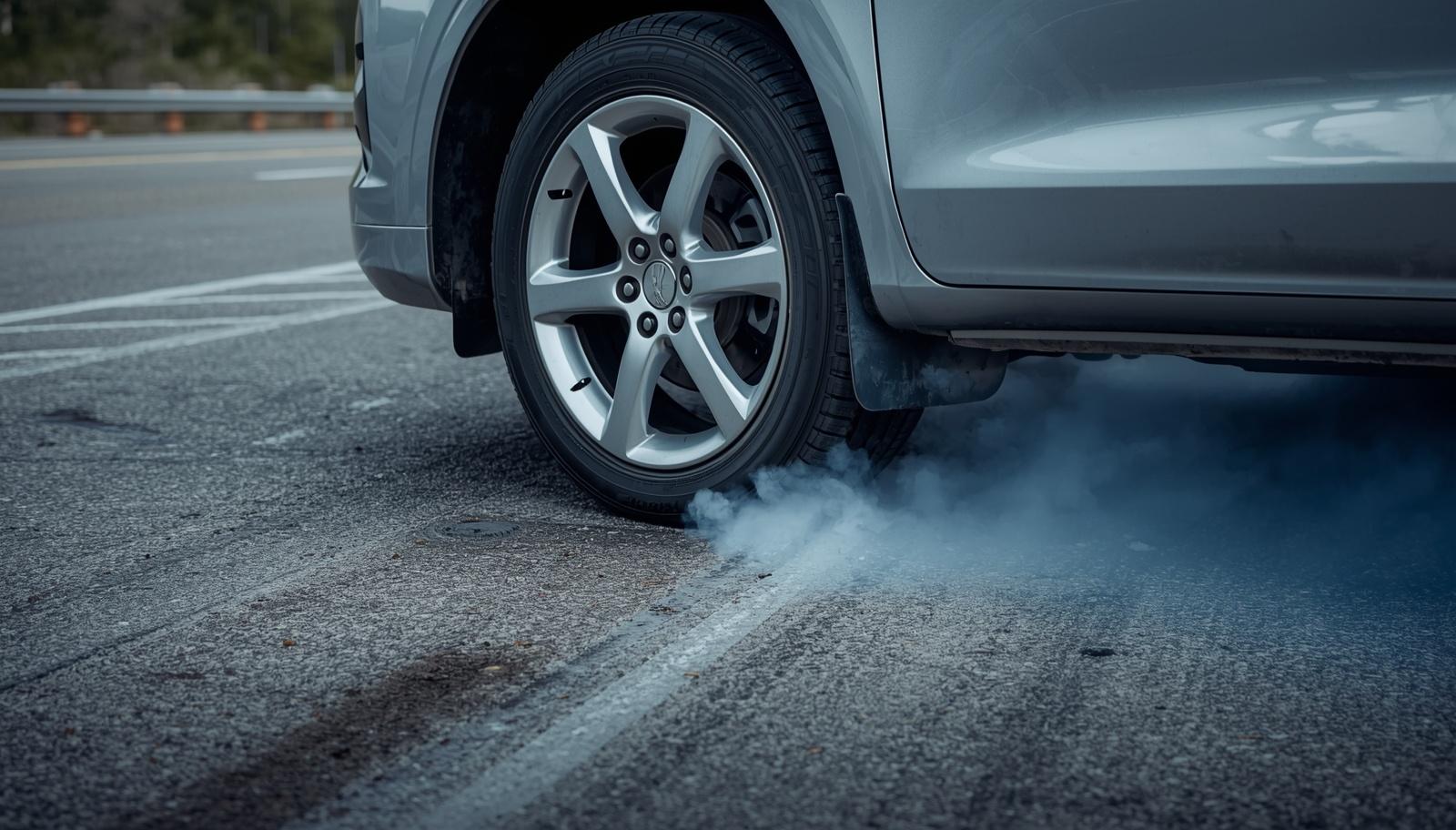 Locked slip can lead to catastrophic consequences
Furthermore, on uneven roads with potholes or bumps, sudden braking imposes additional vertical impact on the front wheels, destabilizing the vehicle’s posture. If the front wheels strike a curb or obstacle during braking, the car may experience severe pitching and lateral torque, potentially leading to rollover. For vehicles with a high center of gravity, such road disturbances amplify instability even further.
For passengers, abrupt braking at high speed produces a sharp forward acceleration differential, as their bodies continue moving at the original velocity. The seatbelt tightens instantly, restraining the chest and shoulders against the seat, creating a pronounced sense of compression. This compression is the belt distributing inertial forces across the sternum, clavicles, and pelvis—areas better suited to absorb stress—thus preventing the head or limbs from striking rigid structures.
Without a seatbelt, the torso would lunge forward, with the head striking the steering wheel or front seat, while the cervical spine endures severe shear and bending forces, often resulting in serious injury. Even with a seatbelt, excessive braking force can cause the neck to whip forward due to head inertia, producing “whiplash” and straining cervical muscles and ligaments.
Loose objects inside the cabin also become high‑speed projectiles under inertia, posing secondary impact hazards. Overall, passenger reactions during sudden high‑speed braking include chest compression, neck whiplash, head impact, and secondary collisions from flying objects. These risks explain why engineers developed seatbelt pretensioners and airbags—to mitigate acceleration differences and reduce the instantaneous forces imposed on the human body.
Automotive engineers have therefore devised safety systems precisely to address these dangers:
Driver habits and attitudes also play a decisive role:
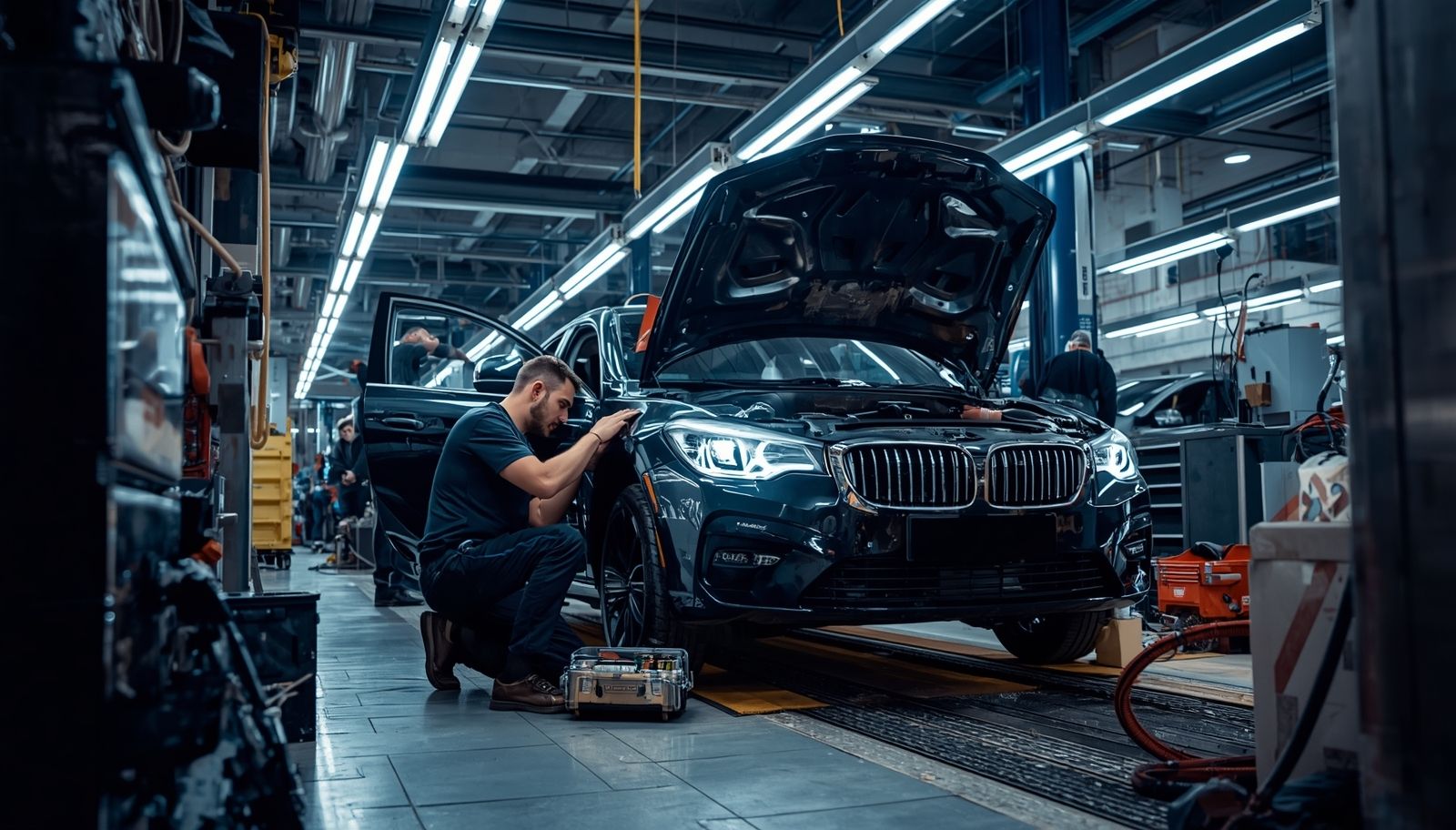 Regularly seek professional inspections of your vehicle to ensure safety
We leverage big data to bring you the most fascinating and mind-blowing trivia. Follow us for regular updates—prepare to be amazed while leveling up your knowledge.



Whether bizarre and fantastical events or ordinary, trivial matters, they all appear in our dreams. Some dreams are so vivid that we remember them clearly after waking, while others vanish instantly

People often think the birds are stupid, yet parrots completely overturn this stereotype. They are not only capable of learning sounds but can also reproduce human speech with striking clarity,

Volcanoes are breathtakingly majestic, drawing countless visitors to admire their scenery. But what would happen if someone were to slip and fall into one? ### Density The density of lava is

Bees are among the most familiar insects to humans. They flutter among flowers, collecting nectar, and often appear to embody diligence and charm. Yet behind this gentle exterior lies a harsh law of

The motor is one of the most important tools of human civilization, contributing greatly to the functioning of society. Electric fans, subways, electric cars, elevators—the examples are countless.
Atoms are the fundamental units that make up all matter in the world. They are so small that they cannot be seen with the naked eye, yet they are the building blocks of everything. At the center of

In our daily lives and studies, we often encounter situations where we forget things. It might be that we planned to bring something before leaving home but suddenly forgot, or that a piece of

A tornado is an extreme weather phenomenon, essentially a rapidly rotating column of air formed within intense convective thunderstorm clouds. When warm, moist air collides violently with cold, dry



Follow us for quirky updates, fun discoveries, and a front‑row seat to the weird and wonderful world we live in.