

Human sex is not only a fundamental biological trait but also a force that profoundly shapes the structure and functioning of society, influencing family roles, cultural norms, and institutional design. It permeates every aspect of daily life, becoming something we take for granted.
Different sexes possess distinct physiological characteristics, but what determines them? At what point in development are they decided?
Chromosomes are structures within cells that carry genetic information, composed of DNA and proteins. They function like a complete blueprint, determining the development and traits of living organisms. In humans, each cell typically contains 46 chromosomes arranged in 23 pairs. Of these, 22 pairs are autosomes, which govern various bodily functions and characteristics, while the final pair are sex chromosomes, directly involved in determining biological sex.
Sex chromosomes come in two forms: X and Y. Females usually possess two X chromosomes (XX), while males have one X and one Y chromosome (XY). An egg always contributes an X chromosome, whereas a sperm may carry either X or Y. If the sperm provides an X, the resulting zygote is XX and generally develops as female; if it provides a Y, the zygote is XY and typically develops as male.
Beyond sex determination, the X and Y chromosomes also carry distinct sets of genes. The X chromosome contains a large number of genes related to bodily functions, while the Y chromosome primarily initiates male sexual development, such as the formation of testes and the secretion of male hormones. This chromosomal mechanism ensures that sex is established at the very beginning of life and gradually manifests through subsequent stages of development.
The SRY gene (Sex-determining Region Y gene) is a unique segment located on the human Y chromosome, and it plays a central role in sex differentiation during early embryonic development. Its presence and expression determine whether the undifferentiated gonads will follow the pathway toward testis formation.
When the SRY gene is activated, it triggers a cascade of upstream genetic signals, most notably the activation of SOX9. SOX9 then suppresses the female developmental route and drives the establishment of testicular structures. As the testes mature, they begin secreting testosterone and anti-Müllerian hormone, which guide the differentiation of male reproductive organs while simultaneously inhibiting the formation of female reproductive structures.
In the absence of the SRY gene, the gonads do not develop into testes but instead follow the ovarian pathway. This means that without SRY, the embryo typically develops a female reproductive system.
In other words, female development represents the default trajectory, while male development requires the specific intervention of the SRY gene. This makes SRY the pivotal determinant in human sex differentiation.
Once the embryonic gonads have been determined as either testes or ovaries, sex differentiation enters its second stage, unfolding into distinct male or female developmental pathways.
If the gonads develop into testes, the supporting cells secrete anti-Müllerian hormone, which suppresses the formation of female reproductive structures. At the same time, the interstitial cells produce testosterone. Within the body, testosterone can be converted into dihydrotestosterone (DHT), which drives the differentiation of male external genitalia such as the penis and scrotum.
As the testes continue to secrete male hormones, both the internal and external male reproductive systems gradually take shape, laying the foundation for secondary sexual characteristics at puberty, including a deeper voice, increased muscle mass, and the growth of body hair.
If the gonads develop into ovaries, the absence of anti-Müllerian hormone allows the Müllerian ducts to naturally form the fallopian tubes, uterus, and part of the vaginal structure. Meanwhile, without the strong influence of testosterone, the external genitalia follow the female pathway, resulting in the development of the clitoris and vulva.
In early stages, the ovaries do not produce large amounts of sex hormones, but once puberty begins, they secrete estrogen. This further shapes female secondary sexual characteristics, including breast development, changes in fat distribution, and the establishment of the menstrual cycle.
 Sex and gender impact every aspect of our lives, becoming even more pronounced after puberty.
Swyer syndrome is a rare disorder of sex development in which individuals possess an XY karyotype but, due to mutation or deletion of the SRY gene, the signal that normally initiates testis formation fails to function. As a result, the embryonic gonads do not differentiate into testes but instead form fibrous “streak gonads” that lack hormonal activity.
In terms of genital development, the absence of testosterone and anti-Müllerian hormone causes the embryo to follow the female developmental pathway. Consequently, patients present with female external genitalia and partial internal structures such as a uterus and fallopian tubes. This means that although their chromosomal pattern is XY, their outward appearance resembles that of typical females. During infancy, this condition is usually not detected because the external genitalia appear normal.
Since the gonads are streak-like and nonfunctional, they cannot produce sufficient estrogen or androgens to trigger puberty. This leads to incomplete secondary sexual development, such as underdeveloped breasts, sparse body hair, and hormonal deficiencies that may affect bone and metabolic health.
Another common manifestation is the absence of menstruation. Although patients generally have a uterus and fallopian tubes, the lack of ovaries capable of ovulation and hormone secretion prevents the establishment of a normal menstrual cycle. For this reason, the condition is often discovered only when puberty fails to progress as expected.
The central approach to treating Swyer syndrome is to compensate for the patient’s lack of sex hormones. Because their gonads cannot normally secrete estrogen or progesterone, physicians typically initiate hormone replacement therapy at the onset of puberty. This helps promote breast development, maintain bone health, establish female secondary sexual characteristics, and simulate menstrual cycles.
Such treatment not only improves physical appearance and physiological function but also reduces long-term health risks such as osteoporosis. In addition, streak gonads carry a risk of tumor formation, so doctors often recommend early surgical removal to prevent malignancy.
Regarding fertility, although patients with Swyer syndrome do not have functional ovaries and cannot ovulate, they usually possess a uterus. This means pregnancy is still possible through assisted reproductive technologies. The most common method involves receiving donated eggs, followed by in vitro fertilization (IVF) and embryo transfer into the patient’s uterus. As long as the uterus can be maintained in normal condition through hormone therapy, successful pregnancy and childbirth remain achievable.
From cases of Swyer syndrome, it becomes evident that the true determinant of human sex is not simply the XY chromosomal pattern, but rather the presence and function of the SRY gene on the Y chromosome. If this gene is mutated or absent, even individuals with an XY karyotype cannot form testes, and the embryo will instead follow the default female developmental pathway.
Klinefelter syndrome is a condition caused by chromosomal abnormalities, in which patients typically have an extra X chromosome, most commonly with the karyotype XXY. This additional X chromosome disrupts normal gonadal development, often resulting in small, underdeveloped testes with impaired function and reduced testosterone production.
Because of insufficient testosterone, the patient’s sex organs, though formed as male structures during fetal development, fail to fully mature at puberty. This can lead to testicular atrophy, impaired sperm production, and frequently infertility.
In terms of physical appearance, individuals with Klinefelter syndrome generally present as male but may show subtle differences, such as taller stature, disproportionately long limbs, reduced muscle mass, and in some cases mild breast development. The lack of adequate testosterone also means that secondary sexual characteristics are incompletely established, with these differences becoming more apparent during adolescence.
The most common reproductive issue is defective sperm production. The extra X chromosome interferes with testicular development, leading to severely reduced or absent sperm counts, and thus most patients face infertility. This problem is often only recognized in adulthood when attempts at conception fail, since outward differences during childhood and adolescence are not always obvious.
Treatment typically begins with hormone replacement therapy to address testosterone deficiency, supporting the development of secondary sexual characteristics, bone health, and metabolic balance. Traditionally, patients with Klinefelter syndrome were considered unable to father children naturally.
However, advances in assisted reproductive technologies have opened new possibilities. Some patients may be able to achieve pregnancy through sperm retrieval techniques such as testicular sperm extraction (TESE), followed by in vitro fertilization (IVF) or intracytoplasmic sperm injection (ICSI). In cases where no viable sperm can be obtained, donor sperm remains an option to assist with reproduction.
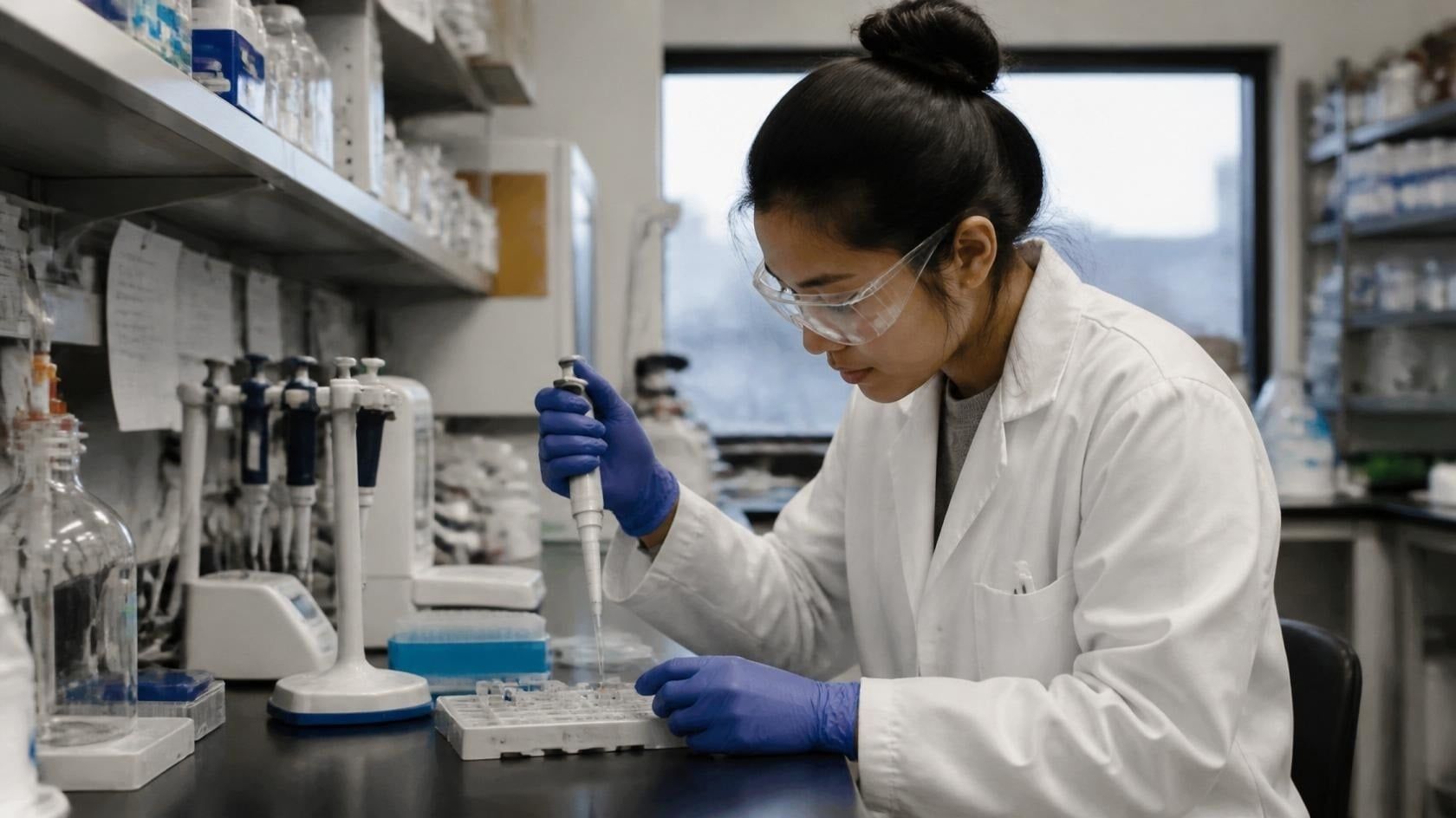 Medical technology is advancing rapidly, and many diseases can now be treated more effectively.
We leverage big data to bring you the most fascinating and mind-blowing trivia. Follow us for regular updates—prepare to be amazed while leveling up your knowledge.


Whether bizarre and fantastical events or ordinary, trivial matters, they all appear in our dreams. Some dreams are so vivid that we remember them clearly after waking, while others vanish instantly

People often think the birds are stupid, yet parrots completely overturn this stereotype. They are not only capable of learning sounds but can also reproduce human speech with striking clarity,

Tattooing is a form of bodily marking that has carried multiple meanings throughout human history. In ancient societies, it could signify religious devotion, serve as a symbol of tribal identity, or

The supermarket shelves are filled with an overwhelming variety of alcoholic beverages, and as consumers, we are often accustomed to simply purchasing ready-made products. Yet one may wonder: is it

The tender green of spring, the heat of summer, the golden hues of autumn, and the chill of winter—people have long grown accustomed to this cycle. Yet how many have paused to wonder: what force lies

Antibiotics are a class of drugs specifically designed to combat bacteria. They interfere with vital bacterial processes, such as damaging the cell wall, blocking protein synthesis, or disrupting DNA
Cocktail therapy is a strategy of combination drug treatment, built on the principle of administering medications with different mechanisms of action at the same time so that they complement one

Stepping into the tropical rainforest, people are often astonished by the sheer size of its creatures: beetles as thick as a thumb, butterflies with wings as wide as a hand, and even frogs and ants


Follow us for quirky updates, fun discoveries, and a front‑row seat to the weird and wonderful world we live in.