

Earthquakes often exact a heavy toll, not only causing casualties but also destroying houses, roads, and infrastructure, plunging entire communities into chaos and loss. In an instant, people may lose their homes and even their sense of security, coming to realize the irresistible force of the earth.
Yet why do some places seem to experience earthquakes so frequently, almost as a constant threat, while others scarcely ever feel the ground tremble? What forces determine this disparity? And must earthquakes always be regarded as something purely destructive?
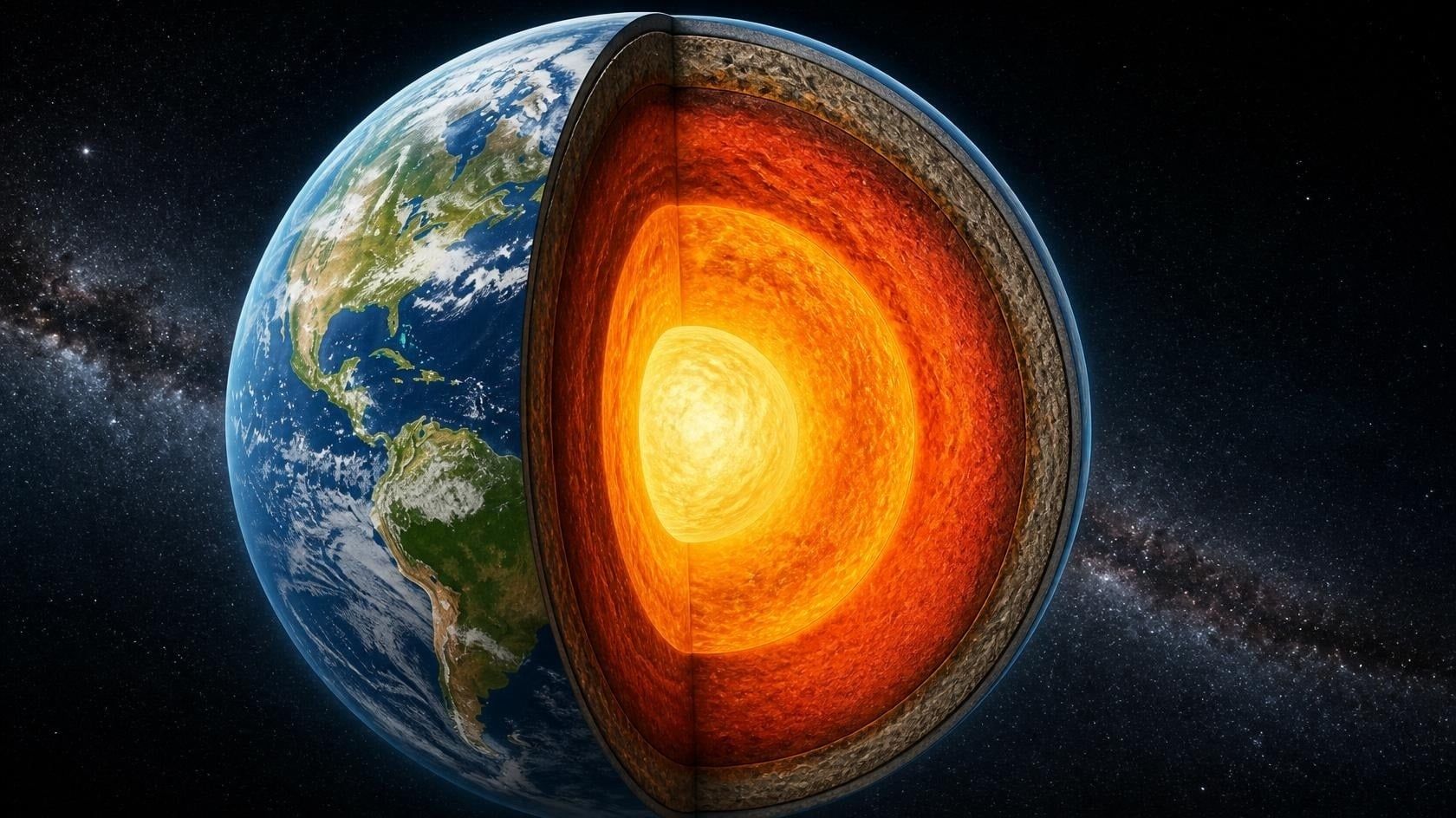
The Earth’s structure resembles a giant layered sphere, with each layer possessing distinct properties and functions. The outermost layer is the crust, which, although it makes up only a small fraction of the planet’s volume, forms the foundation of human life. The continental crust is thicker and composed mainly of rocks such as granite, while the oceanic crust is thinner and dominated by basalt.
Beneath the crust lies the mantle, a vast layer that accounts for most of Earth’s volume. Although the mantle is solid, under immense heat and pressure it can flow slowly, creating convection currents. These currents act like enormous conveyor belts, driving the movement of tectonic plates.
At the deepest level is the core, divided into the outer core and inner core. The outer core consists of liquid iron-nickel alloy, whose flowing metals generate Earth’s magnetic field, shielding the planet from solar wind and cosmic radiation. The inner core, by contrast, is a solid sphere of iron and nickel, kept rigid by extreme pressure. The core is not only a major source of Earth’s internal energy but also a crucial barrier that sustains conditions for life.
From the outside in, the crust, mantle, and core together form Earth’s “three-layer protective system”: the crust as our dwelling place, the mantle as the driving force, and the core as the deep energy center.
The Earth’s surface is not a single continuous sheet of rock, but rather a mosaic of vast plates fitted together like pieces of a giant puzzle. These plates float atop the mantle and, although their movement is extremely slow, over geological timescales they are capable of shifting continents and even shaping mountains and oceans.
The driving force behind plate movement comes from convection within the mantle. Deep within, heated material rises, cools, and then sinks again, creating a constant cycle much like a pot of boiling soup. This convection generates the push beneath the plates, causing them to separate, collide, or slide past one another. When plates diverge, magma wells up to form new ocean floor; when they collide, the immense pressure can thrust up towering mountain ranges.
The interaction between plates and mantle convection lies at the heart of plate movement: the mantle churns in the depths, the plates drift at the surface, and together they sculpt the dynamic face of our planet.
The Earth’s surface is composed of many plates that move slowly over time, inevitably meeting or interacting with one another. Different types of contact produce very different phenomena at the surface.
At convergent boundaries, plates push against and collide with each other, like two immense forces pressing together. This compression can uplift the crust to form towering mountain ranges, or force one plate to sink beneath another into the mantle’s depths.
At divergent boundaries, plates move apart, like pieces of a puzzle being pulled open. As gaps form, magma from the mantle rises and solidifies into new crust. This process is common beneath the oceans, creating vast mid-ocean ridges.
At transform boundaries, plates slide past each other along faults, not colliding or separating but moving horizontally. Though it may appear to be a mere “glancing pass,” this persistent friction leaves profound marks on the Earth’s surface.
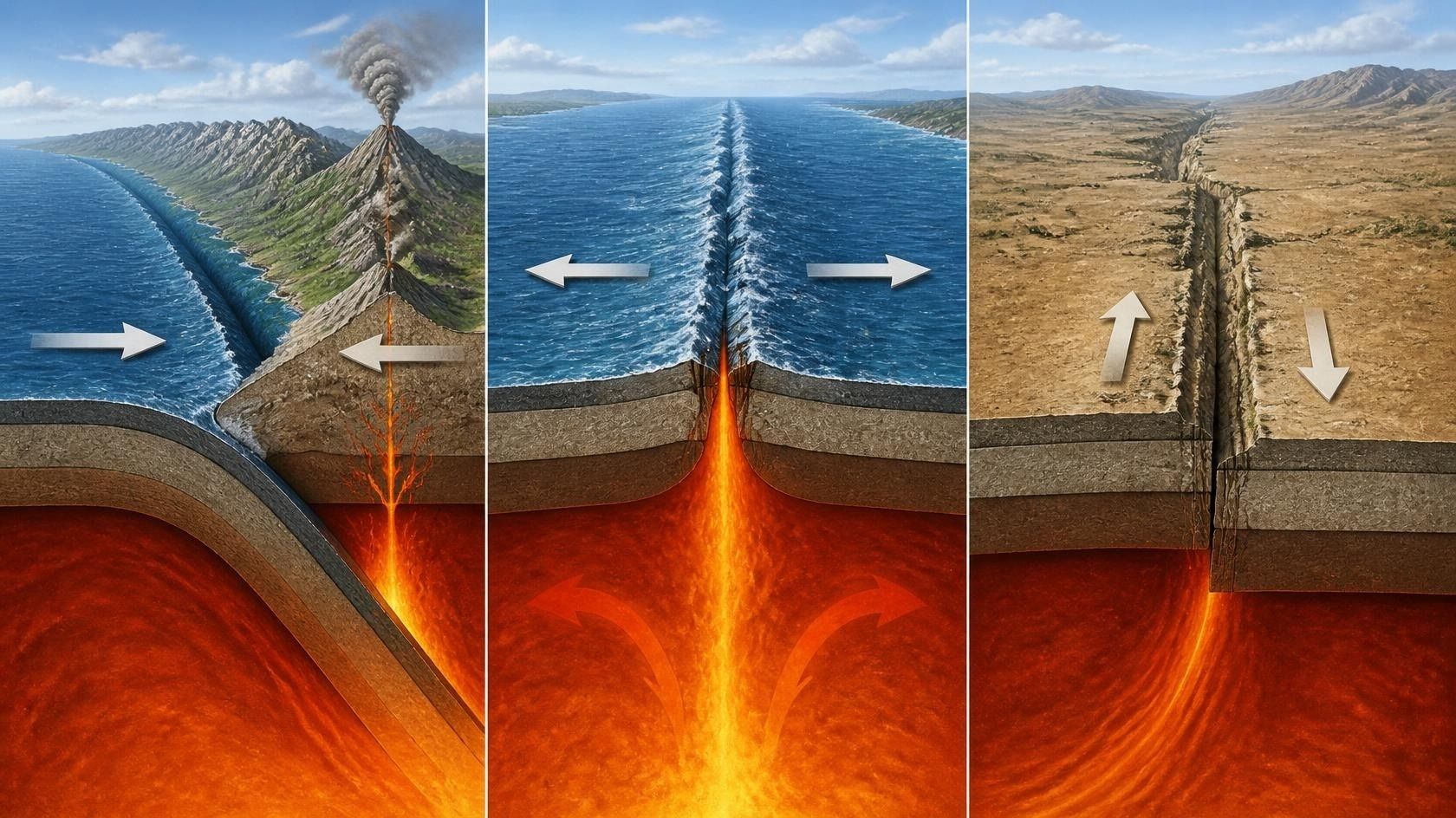 At convergent, divergent, and transform boundaries respectively, the ways in which plates interact give rise to different outcomes.
No matter the type of plate boundary, when plates come into contact and continue to be driven by mantle forces, they do not slide smoothly. Instead, they often become “locked” due to rough or irregular surfaces. This locking does not mean the plates stop moving; rather, the motion is temporarily restrained, and stress gradually builds up along the boundary.
Over time, the stress increases, and the rocks behave like a tightly stretched rope, bearing greater and greater pressure. When the stress exceeds the strength of the rocks, fracturing occurs. The locked section suddenly gives way, and the previously suppressed energy is released in an instant. This energy travels through the crust as vibrations—what we experience as an earthquake.
The intensity of an earthquake depends on the amount of energy released and the extent of the fracture. If only a small section breaks, the shaking may be mild; but if a large area ruptures, the energy propagates far more violently, producing a powerful earthquake.
| Continuous Plate Movement | Mantle convection drives the slow motion of plates, gradually bringing them into contact and under stress. |
| Gradual Stress Accumulation | At plate boundaries, rough surfaces cause plates to lock, preventing release of force and allowing stress to build within the rocks. |
| Fracture and Energy Release | When accumulated stress exceeds the rocks’ strength, fractures occur, the locked section suddenly gives way, and energy is released instantly, producing an earthquake. |
The vast majority of earthquakes worldwide do not occur randomly but are concentrated along specific seismic belts. These belts correspond to plate boundaries, where Earth’s energy most readily accumulates and is released.
The most prominent is the Circum-Pacific Seismic Belt, often described as a giant “Ring of Fire” encircling the Pacific Ocean. Stretching from the western coasts of the Americas to Asia and Oceania, this zone is marked by highly complex plate interactions—subduction, compression, and lateral sliding—making earthquakes and volcanic activity especially frequent. It accounts for the bulk of global seismic energy.
Beyond the Pacific, the Eurasian Seismic Belt is another major zone of activity. Beginning in the Mediterranean, it extends through Turkey and Iran, reaching India and the Himalayas before continuing into Southeast Asia. Earthquakes here are closely tied to mountain-building processes, as persistent plate collisions uplift the crust and release accumulated energy.
A third significant belt is the Mid-Ocean Ridge Seismic Belt, which runs for tens of thousands of kilometers along submarine ridges. These boundaries are divergent, where mantle magma rises to form new crust. Although earthquakes here are generally shallow and less destructive, they serve as direct evidence of Earth’s ongoing creation of new oceanic crust.
| Seismic Belt | Location Range | Boundary Type |
|---|---|---|
| Circum-Pacific Seismic Belt | Encircles the entire Pacific rim, including the west coasts of South and North America, Japan, Taiwan, the Philippines, Indonesia, and New Zealand | Predominantly convergent and transform boundaries, with subduction and lateral sliding intertwined |
| Eurasian Seismic Belt | Extends from the Mediterranean through Turkey, Iran, and India, reaching the Himalayas and Southeast Asia | Mainly convergent boundaries, where plate collisions drive mountain-building processes |
| Mid-Ocean Ridge Seismic Belt | Runs for tens of thousands of kilometers along the ridges of the Atlantic, Indian, and Pacific Oceans, with Iceland as a typical example | Divergent boundaries, where plates separate and rising magma forms new crust |
 The movement of the Australian plate transformed rainforests into eucalyptus forests; through natural selection, koalas evolved detoxification genes, low‑metabolism physiology, and tree‑grasping abilities, successfully adapting to extreme environments.
From a human perspective, earthquakes are often equated with collapsed buildings, ruptured ground, and immense disasters. Yet if we shift our view to the geological timescale of millions of years, it becomes clear that earthquakes are not an expression of hostility toward humanity, but rather the “breath and pulse” of a planet sustaining life and demonstrating its endless vitality.
The collisions and ruptures of tectonic plates that accompany earthquakes may appear destructive, but in truth they are part of Earth’s self-repair and resource recycling. Without these tremors and movements of the crust, the planet would, over the course of ages, gradually lose its dynamism and decline into a cold, lifeless desert.
In terms of the carbon cycle, subduction and compression at plate boundaries carry surface carbon—such as ocean sediments and biological remains—deep into the heated mantle. Later, through volcanic activity often associated with earthquakes, carbon dioxide is released back into the atmosphere in measured amounts.
This natural carbon cycling mechanism finely regulates Earth’s greenhouse effect—preventing heat from dissipating entirely and freezing the planet, while also avoiding excessive accumulation that would lead to unbearable heat. It is this ceaseless adjustment that safeguards the most habitable temperature range for life.
In terms of resource cycling, earthquakes and plate movements can bring deep-seated minerals and nutrient-rich materials up to the surface—such as metal deposits, geothermal energy, and even the release of groundwater. The seismic collisions and crustal uplift generated by plate interactions push mineral-laden rocks from the depths back toward the surface.
These fresh “nutrients of the Earth” are then carried by weathering and flowing water into oceans and plains, supplying the foundation for plant growth and marine plankton, and sustaining entire food chains. Without the continual stirring of the crust, soils would eventually become barren.
In landscape formation, the uplift of mountains, the creation of ocean trenches, and the opening of rift valleys are all products of plate interactions. The majestic Himalayas, the profound East African Rift, the winding island arcs, and the deep ocean trenches we admire today are masterpieces carved over millions of years by countless earthquakes and tectonic collisions.
Though earthquakes may damage the surface in the short term, over long spans of time they sculpt diverse geographic environments, providing habitats and sources of water for humanity and all living things. These landforms not only reshape Earth’s appearance but also influence river courses, climate distribution, and even the trajectory of human civilization.
In terms of biodiversity, the drifting of plates and the landscape changes triggered by earthquakes often split once-continuous continents or reconnect previously isolated landmasses.
This geographic isolation and recombination force species to adapt to new environments, driving genetic variation and divergence, and giving rise to countless unique species—for example, Australia’s distinctive kangaroos and koalas. Without the geographic transformations brought by seismic activity, Earth would not possess such dazzling biological diversity.
On Mars, by contrast, the cooling of its core halted plate movement and silenced earthquakes, ultimately erasing its magnetic field and atmosphere, leaving behind a dead planet. Earthquakes, therefore, are the most direct evidence that our planet’s “geological heart is still beating.” They remind us that we live on a vibrant, ever-renewing world. To understand, respect, and coexist with this dynamic force is humanity’s ultimate challenge for sustainable survival on this planet.
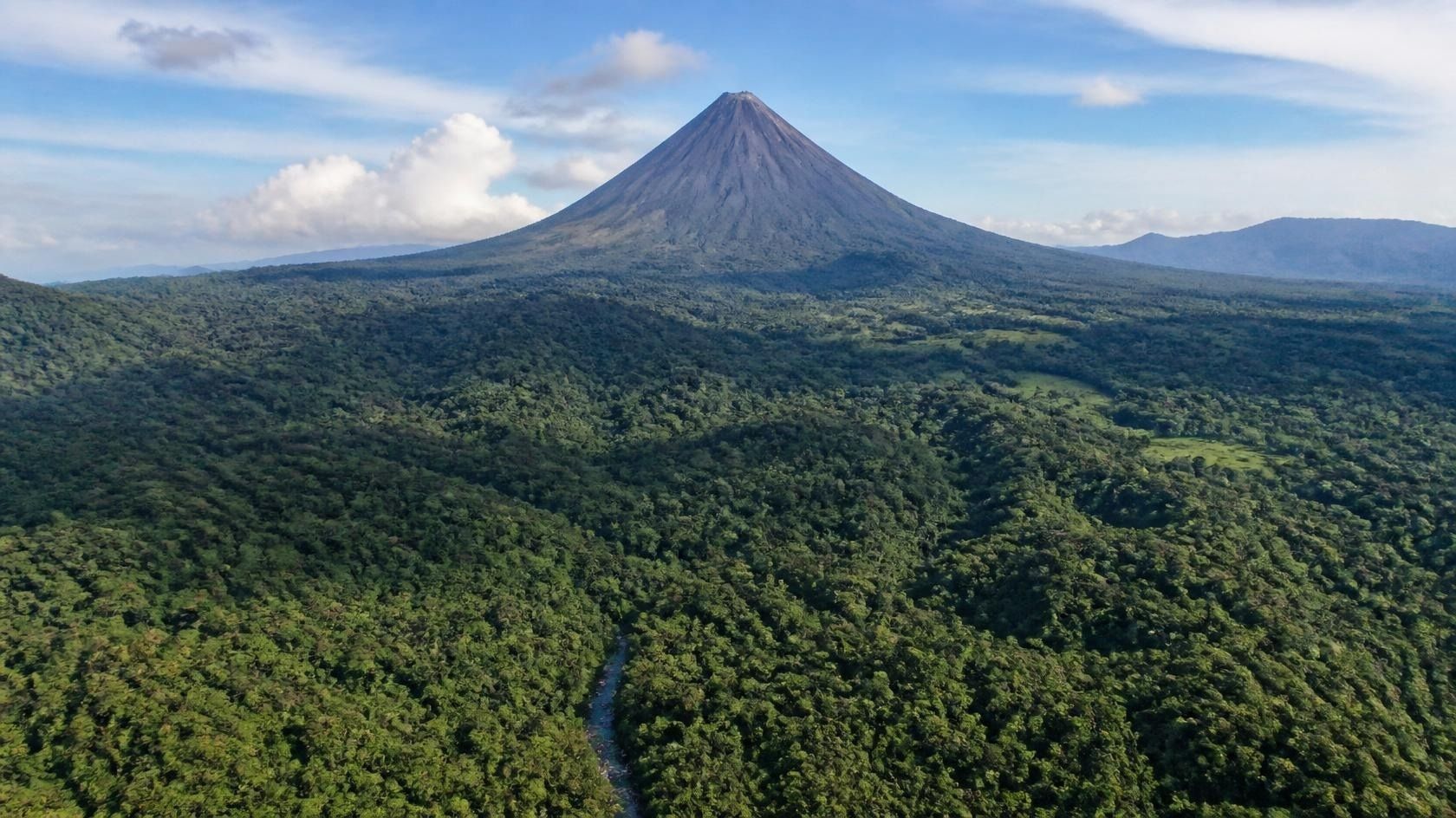 The Earth possesses a highly intricate system of self‑circulation and renewal; the losses earthquakes inflict upon human society are merely an unavoidable part of this process, while also serving as a reminder of humanity’s smallness in the face of nature.
We leverage big data to bring you the most fascinating and mind-blowing trivia. Follow us for regular updates—prepare to be amazed while leveling up your knowledge.


Radar has an exceptionally wide range of applications, capable of precisely determining an object’s position, distance, and velocity. Its powerful effectiveness becomes even more evident under
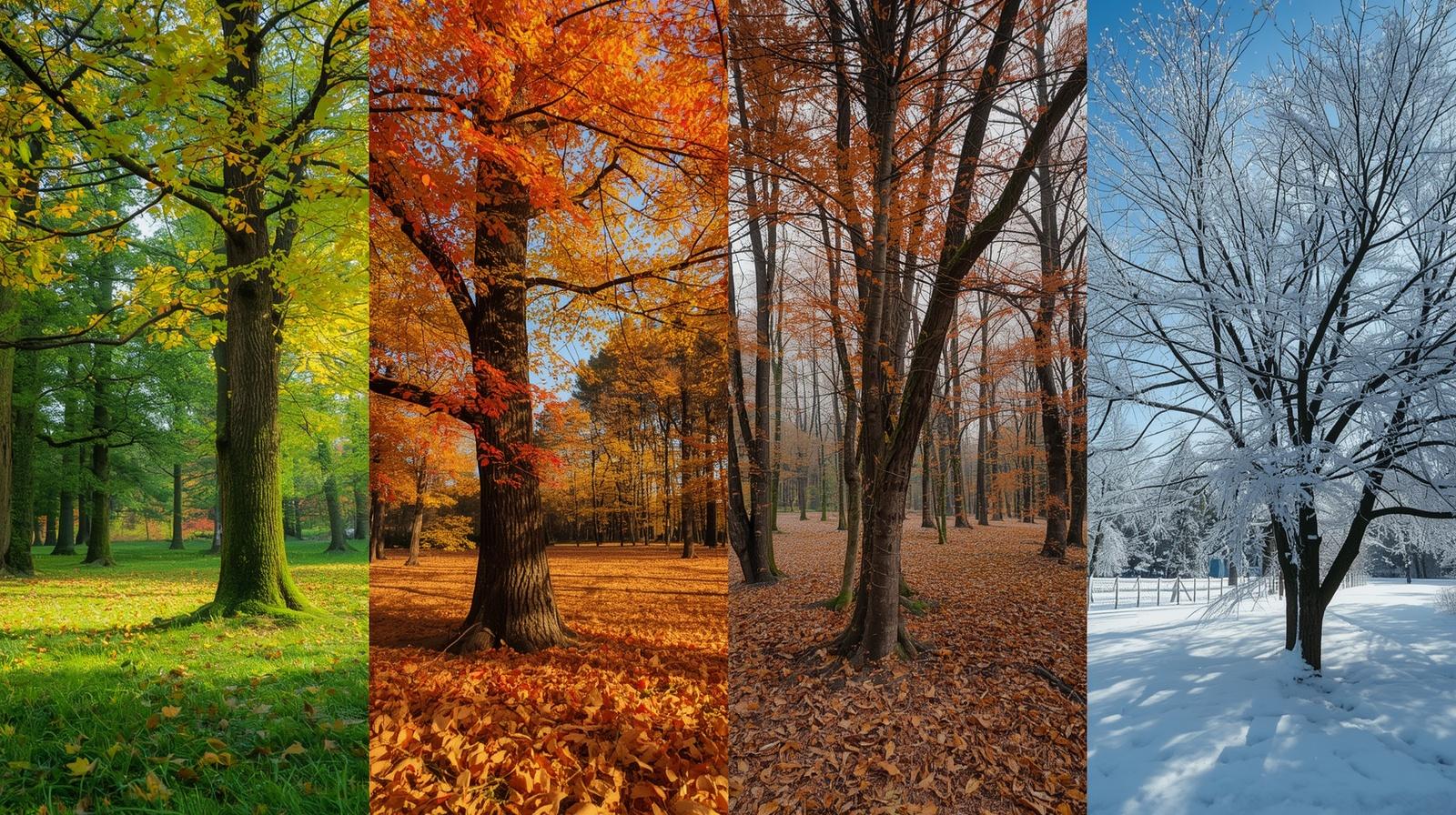
The tender green of spring, the heat of summer, the golden hues of autumn, and the chill of winter—people have long grown accustomed to this cycle. Yet how many have paused to wonder: what force lies
Eggs are a highly nutritious food. They contain high‑quality protein that provides the essential amino acids required by the human body. The yolk is rich in vitamins A, D, E, and K, as well as

Teeth are among the hardest tissues in the human body, capable of withstanding immense pressure during chewing and resisting everyday wear. Yet within such a resilient structure, why does corrosion

Cocktail therapy is a strategy of combination drug treatment, built on the principle of administering medications with different mechanisms of action at the same time so that they complement one

Magnetic Levitation (Maglev) trains are famous for their high speed, but how can such heavy trains float? And why do they need to float at all? ### Operating Principle A maglev train is a

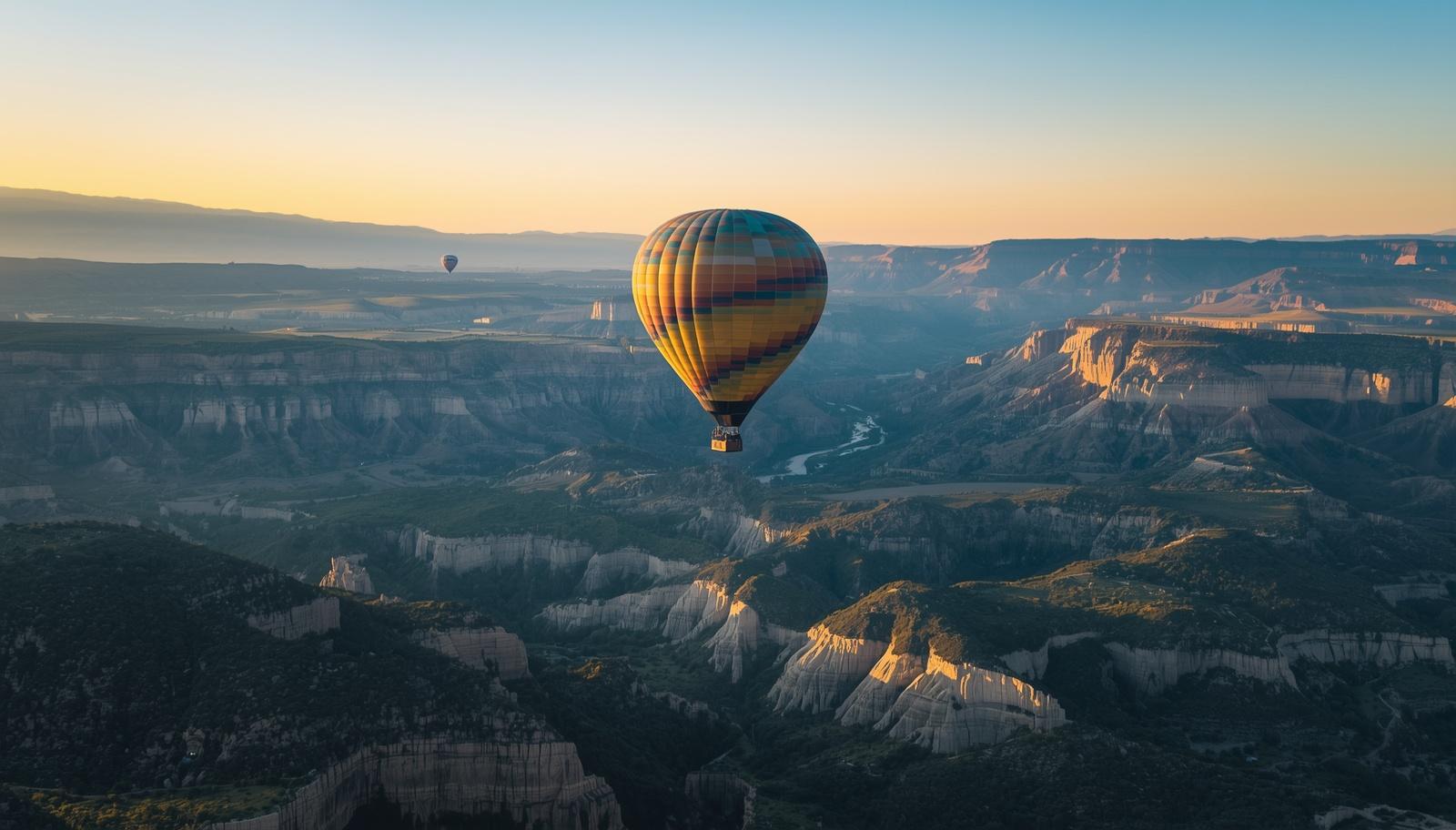
A hot air balloon is a large and graceful aircraft, symbolizing humanity’s earliest attempts to explore the sky. In eighteenth‑century France, the Montgolfier brothers first launched such a fabric
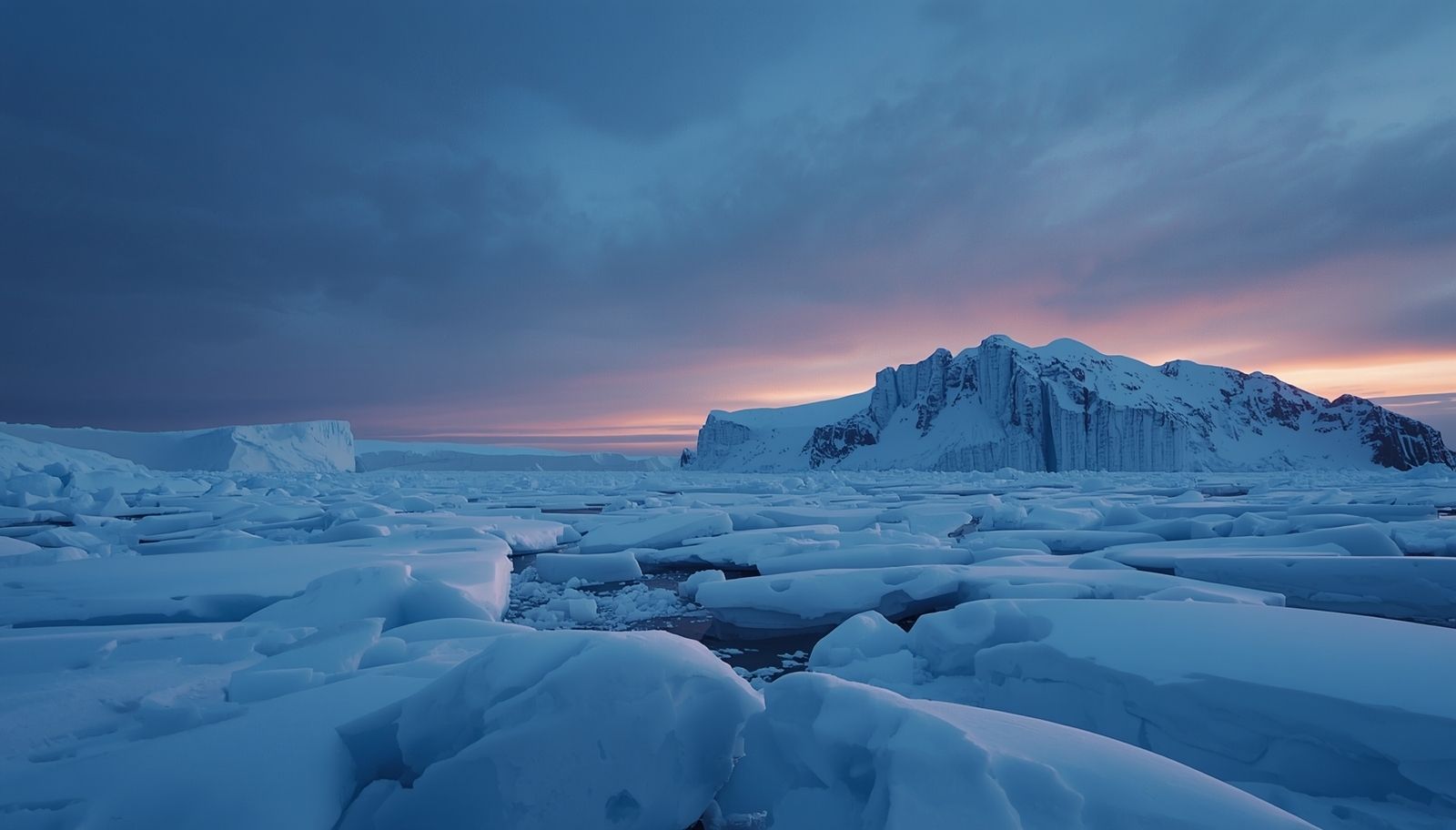
The polar realms, shrouded in relentless cold and endless mystery, remain territories that most people will never set foot upon in their lifetime. The Antarctic and the Arctic lie at opposite ends of

Follow us for quirky updates, fun discoveries, and a front‑row seat to the weird and wonderful world we live in.