

Many people have experienced hiccups—those sudden spasms that come in bursts and make us feel uncomfortable. If hiccups occur at the wrong moment, they can be quite embarrassing.
So why do hiccups happen? Does drinking water really help? And are there ways to prevent or stop them immediately?
The diaphragm is a thin yet resilient sheet of muscle located between the thoracic cavity and the abdominal cavity, acting like a “partition wall” that separates the heart and lungs above from the digestive organs below. Its shape is dome‑like, with the center slightly elevated and the edges attached to the ribs, sternum, and spine, forming a natural barrier.
Its primary function is breathing. When the diaphragm contracts, the muscle pulls downward, enlarging the thoracic cavity and allowing the lungs to draw in air. When the diaphragm relaxes, the muscle returns to its dome shape, the thoracic cavity shrinks, and air is expelled. This rhythmic up‑and‑down motion works much like a piston, driving the cycle of respiration.
Beyond breathing, the diaphragm also plays supporting roles. It helps maintain pressure balance between the thoracic and abdominal cavities, assists blood flow back to the heart, and contributes force during actions such as coughing, hiccupping, or defecation.
Hiccups are a distinctive respiratory phenomenon involving both the diaphragm and the glottis. When the diaphragm is suddenly stimulated and contracts involuntarily, the thoracic cavity expands abruptly, drawing air rapidly into the lungs.
Ordinarily, this inhalation should be smooth, but during a hiccup the glottis snaps shut almost instantly, blocking the normal passage of airflow. As a result, the incoming air is “trapped” and strikes the glottis, producing the familiar hiccup sound.
Here, the diaphragm acts as the “initiator,” since its abnormal contraction is the root cause of the hiccup, while the glottis serves as the “sound‑maker,” its sudden closure turning the event into an audible reflex.
In other words, the diaphragm drives the air inward, and the glottis abruptly cuts it off—their combined action creates the unique manifestation of a hiccup.
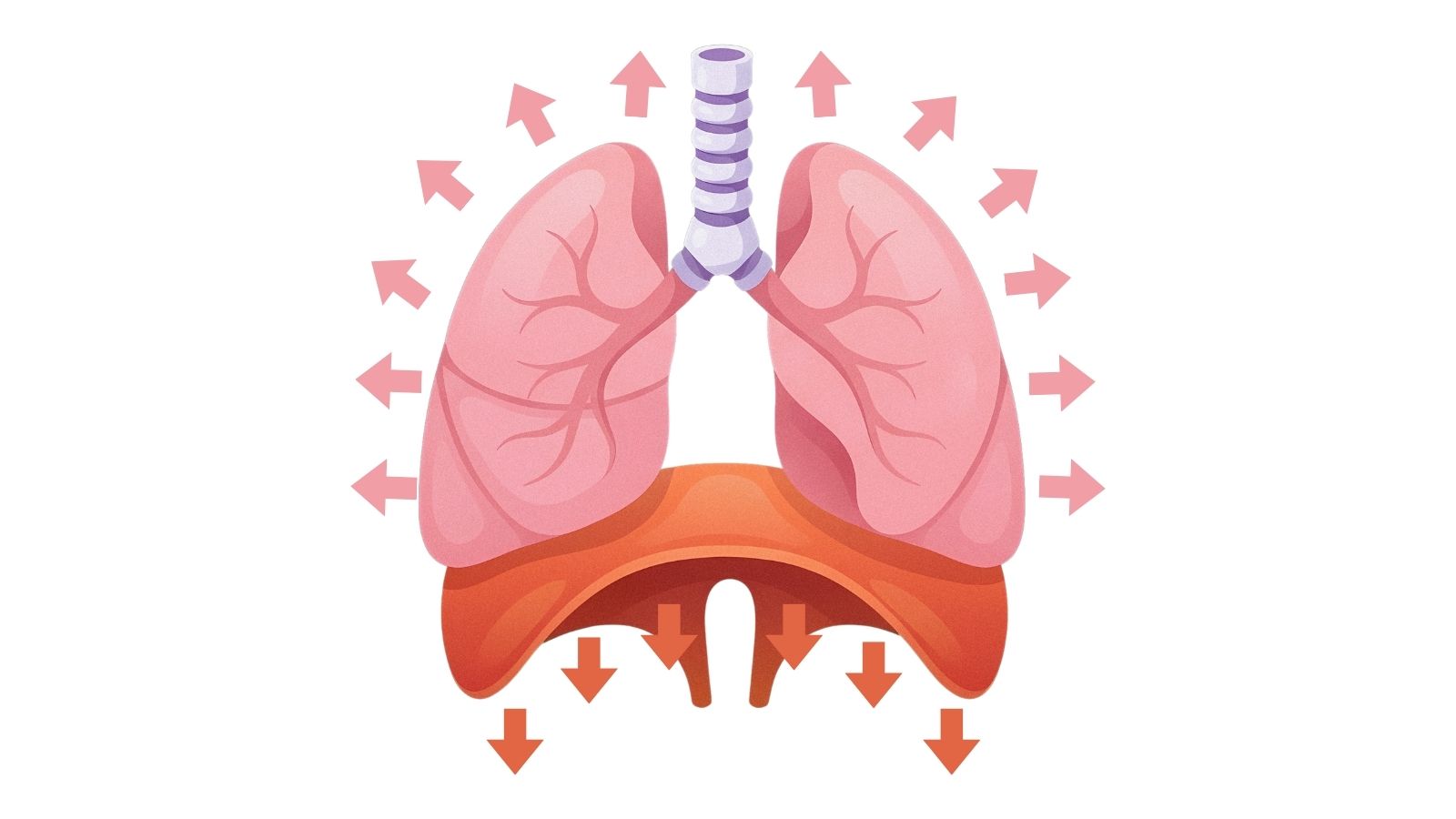 The diaphragm lies beneath the lungs. During inhalation, it contracts and pulls downward, allowing the lungs to draw in air and expand.
The triggers for hiccups are quite varied and often linked to the sensitivity of the diaphragm and its associated nerves. The most common situation is sudden gastric expansion—for example, eating too quickly, overeating, or drinking large amounts of carbonated beverages. The stretching of the stomach wall stimulates nerves near the diaphragm, causing it to contract involuntarily.
Beyond digestive stimuli, temperature changes can also provoke hiccups. Rapidly swallowing very cold drinks or hot food can abruptly stimulate nerves in the esophagus and stomach, thereby affecting the diaphragm’s function. Emotional tension or excessive stress may likewise prompt the autonomic nervous system to misfire, leading the diaphragm to make brief “false moves.”
Certain medications or medical conditions can also serve as sources of hiccups. Disorders that affect the central nervous system or the nerves controlling the diaphragm may prolong hiccups, sometimes turning them into a clinical symptom requiring treatment.
The ways to stop hiccups mainly involve either interrupting the abnormal rhythm of the diaphragm’s contractions or altering the state of breathing and nerve activity. The most common technique is holding one’s breath, which fills the lungs with air and temporarily increases pressure in the thoracic cavity, thereby suppressing excessive contractions of the diaphragm. Another approach is drinking water quickly, especially in repeated small gulps, which stimulates the esophagus and nerves to reset the diaphragm’s function.
There are also methods that rely on nerve reflexes to halt hiccups—for instance, being startled suddenly, pulling on the tongue, or gently pressing the eyeballs. These actions stimulate the vagus nerve and disrupt the reflex pathway of hiccups. Taking a spoonful of sugar or sucking on an ice cube can likewise activate sensory nerves in the mouth and throat, indirectly influencing the diaphragm’s contraction frequency.
In summary, although there are many ways to stop hiccups, the core principle is always to modify breathing patterns or stimulate related nerves so that the diaphragm returns to its normal rhythm. In most cases, hiccups are only a temporary physiological phenomenon. However, if they persist or are accompanied by discomfort such as chest pain or difficulty swallowing, medical attention should be sought promptly to obtain professional advice.
In 1922, an American man named Charles Osborne—originally a farmer living an ordinary life—suffered an accident in which he fell and was injured. From that moment on, he began a hiccup episode that lasted for an astonishing 68 years. Doctors speculated that the fall had damaged parts of his brainstem or nerves connected to the diaphragm, preventing the hiccup reflex from being properly suppressed.
During the first several decades, his hiccups were extremely frequent, occurring 20 to 30 times per minute with almost no interruption. Over time, the frequency gradually decreased, but the hiccups never fully disappeared. It is estimated that he hiccupped more than 400 million times in his lifetime, a staggering figure that earned him a place in the Guinness World Records.
Despite this condition, Osborne strove to live as normal a life as possible. He learned special breathing techniques to soften the sound of his hiccups so he could converse with others. He married, raised children, and even participated in social activities. Though hiccups brought inconvenience, he demonstrated remarkable patience and adaptability.
His case drew wide attention from the medical community. Numerous doctors attempted treatments, including medications and nerve stimulation, but none succeeded in eliminating the problem.
Then, in 1990, his hiccups suddenly stopped—a phenomenon that remains a medical mystery. Some physicians suggested that age-related changes in his nervous system or diaphragm reflex pathways might have altered the mechanism, while others believed that decades of continuous hiccups had eventually exhausted the nerves responsible for triggering them. Whatever the cause, the cessation was spontaneous rather than the result of medical intervention.
After this unexpected relief, Osborne experienced a newfound calm in his daily life. Having endured 68 years of relentless hiccups, the cessation was an indescribable release. The following year, in 1991, he passed away at the age of 97.
Osborne’s story reminds us that while hiccups are usually a brief and harmless physiological event, under extraordinary circumstances they can become a lifelong burden. His experience stands as both a medical curiosity and a testament to human resilience in the face of persistent adversity.
We leverage big data to bring you the most fascinating and mind-blowing trivia. Follow us for regular updates—prepare to be amazed while leveling up your knowledge.


Tattooing is a form of bodily marking that has carried multiple meanings throughout human history. In ancient societies, it could signify religious devotion, serve as a symbol of tribal identity, or

Honey is a natural substance produced by bees, created from the sweet nectar they collect from flowers. Through repeated processing and concentration, the nectar is transformed and stored within the

In today’s society, motors are virtually everywhere. They drive robotic arms in factories, keeping production lines running at high speed; they power elevators and automatic doors, making urban life
The chicken’s body is likewise covered with feathers and equipped with wings, giving the outward impression of being suited for flight. Yet why is it that they cannot soar into the sky like other

Static electricity is a peculiar natural phenomenon. It seems to make objects cling to each other out of nowhere, and at times it suddenly releases energy, producing a sharp sting as if one has been

Magnetic Levitation (Maglev) trains are famous for their high speed, but how can such heavy trains float? And why do they need to float at all? ### Operating Principle A maglev train is a

In human appearance, hair is often the most striking feature. It not only shapes our image but also carries cultural and aesthetic significance. Yet not everyone can maintain a full head of hair over

In the human world, rest and sleep are essential to life. Humans, mammals, and even most fish can conserve energy by remaining still. Yet in the vast ocean, there exists a group of creatures that can


Follow us for quirky updates, fun discoveries, and a front‑row seat to the weird and wonderful world we live in.