

In everyday life, showering is a time for relaxation, cleansing, and even reflection. Yet there is one seemingly trivial question that often sparks debate: should you urinate while showering? Some argue that it is convenient and saves water, even reducing the amount used to flush the toilet; others feel it is unhygienic and psychologically uncomfortable.
What makes this topic intriguing is that it touches not only on personal habits, but also on hygiene, environmental concerns, and health. As we stand beneath the stream of water in the bathroom, this seemingly private act reflects broader differences in human lifestyles and the clash of perspectives.
Urinating while showering can in fact contribute to water savings. Under normal circumstances, each trip to the toilet requires a flush, and modern toilets consume on average about 6 to 9 liters of clean water per flush. By addressing this need during a shower, that extra use of water can be avoided.
More importantly, this “combined behavior” integrates two everyday necessities—showering and urination—into a single process, preventing the repeated use of water resources. Over time, the reduction in household water consumption can be substantial. If a person showers once a day and urinates during that time, the annual savings could amount to several thousand liters of water, equivalent to dozens of barrels of drinking water.
In addition, this practice indirectly eases the burden on wastewater treatment systems. Each avoided flush means one less surge of clean water entering the sewage system. From the perspective of urban water management, such small-scale savings, if widely adopted, could collectively produce a significant impact.
Beyond saving water, urinating while showering can also bring additional environmental benefits in terms of reducing carbon emissions and resource consumption. For women, using toilet paper is typically part of daily urination, yet the production of toilet paper requires large amounts of wood, energy, and water, and is accompanied by carbon emissions. Each sheet avoided means less deforestation, less energy used in pulp and paper manufacturing.
When women choose to urinate during a shower, the immediate rinsing with water eliminates the need for toilet paper. This seemingly minor change, when accumulated over time, can significantly reduce paper consumption. If a person saves just a few sheets of toilet paper each day, the annual reduction could amount to hundreds of sheets, translating into several kilograms less pulp required. This not only lowers carbon emissions but also reduces household waste.
One of the most common concerns people have is the belief that urine is dirty. Yet from a scientific perspective, normal urine is not nearly as unclean as many assume. It is composed primarily of water—over 95%—with the remainder consisting of dissolved salts, urea, and other metabolic byproducts. These substances are not bacteria or harmful pathogens, but rather natural waste products expelled by the body.
In a healthy individual, urine is typically sterile at the point of excretion, containing no disease-causing bacteria. Only in cases of urinary tract infections or other medical conditions might urine carry bacteria or abnormal components. In other words, for most people, urine is far closer to “water with trace metabolic substances” than to feces, which is rich in pathogens.
During a shower, the continuous flow of water immediately dilutes and washes away urine, preventing any residue or hygiene issues. This is why many medical studies and environmental advocates argue that urinating in the shower poses no threat to health or cleanliness.
Moreover, in most modern houses or apartments, the plumbing design ensures that the bathroom drain ultimately merges with the toilet drainage system, both leading to the same sewage pipeline. In other words, whether it is toilet flushing or shower drainage, all of it eventually enters the same sewer network and is processed collectively by municipal wastewater treatment facilities.
The logic behind this design is straightforward: all domestic water use and waste must be channeled together to allow for effective sewage treatment and resource management. Thus, when urine enters the drain during a shower, it is immediately diluted and washed away by a large volume of shower water, then directed into the same pipeline as toilet flushes. From an infrastructure standpoint, there is no essential difference.
This means that urinating while showering does not “add extra pollution” to the bathroom drainage system, since its ultimate destination is identical to that of toilet water. This is also why some people argue that, given urine and toilet flush water eventually converge, addressing the need during a shower can actually save the step of flushing, thereby conserving water and reducing consumption.
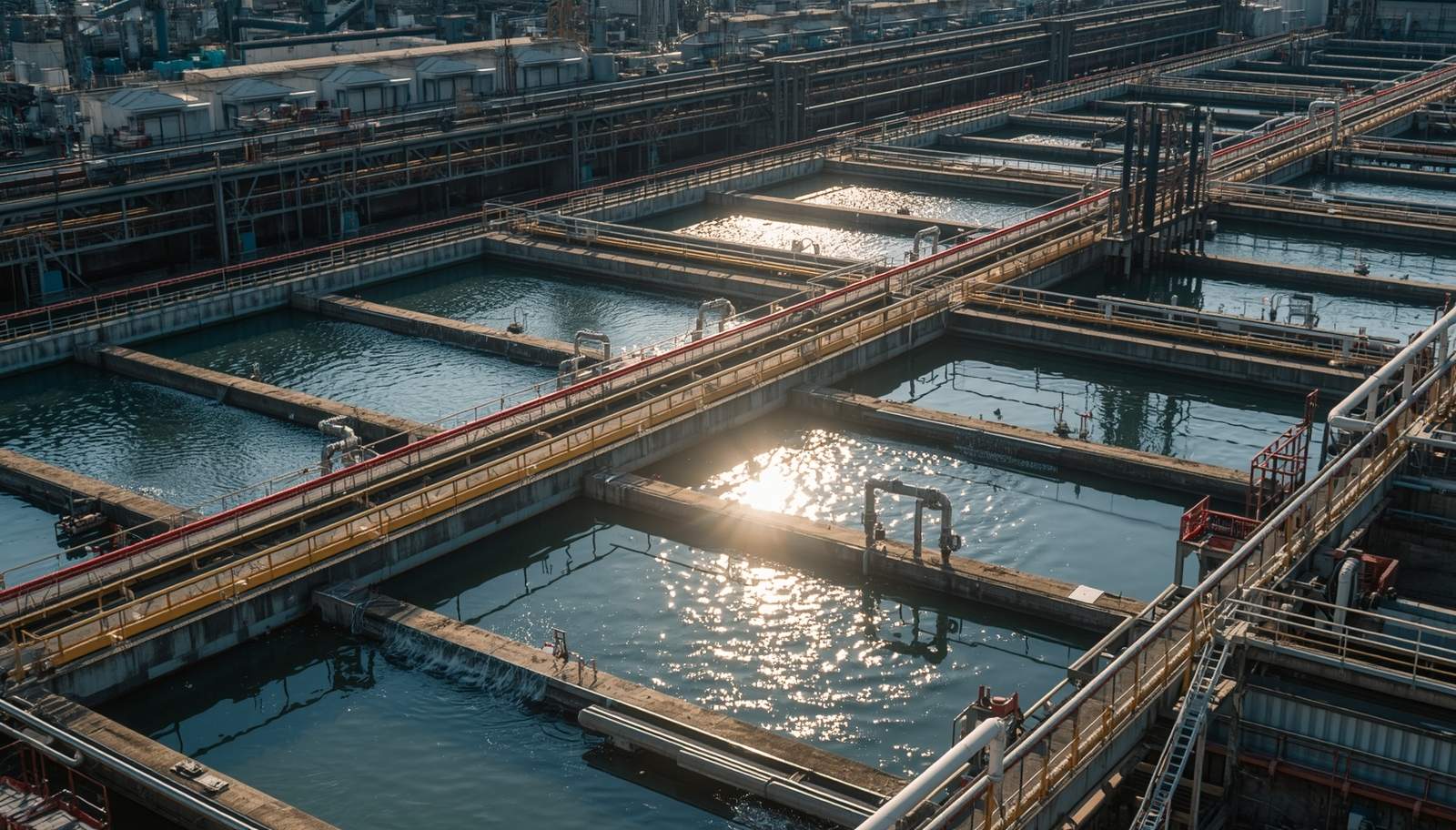 Sewage Treatment Plant
Although urinating while showering may have benefits such as saving water and reducing consumption, it can also create an undesirable psychological effect—a conditioned reflex. The human nervous system readily associates certain sensory stimuli with specific behaviors, and this is what we call a conditioned reflex. When a person becomes accustomed to urinating during a shower, over time the sound of running water alone may trigger the urge to urinate.
This reflex may seem harmless in the bathroom, but it can become problematic in other settings. For instance, hearing water flow in public places—such as at a sink, a fountain, or even during rainfall—might provoke unnecessary urges to urinate, leading to discomfort or embarrassment. For some individuals, this mental association of “water sound = need to urinate” can affect quality of life and create stress in situations where bladder control is important, increasing inconvenience and psychological burden.
For women, urinating while showering differs from men because female body structure is not suited to standing urination. When a woman attempts to urinate in a standing position, the pelvic floor muscles must exert extra effort to control the direction of the stream, creating tension and additional strain. Over time, this can lead to pelvic floor fatigue, increasing the risk of urinary incontinence or reduced bladder control.
In addition, the female urethra is shorter, making it harder to direct the flow. In a standing posture, urine may splash onto the legs or body, causing discomfort and hygiene concerns. Compared with sitting or squatting, standing urination requires greater muscular coordination, and this “unnatural posture” adds stress to the process.
Furthermore, standing urination may result in incomplete bladder emptying. Because the posture does not favor smooth urine flow, some urine may remain in the bladder, which over time raises the risk of urinary tract infections. These physiological costs may not be immediately apparent, but if the habit persists, they can pose potential risks to women’s urinary health.
 Loss of bladder control can lead to extremely awkward situations
Taking all perspectives into account, urinating while showering has both advantages and drawbacks. For men, standing urination is already a natural posture, and since urine in a healthy state is not inherently dirty, doing so in the shower can indeed bring benefits such as saving water, reducing carbon emissions, and lowering toilet paper use. The main concern for men lies more in the psychological aspect: the conditioned reflex to the sound of running water, which may trigger involuntary urges to urinate and deserves attention.
For women, the situation is more complex. While urinating in the shower can also save water and reduce toilet paper consumption, standing urination is not a natural posture. The pelvic floor muscles must exert extra effort, which over time may lead to fatigue and weakened bladder control. In addition, the direction of urine flow is harder to manage, and incomplete bladder emptying may increase the risk of urinary tract infections. In other words, the physiological cost for women is higher than for men.
Therefore, the answer to “Should you urinate while showering?” is not absolute. For healthy men, doing so occasionally may yield environmental benefits that outweigh the risks. For women, greater caution is needed, as posture and anatomy may carry long-term consequences. Ultimately, this is a matter of personal habit: some value convenience and sustainability, while others prioritize hygiene and psychological comfort. What truly matters is understanding the science and trade-offs behind the choice.
| Men | Women | |
|---|---|---|
| Posture | Standing urination is a natural posture, with virtually no extra strain | Standing urination is not a natural posture, requiring additional effort from the pelvic floor muscles |
| Hygiene | Urine is quickly diluted and washed away by the shower stream, posing minimal hygiene concerns | The flow is harder to control, and splashing onto the legs or body increases the burden of cleaning |
| Physiological Risks | The main risk lies in the psychological “running water conditioned reflex” | In addition to the reflex risk, incomplete bladder emptying may occur, raising the likelihood of urinary tract infections |
| Environmental Benefits | Saves water, reduces carbon emissions, and lowers toilet paper use—clear benefits | Also saves water and reduces toilet paper use |
| Overall Assessment | Benefits outweigh risks | Greater physiological and health concerns, with risks outweighing benefits overall |
Although urinating while showering may bring benefits such as saving water and reducing consumption for healthy individuals, it can be a habit best avoided for those with urinary system problems.
Patients with conditions like frequent urination or incontinence already have weaker bladder control, and if they develop the reflex of “urinating when hearing running water,” their ability to regulate urination voluntarily may be further undermined. Over time, this can make the urge to urinate more easily triggered by external stimuli, worsening their symptoms.
For those with incontinence, urinating in the shower may also deepen psychological distress. Such behavior can gradually accustom the body to “uncontrolled urination,” making it harder to maintain stable habits in daily life. This not only increases physical inconvenience but can also lead to anxiety and embarrassment.
Moreover, patients with frequent urination or incontinence often need training to strengthen bladder and pelvic floor muscle control. The habit of urinating in the shower runs counter to this therapeutic direction. In other words, for these individuals, avoiding urination during showering is an important part of maintaining or improving their condition.
We leverage big data to bring you the most fascinating and mind-blowing trivia. Follow us for regular updates—prepare to be amazed while leveling up your knowledge.


Majestic mountain ranges bring extraordinary landforms to the Earth. From an initial stretch of flat ground to towering peaks that pierce the clouds, how did they rise from beneath the surface and

Earthquakes often exact a heavy toll, not only causing casualties but also destroying houses, roads, and infrastructure, plunging entire communities into chaos and loss. In an instant, people may

A well is one of humanity’s earliest water‑drawing facilities. Its primary function is to bring groundwater to the surface, supplying people with drinking water, irrigation, and everyday use. Because

The current global situation of myopia has become a significant public health issue. With the advance of urbanization and the widespread use of technology, human lifestyles have undergone profound

For many people, losing weight feels like a lifelong mission. In today’s world of abundance, food shortages are no longer a concern. Instead, overnutrition has led to widespread obesity. ###

Acne is often regarded as a troubling condition: it not only affects one’s appearance but can also subtly undermine self‑confidence. Many people, when looking in the mirror, feel anxious at the sight

Cocktail therapy is a strategy of combination drug treatment, built on the principle of administering medications with different mechanisms of action at the same time so that they complement one

The droplets that fall from the sky are not always the same. At times they are raindrops, striking eaves and streets; at other times they are snowflakes, gently covering rooftops and fields. Both


Follow us for quirky updates, fun discoveries, and a front‑row seat to the weird and wonderful world we live in.