
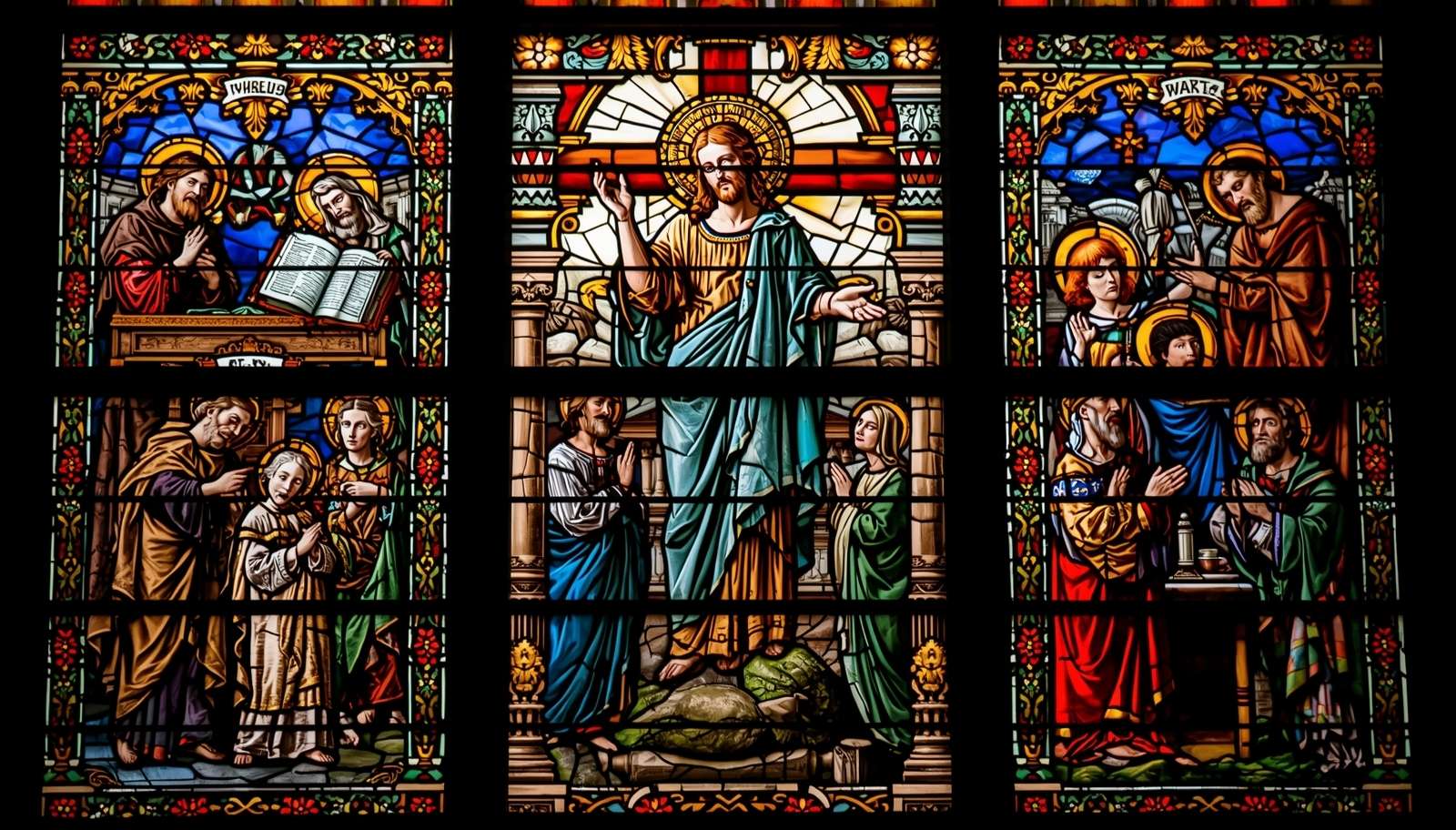
Christianity, Catholicism, Orthodoxy and Protestantism
Christianity is a faith centered on Jesus Christ, emphasizing salvation and the relationship with God. It is also one of the religions with the largest number of followers worldwide. So what is the relationship between Christianity and Catholicism, Orthodoxy, and Protestantism? Are they entirely different religions?
Judaism is an ancient religion whose core lies in the belief in one God and in the conviction that God established a special covenant with the people of Israel. Jewish religious life revolves around the Law, which regulates daily conduct, dietary practices, rituals, and community order. Jews believe they are the “chosen people,” their history a journey with God, and they continue to await the coming of the Messiah, who is hoped to bring deliverance and peace.
Against this religious backdrop, Jesus was born into a Jewish family. His teachings were initially directed toward Jews, continuing Jewish tradition while offering new interpretations. He emphasized love and forgiveness, proclaimed that “the kingdom of heaven is near,” and embodied the meaning of salvation through his life.
For Jews, the Messiah was expected to be a political or military leader who would liberate Israel; yet Jesus’ followers believed he was the Messiah, whose mission was not to establish a worldly kingdom but to bring spiritual redemption through suffering and resurrection.
This belief became the core of the divergence. Jesus’ teachings challenged the authority of the Jewish religious leaders of his time, emphasizing love and forgiveness rather than rigid adherence to the Law, and declaring himself the Son of God—conflicting with traditional Jewish understanding. Politically, he was seen as a potential threat to Roman rule. Taken together, these factors led to Jesus being persecuted by both the religious leaders and the Roman authorities, culminating in the famous punishment of crucifixion.
After Jesus’ death, his disciples at first scattered in fear. Yet as they insisted they had seen and firmly believed that Jesus had risen, they gathered again and courageously went out to proclaim his teachings. They established early communities of believers in Jerusalem and elsewhere, emphasizing love and salvation, with Jesus’ suffering and resurrection as the core of their faith.
As time went on, the disciples’ preaching extended beyond the Jewish people, gradually reaching the Greek and Roman worlds. Christianity retained the Jewish scriptures (the Old Testament) but added the New Testament, which records the life and teachings of Jesus. In this way, it set out on a new path built upon Judaism, becoming a distinct world religion.
After Jesus’ disciples began preaching, Christianity gradually evolved from a small Jewish sect into a faith that spread throughout the Roman Empire. In the beginning, Christians often gathered in homes or hidden places, since the Roman authorities did not recognize the religion and repeatedly persecuted its followers. During this period, Christianity was centered on community life, with believers supporting one another and sustaining their faith through the Eucharist and prayer.
As time went on, Christian communities were no longer confined to Jews but increasingly attracted large numbers of non-Jews. Among the early apostles, Paul (Saint Paul) was one of the most influential missionaries, playing a crucial role in the growth of Christianity. He emphasized that faith in Jesus alone was sufficient for salvation, without the need to fully observe Jewish law. This idea made Christianity more accessible to Gentiles and fueled its rapid expansion across the Mediterranean world.
By the third century, Christianity had established stable communities throughout the empire. Although persecution continued, the number of believers kept growing, and in some regions organized church structures began to take shape. These churches discussed and defined common doctrines and gradually developed the episcopal system to maintain unity of faith.
In the fourth century, Emperor Constantine legalized Christianity, marking a major turning point in its history. From then on, Christianity was no longer an underground faith but increasingly public, intertwining with the political structures of the empire. Later, Emperor Theodosius I declared Christianity the state religion, transforming it from a persecuted minority into an imperial-supported faith. This process secured Christianity’s central place in European society and laid the foundation for its institutional and theological development.
As Christianity gradually became the dominant religion of the Roman Empire, internal differences began to emerge along regional and cultural lines. The Western Church, centered in Rome, used Latin and emphasized the supreme authority of the Pope; the Eastern Church, centered in Constantinople, used Greek and placed greater importance on mystical theology and the solemnity of liturgy. At first, these differences did not lead to an immediate split, but over time theological disputes, variations in ritual practice, and political rivalries deepened mutual distrust.
One of the sharpest controversies was the question of the origin of the Holy Spirit. The Western Church added to the Nicene Creed the phrase that the Spirit proceeds “from the Father and the Son,” while the Eastern Church regarded this as an unauthorized alteration. In addition, the Pope in the West claimed supreme leadership over the entire Church, whereas the Eastern Church maintained that all patriarchs should be equal. These theological and authority conflicts ultimately erupted in 1054, when the Pope of Rome and the Patriarch of Constantinople excommunicated each other—a severe religious penalty—formally dividing Christianity into Catholicism and Eastern Orthodoxy.
After the split, the two traditions each embarked on different paths. Catholicism continued to develop in Western Europe, with papal authority steadily increasing and becoming a central force in medieval politics and culture. Eastern Orthodoxy, supported by the Byzantine Empire, emphasized mystical liturgy and spiritual devotion, spreading widely in Greece, Russia, and Eastern Europe. This division was not only a religious schism but also a reflection of broader cultural, linguistic, and political differences between East and West, leaving a profound impact on the course of European history.
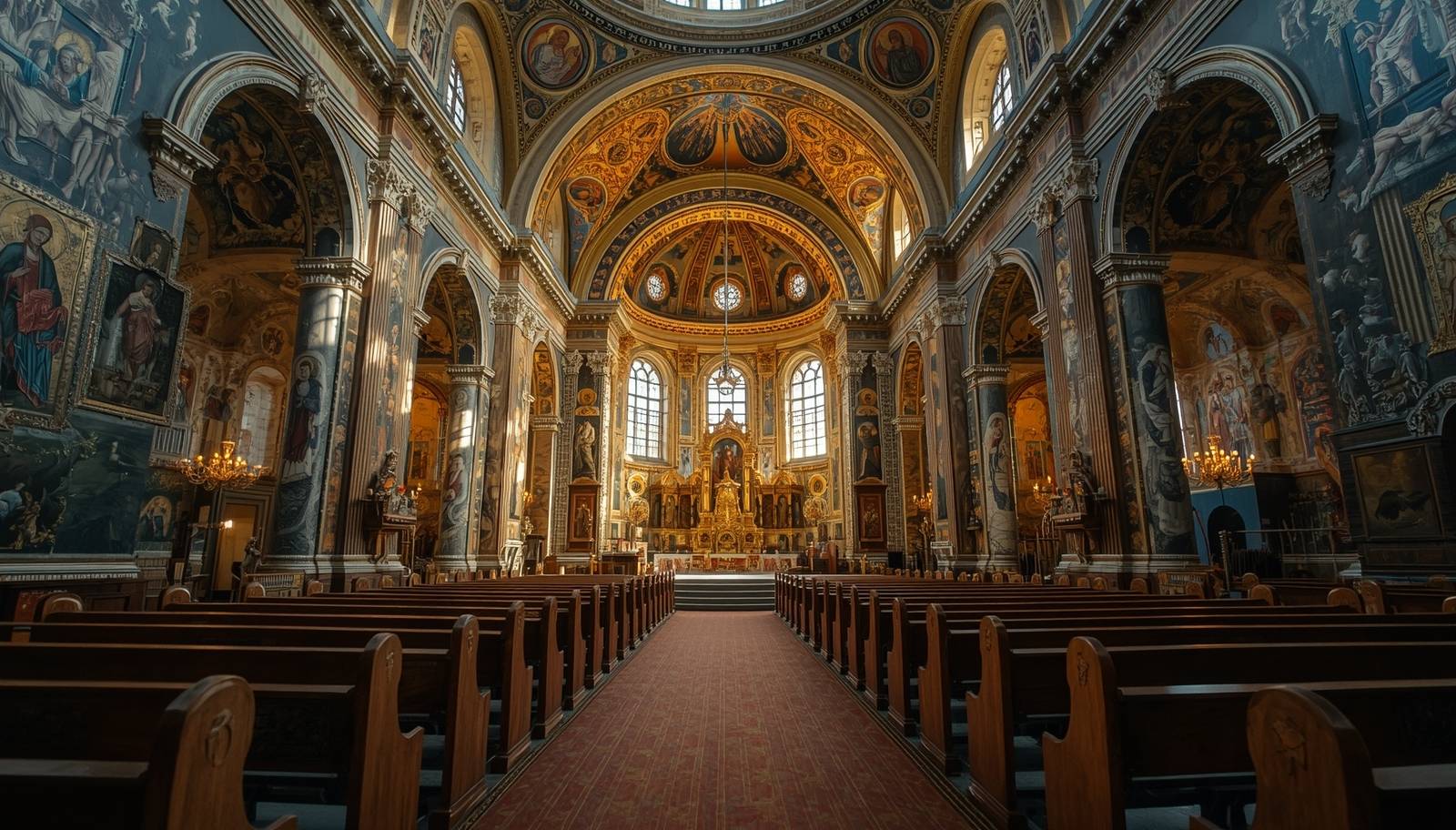 Eastern Orthodoxy profoundly shaped Eastern European civilization and national identity
By the fifteenth and sixteenth centuries, the Catholic Church in Western Europe had grown into a vast religious and political power, but at the same time it had accumulated many controversies. Wealth and authority were excessively concentrated, and the sale of indulgences provoked widespread resentment, as it seemed to suggest that salvation could be purchased with money. Many scholars and believers began to question whether the Church still remained faithful to its original spiritual mission.
In this atmosphere, the German theologian Martin Luther in 1517 issued his Ninety-Five Theses, openly criticizing the corruption and false doctrines of the Church. He advocated “justification by faith,” teaching that salvation was not achieved through church institutions or money, but through faith in God. This idea spread rapidly and ignited a broad movement of religious reform.
Soon afterward, the French theologian John Calvin in Switzerland developed a more rigorous theological system, emphasizing God’s sovereignty and the doctrine of predestination. His work, Institutes of the Christian Religion, became a foundational text of Protestant theology, shaping Protestantism into a tradition that was not merely a reaction against Catholicism but a self-sustaining religious framework.
In simple terms, Luther was the “pathbreaker” of Protestantism, shattering the old order, while Calvin was its “builder,” providing intellectual depth and institutional structure. Their differences also gave Protestantism a diverse character: Lutheranism stressed faith and grace, whereas Calvinism emphasized discipline, theological rigor, and social integration. This diversity was a key reason Protestantism continued to grow and exert influence across the world.
After Protestantism split from Catholicism, its development was not a single linear path but gradually gave rise to several major denominations, each shaped by distinct cultural contexts and social needs.
Lutheranism was the earliest branch, founded on Martin Luther’s ideas and rooted in Germany and Northern Europe. It emphasized “justification by faith” and the centrality of Scripture, retained some Catholic liturgical forms, but placed greater theological weight on faith and grace. It also promoted education so that believers could read the Bible for themselves.
Reformed Christianity (Calvinism) was advanced by John Calvin in Switzerland and France, establishing a rigorous theological system that stressed God’s sovereignty and the doctrine of predestination. In Geneva, Calvin created a society centered on religion, whose influence spread to the Netherlands, Scotland, and England, and later through Puritans to North America, profoundly shaping early American religious culture.
Anglicanism (the Church of England) emerged in England, preserving certain Catholic traditions of liturgy and structure while absorbing Protestant ideas, forming a unique denomination between the two. With the expansion of British colonial power, Anglicanism spread worldwide and left a lasting impact.
Baptists emphasized that believers must be baptized voluntarily as adults and placed strong importance on local church autonomy. Their hallmark was the freedom of personal faith choice, and in the United States they flourished, becoming one of the most influential Protestant denominations.
Pentecostalism arose in the early twentieth century in the United States, most famously through the Azusa Street Revival in Los Angeles. It emphasized the presence of the Holy Spirit, with charismatic phenomena such as speaking in tongues and healing. Pentecostal gatherings were marked by passion and music, highlighting the believer’s direct connection with the Spirit. It spread rapidly in the Americas, Africa, and Asia, becoming one of the fastest-growing Christian movements worldwide.
Overall, Protestantism’s development after the split was characterized by diversity. It produced different theological interpretations and exerted varied social and cultural influences. This diversity enabled Protestantism to adapt flexibly to different times and regions, sustaining its expansion across the globe.
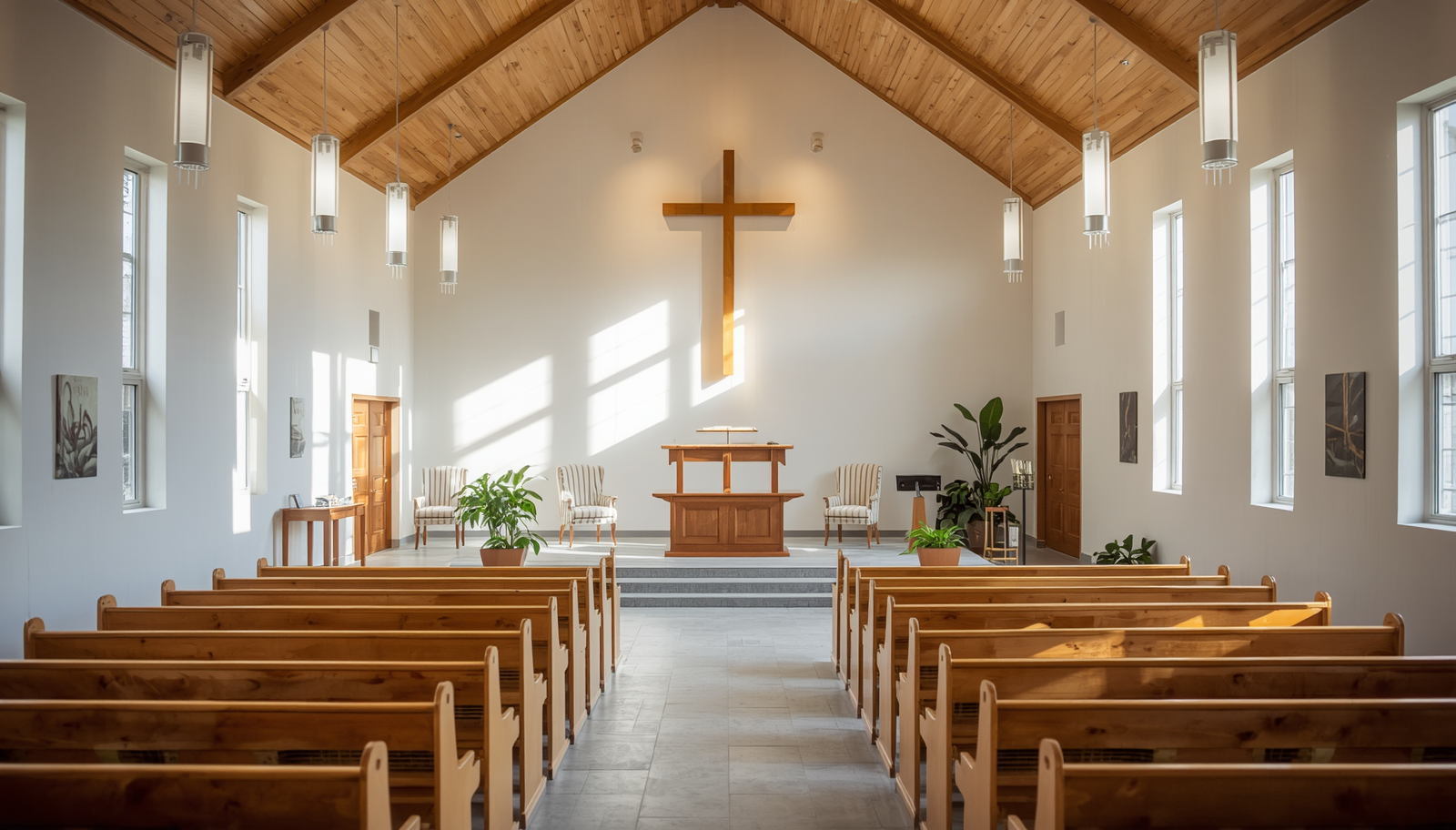 Protestantism is the most diverse and the most autonomous religion
| Catholicism | Eastern Orthodoxy | Protestantism | |
|---|---|---|---|
| Authority Structure | Centered on the Pope, with the Bishop of Rome regarded as the successor of Peter, holding supreme authority over the universal Church. | No single supreme leader; governed collectively by local patriarchs, emphasizing local autonomy and conciliar decision-making. | Rejects papal supremacy, emphasizing the authority of Scripture itself; church organization is diverse, often managed by local communities or denominations. |
| Core Doctrine | Stresses the sacraments (such as Eucharist, baptism, confession) as essential means of salvation, combining faith with good works. | Emphasizes mysticism and the sacredness of the sacraments, with particular focus on liturgy and spiritual life; salvation is seen as union with God. | Emphasizes “justification by faith,” teaching that salvation comes through faith alone rather than institutions or works; Scripture is the sole foundation of belief. |
| Liturgy and Worship | Solemn liturgy, originally in Latin (later in local languages); the Eucharist is regarded as the real presence of Christ. | Highly elaborate liturgy, conducted in Greek or local languages; the Eucharist is likewise viewed as a mystical real presence. | Liturgy is relatively simplified, focusing on preaching and Scripture reading; the Eucharist is often seen as symbolic or commemorative (with variations among denominations). |
| Clergy | Priests must remain celibate; hierarchical church structure is well-defined; monasticism is highly developed. | Clergy may marry (except bishops); strong emphasis on monastic tradition and spiritual discipline. | Clergy structures vary; some denominations allow ministers to marry; their role is often closer to that of community leaders. |
| Cultural and Social Influence | Central to medieval European politics and culture, fostering art, architecture, and education, and building extensive institutions. | Deeply influential in Byzantine and Eastern European culture, emphasizing religious art such as icons, shaping Eastern Christian civilization. | Promoted widespread education and the printing press, encouraged personal Bible reading, and became closely linked with national identity, democratic thought, and modern cultural development. |
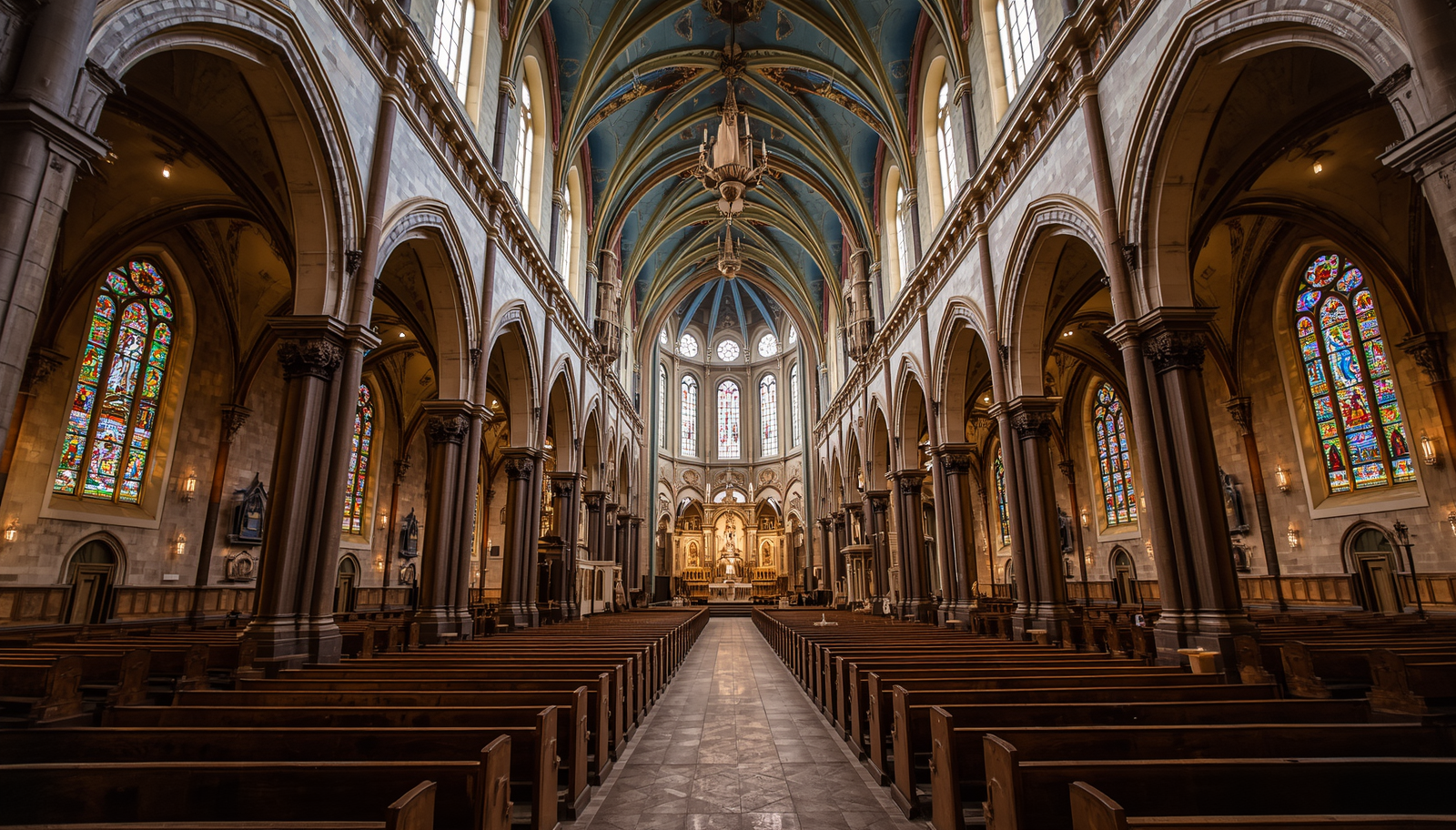 Catholicism is characterized by a clear hierarchy, strict organization, and the largest number of believers worldwide
We leverage big data to bring you the most fascinating and mind-blowing trivia. Follow us for regular updates—prepare to be amazed while leveling up your knowledge.


Majestic mountain ranges bring extraordinary landforms to the Earth. From an initial stretch of flat ground to towering peaks that pierce the clouds, how did they rise from beneath the surface and

Tattooing is a form of bodily marking that has carried multiple meanings throughout human history. In ancient societies, it could signify religious devotion, serve as a symbol of tribal identity, or

The most captivating aspect of twins lies in their striking resemblance in appearance. When encountering twins in a crowd, the first impression is the shock of seeing two faces that look almost

Radar has an exceptionally wide range of applications, capable of precisely determining an object’s position, distance, and velocity. Its powerful effectiveness becomes even more evident under

Acne is often regarded as a troubling condition: it not only affects one’s appearance but can also subtly undermine self‑confidence. Many people, when looking in the mirror, feel anxious at the sight

Teeth are among the hardest tissues in the human body, capable of withstanding immense pressure during chewing and resisting everyday wear. Yet within such a resilient structure, why does corrosion

Cocktail therapy is a strategy of combination drug treatment, built on the principle of administering medications with different mechanisms of action at the same time so that they complement one

In human society, the most immediate differences often arise from appearance. Walking down the street or browsing through historical images, we find that human looks display astonishing diversity.



Follow us for quirky updates, fun discoveries, and a front‑row seat to the weird and wonderful world we live in.